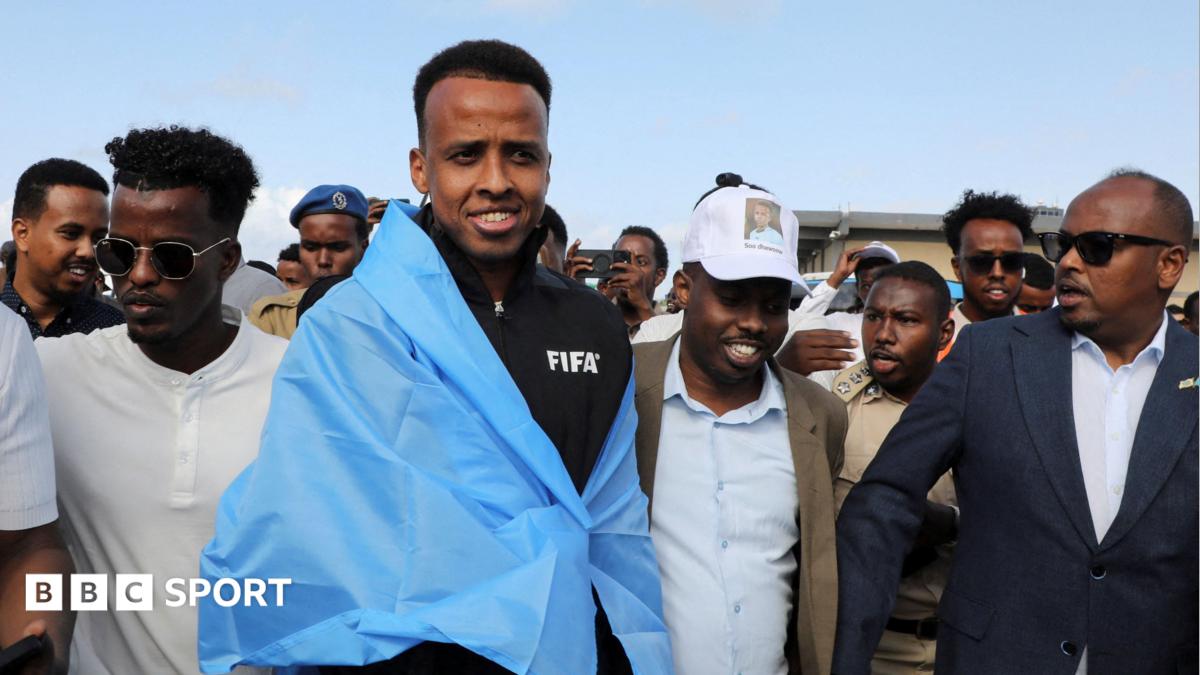
Mogadishu — Somalia’s most celebrated referee, Omar Artan, landed in Mogadishu Wednesday evening after being denied entry to the United States where he was set to make history as the first Somali official at a FIFA World Cup. Artan, 34, was barred from entering the U.S. on Monday at Miami International Airport despite holding a diplomatic passport and a single-entry visa. No explanation was provided by U.S. immigration authorities, leaving FIFA and Somali officials scrambling for answers.
Artan’s ordeal began Monday morning when he arrived in Miami, expecting to join 52 other referees at the World Cup officials’ base in Florida. Instead, he was pulled into a marathon interview with customs and border patrol agents, detained for hours, and placed on a flight to Istanbul before being sent back to Somalia. The rejection comes despite Artan being named CAF Men’s Referee of the Year in 2025 and holding all required documentation.
Key Points
- ✅ Artan was set to be the first Somali referee at a FIFA World Cup
- ⚡ Held diplomatic passport and valid U.S. visa, rejected without explanation
- 💡 Detained for 11 hours before deportation to Istanbul
Upon arrival at Aden Adde International Airport, Artan was greeted by government ministers, FIFA representatives, and Somali Football Federation officials. A crowd of referees, football players, and residents lined the tarmac and terminal, chanting his name and holding banners. Artan addressed the crowd briefly, thanking supporters and vowing to return for the next World Cup in 2030. “Everything is preordained. FIFA supported me well,” he said in remarks translated to English. “I promise you I’ll be officiating at the next World Cup. Somalia, everywhere, I’m letting you know.”
| Aspect | Artan’s Situation | FIFA’s Stance |
|---|---|---|
| Entry Status | Denied at U.S. border despite valid visa | Continues to support officials with valid documentation |
| World Cup Role | Removed from 2026 roster after rejection | Citing security and logistical constraints |
| Future Plans | Vows to officiate in 2030 World Cup | No formal statement on appeal process |
Government officials confirmed Artan’s arrival and expressed outrage at the treatment. Somalia’s sports minister, Maryam Qaasim, called the incident a “violation of diplomatic norms” and vowed to raise the issue with international bodies. “This is not just about one referee,” she said. “It is about the dignity of a nation and the rights of its citizens.” FIFA has not publicly commented on whether legal or diplomatic channels will be pursued to address the ban.
💡 Pro Tip
Diplomatic passports do not guarantee immunity from entry denials. Always confirm bilateral agreements and seek real-time advisory from consular services before international travel, especially for high-profile events.
Artan’s exclusion was enforced under a 2025 U.S. entry ban targeting 12 countries, including Somalia, implemented by the Trump administration. The ban prohibits entry under any visa category and has drawn criticism from human rights groups and diplomatic circles. Two days before the World Cup draw in December 2025, Trump publicly questioned Somalia’s sovereignty, calling it “barely a country” and urging Somali immigrants to “go back to where they came from.”
- 📊 The U.S. ban covers 12 nations, affecting thousands of travelers and officials annually
- 🔍 Artan’s case may test the limits of FIFA’s influence over host nation policies
- ⚠️ The incident raises concerns about fairness and transparency in World Cup officiating selection
During his press briefing Wednesday, Artan urged Somali youth not to lose hope in their country. “Let’s all defend Somalia’s honor,” he said. “We all belong to Somalia, whether it’s bad or good. That flag is ours, and so is the passport. Let’s defend it.” He stressed that despite the setback, his journey would continue, and he would encourage others to do the same. “The youth shouldn’t be demoralized about their country. I’ll still stand for my nation,” he declared.
📋 By The Numbers
- 52 — Total referees selected for 2026 World Cup from FIFA’s global pool
- 5 — Number of African referees on the final list
- 2030 — Next World Cup where Artan vows to officiate
Artan’s removal from the 2026 roster leaves a gap in the officiating team and highlights the growing intersection of sports, diplomacy, and geopolitics. With all on-field officials required to be based in Florida for training and security, Artan’s absence underscores the logistical rigidity of the tournament’s structure. FIFA’s decision to proceed without him signals a prioritization of operational constraints over individual merit in this case, raising broader questions about access and fairness in global sporting events.