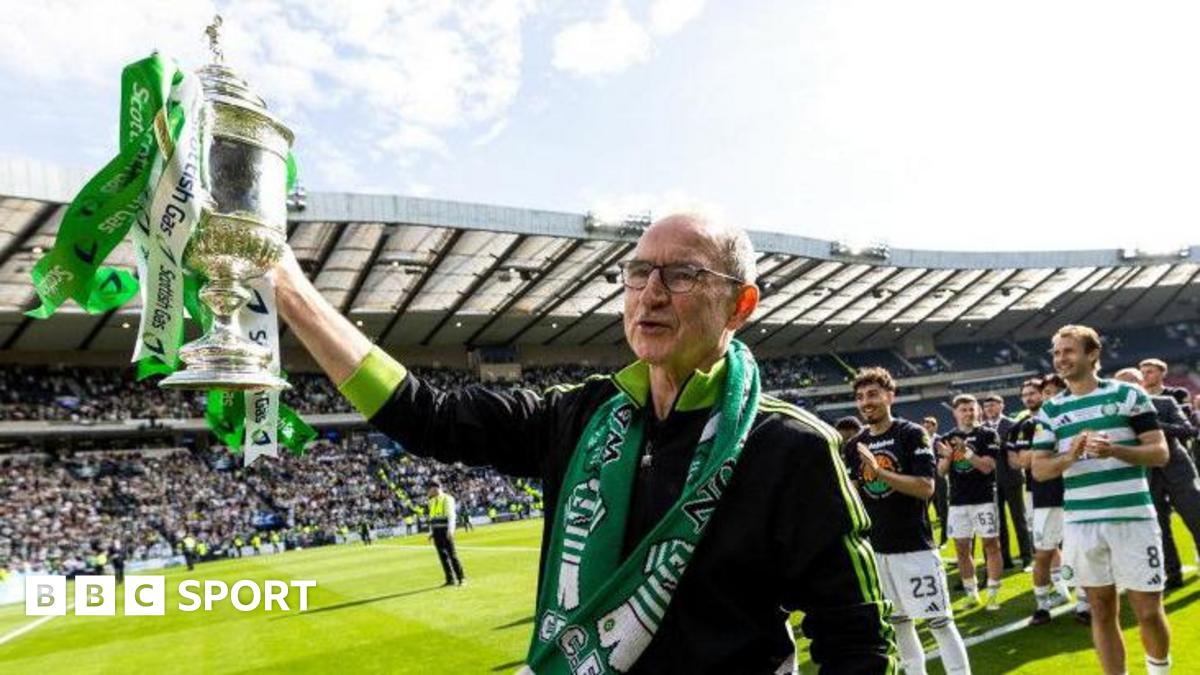
Martin O’Neill left Hampden Park on Saturday in possession of a Premiership winner’s medal and a Scottish Cup trophy, but the manner of his exit could reshape Celtic far more than either trophy ever did.
Less than a week after Celtic beat Dunfermline Athletic 3-1 to complete an unlikely double, the club’s most storied manager in the modern era is facing a decision he never expected to face again. “If the season was to start tomorrow, I couldn’t do it,” O’Neill told reporters moments after the final whistle. “I’m getting old. I’ve done the learning in the last few months. Some tactics befuddled me — and I’m allowed to say that.” His honesty was raw, almost disarming in an era of polished corporate soundbites. But behind the self-deprecation lies a deeper truth: O’Neill, now 74, has just completed one of the most demanding managerial stints in Scottish football history — across two separate emergencies — and won both.
💡 Pro Tip
When a club turns to a legend in crisis, the board’s next move should never be rushed. The real risk isn’t keeping the interim — it’s alienating the man who just saved the season.
His second spell began in January after Wilfried Nancy’s abrupt departure left Celtic six points behind Hearts and staring at a humiliating title loss. O’Neill, then managing an unrelated project in England, was dining on London’s King’s Road when the call came from owner Dermot Desmond. “Would you hold the fort?” asked Desmond. “We’ve got ten minutes to decide.” Ten minutes and a lifetime of loyalty later, O’Neill was back at Celtic Park. What followed was a managerial masterclass: 19 wins, two draws, and just two defeats in 23 league games — an 83% win rate. Only Hearts, with their own renaissance under Steven Naismith, managed to stay in the hunt.
| Manager | Duration | League Finish | Trophies |
|---|---|---|---|
| Brendan Rodgers | 3 seasons | 2nd | 2 |
| Wilfried Nancy | 3 months | 3rd | 0 |
| Martin O’Neill | 5 months (split) | 1st |
What made the achievement remarkable wasn’t just the result — it was the context. This Celtic side, stripped of its marquee signings and haunted by fan unrest after years of poor recruitment, was widely dismissed as past its prime. Yet O’Neill, with a mix of old-school charm and tactical nous, rebuilt belief in days, not weeks. Junior Adamu’s 94th-minute equaliser against Dundee in February was less a goal and more a turning point — the moment a squad on the brink rediscovered its heartbeat.
Key Points
- ✅ O’Neill’s second emergency spell spanned 23 league games with an 83% win rate
- ⚡ He guided Celtic from six points behind Hearts to the Premiership title
- 💡 His man-management overcame a squad lacking star power and harmony
“He’s not bad, is he?” said Viljami Sinisalo, one of O’Neill’s first signings under emergency conditions. “What he’s done to this group — the confidence, the belief — it’s a job like no other.” The players’ chorus was unanimous. Right-back Alistair Johnston called for O’Neill’s return “for sure.” Captain Callum McGregor said, “He drove this team on — and he deserves to enjoy his summer.” Even in defeat, O’Neill commands respect. But respect doesn’t pay contracts or secure futures. The real question now is whether Celtic can afford to let him walk — and whether he can bring himself to stay.
📋 By The Numbers
- 83% — O’Neill’s win rate in Premiership games during his second spell
- 6 — Points Celtic were behind Hearts at the start of his second tenure
- 2 — Separate emergency spells spanning less than a full season
Sources close to the club say Desmond has not yet spoken to O’Neill, but talks are expected within days. O’Neill himself remains undecided. “I think I must be in consideration,” he said with a wry smile, “even if it’s only for a very short time.” His daughters are reportedly in favour. His wife, less so. Age is not the only factor. “I genuinely don’t know if I could do it every day anymore,” he admitted. “But I’ve learned so much in the last few months. And when you’ve been around this long, you don’t walk away from a challenge — you leave when you’re ready.”
Former Ireland manager Stephen Kenny doesn’t mince words: “He’s done the extraordinary. If he wants to continue, he should. The club would be foolish not to keep him.” But Celtic’s hierarchy faces a paradox. They just appointed their first American manager in Nancy — and now, if O’Neill stays, they’d be defying their own globalisation strategy. Equally, letting him go could feel like discarding a lifeline thrown in the darkest hour. As Scott Brown, Celtic’s former captain and Hearts’ current manager, put it: “It all depends if he’s got the energy. But if he does — and he clearly does — then the club should fight for him.”
Whatever happens next, one fact is undeniable: Martin O’Neill didn’t just save two Celtic seasons. He reminded the club, and its fans, what it means to be Celtic — not as a brand, but as a fighting force. Now, the ball is in his court. And in Glasgow, the clock is ticking louder than ever.