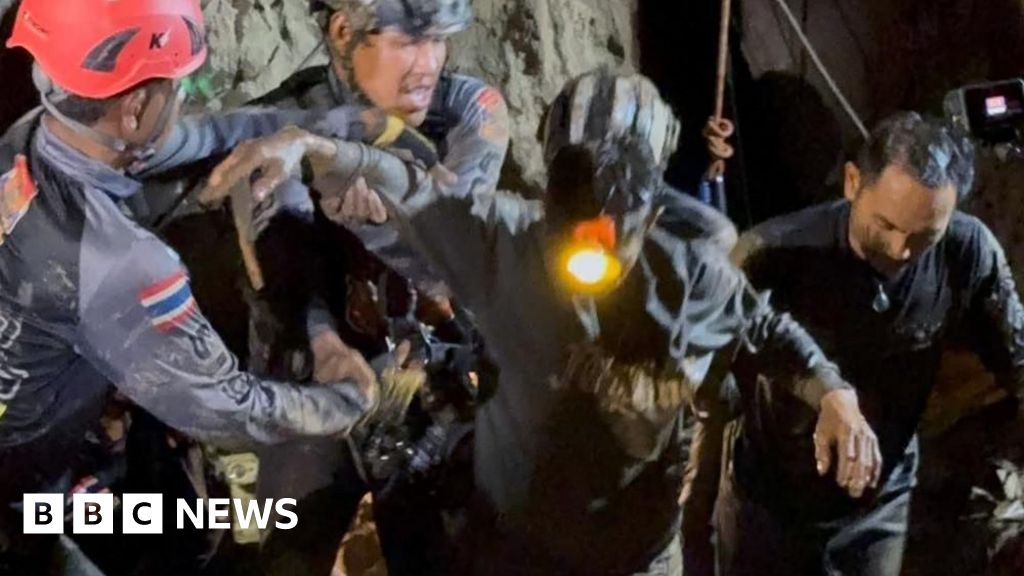
Tham Nam cave in southern Laos, a maze of jagged limestone tunnels 12 kilometers long, swallowed a group of five men on August 24 after sudden flash floods severed their escape route. The first survivor, identified only as Bounthavy Somsavath, was pulled from the cave’s main chamber at 4:17 p.m. local time, his weakened frame supported by a stretcher as medics administered oxygen. Officials confirmed he had survived on rainwater collected in plastic bottles and a single packet of biscuits found in his pocket.
The remaining four men—two farmers, a tour guide, and a local official—were located 800 meters inside the cave on Friday using thermal imaging cameras, their voices picked up by rescue drones equipped with directional microphones. Rescue teams from Laos, Thailand, and Australia have been forced to drill ventilation shafts and install pumps to drain the rising water, which has submerged lower tunnels by two meters since the initial collapse.
Key Points
- ✅ First survivor freed after 11 days trapped in Tham Nam cave
- ⚡ Monsoon floods cut off escape route on August 24
- 💡 Four survivors remain in critical condition, rescue teams battling rising water
Meteorologists warn that another tropical depression is forming over the South China Sea and could bring heavy rains to the region by Wednesday. Local authorities have evacuated nearby villages, while the United Nations Office for the Coordination of Humanitarian Affairs has pledged emergency supplies, including food, antibiotics, and water purification tablets. The Thai Navy SEAL team, which assisted in the 2018 Thai cave rescue, has joined the operation, providing technical expertise in cave diving and patient extraction.
| Rescue Team | Role | Specialization |
|---|---|---|
| Lao People’s Army | Logistics and security | Ground operations |
| Thai Navy SEALs | Cave diving and patient extraction | Underwater medicine |
| Australian Federal Police | Search and rescue coordination | Forensic analysis |
Bounthavy’s condition is stabilizing, though doctors report early signs of hypothermia and dehydration. His family, who had gathered outside the cave entrance since Saturday, were allowed a brief reunion before he was airlifted to a hospital in Pakse. Meanwhile, the trapped men’s families have set up a makeshift shrine at the cave mouth, lighting incense and leaving offerings of rice and fruit in a desperate bid for divine intervention.
💡 Pro Tip
Survivors in flood-prone caves should prioritize collecting water in sealed containers immediately upon entering, as stagnant floodwater is often contaminated with bacteria and parasites.
The Laos Department of Disaster Management has launched a public appeal for water pumps, generators, and medical volunteers, with donations flooding in from across Southeast Asia. Engineers are working around the clock to reinforce a 300-meter section of the cave’s ceiling, which has shown signs of structural fatigue. If the operation succeeds, it would mark the first successful multi-day cave rescue in Laos since records began in 1998.
📋 By The Numbers
- 12 kilometers — Length of Tham Nam cave system
- 2 meters — Depth of floodwater rise since initial collapse
- 3 — Number of countries involved in the rescue operation
Experts warn that the rescue’s success hinges on two critical factors: the weather holding until Wednesday and the structural integrity of the cave’s upper galleries. A miscalculation could trigger a secondary collapse, burying the remaining survivors under thousands of tons of limestone. For now, the world watches as a fragile thread of hope dangles over a watery abyss.