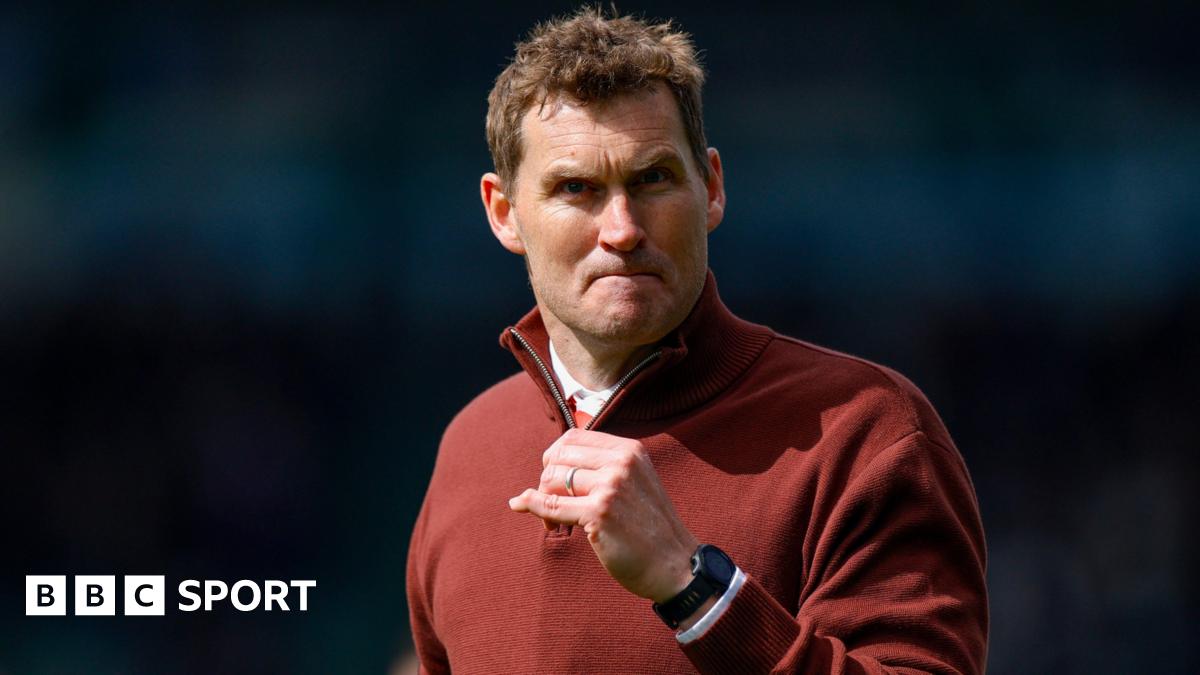
Exeter City have formally appointed Matt Taylor as their first-team manager, ending weeks of speculation and securing a leader already steeped in the club’s fabric. The 44-year-old, who guided the Grecians to promotion in 2022, returns after an interim spell that began in March when Gary Caldwell left for Wigan Athletic. Taylor’s appointment marks his second tenure at St James Park, a club he first joined as a player in 2007 before rising through the ranks into coaching and management.
Key Points
- ✅ Taylor appointed permanent manager after interim spell since March
- ⚡ Second stint at Exeter following earlier promotion in 2022
- 💡 Club faces financial squeeze and must rebuild squad with academy focus
Taylor inherits a club freshly relegated from League One, their status confirmed on the final day of the season. His challenge is twofold: restore competitiveness on the pitch while steering Exeter through a period of financial prudence. The club, owned by its supporters, has already begun releasing senior players including Ilmari Niskanen and Josh Magennis, with more expected to follow. Taylor has warned fans to brace for “drastic” squad cuts, a reality dictated by losses incurred last season.
Speaking at his unveiling, Taylor acknowledged the weight of the role. “Coming back to Exeter reminded me just how special this club is,” he said. “There’s work to do, on and off the pitch. The whole club is going through a reset, and I’m excited to be part of it.” He stressed the need to rely on young academy players, citing his experience in developing talent—a process that delivered stars like Joel Randall and Archie Collins in his first spell.
Club chairman Wilf Walsh framed the appointment as a strategic move aligned with Exeter’s long-term values. “Matt understands every aspect of the club,” Walsh said. “He knows how to get promoted out of League Two and is absolutely committed to the academy model that has made us successful.” The board’s decision followed a review of multiple candidates, with Taylor’s intimate knowledge of the supporter-owned structure and youth development pathway proving decisive.
- Academy integration — Taylor plans to accelerate integration of academy graduates into the first team, prioritising local players who embody the club’s community ethos.
- Financial discipline — A planned budget reduction of at least 30% will force tough decisions on player contracts and recruitment.
- Immediate rebuild — Taylor aims to assemble a competitive squad by late June, targeting free agents and loan deals to balance experience and cost.
📋 By The Numbers
- 162 — Appearances made by Taylor as a player for Exeter between 2007 and 2011
- 20 — Goals scored during that period, including in back-to-back promotions from the National League to League One
- 5th — Highest league finish under Taylor in his first permanent spell (2019–20)
Taylor’s first stint ended in 2021 when he left for Rotherham United, a move that saw Exeter miss promotion by a single goal difference. He returned to the club’s hot seat in March after Caldwell’s departure, inheriting a team mired in the bottom three. His interim record—a solitary win from twelve matches—underscored the scale of the task ahead. Yet his presence alone has already galvanised sections of the fanbase, many of whom view him as a bridge between the club’s proud past and its uncertain future.
💡 Pro Tip
For clubs facing financial pressure, prioritising academy integration over marquee signings can build sustainable competitiveness while maintaining fan trust. Taylor’s model at Exeter shows how local identity often outweighs short-term results in supporter-owned environments.
Off the field, Taylor’s challenge mirrors that of the club’s: restore confidence without compromising core principles. His return signals continuity, but the road to League One is steep, lined with financial cliffs and the high expectations of a community that sees itself in every player who pulls on the Grecians shirt.