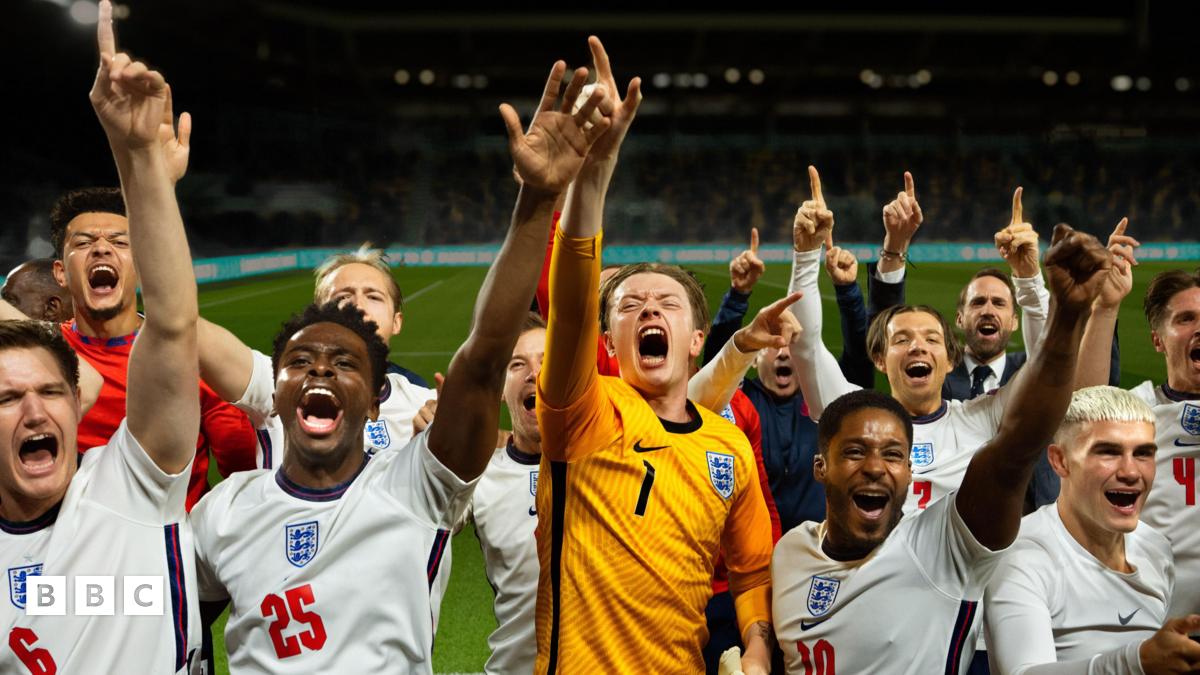
Gareth Southgate didn’t just reshape England’s football team—he rewrote the nation’s emotional relationship with defeat. That transformation, told through a new BBC drama, hinges on a moment most fans would rather forget: the penalty miss in the 1996 European Championship semifinals. What followed was a decade of quiet resilience, culminating in Southgate’s decision to bring psychologist Pippa Grange into the squad in 2018 to dismantle the team’s catastrophic fear of penalty shootouts.
Key Points
- ✅ Southgate led England to two Euro finals and broke the World Cup penalty curse
- ⚡ Grange’s psychological intervention targeted the team’s penalty shootout failures
- 💡 The drama confronts the racist abuse faced by Rashford, Sancho and Saka after Euro 2020
Joseph Fiennes portrays Southgate in Dear England, which distills years of behind-the-scenes struggles into a four-episode narrative. The series opens with Southgate’s 1996 miss—his hands clasped over his neck as the ball trickled past David Seaman—then flashes forward to his 2018 appointment, where he hired Grange to address a deeper issue: the players’ inability to handle pressure under scrutiny. Grange’s methods, rooted in mindset coaching, forced the squad to confront the psychological weight of representing a nation that demands perfection.
| Aspect | 1996 Southgate | 2018 Southgate |
|---|---|---|
| Penalty record | Missed against Germany | Won shootout vs Colombia in 2018 |
| Team culture | Silent suffering | Structured psychological support |
| Public reception | Isolation after miss | National hero despite final loss |
Writer James Graham, whose Olivier-winning play inspired the series, calls Southgate’s journey “a story of real hope.” Graham grew up in a Nottinghamshire mining village, where access to drama was a lifeline for a shy child who found even physical education daunting. His secondary school’s dedicated theatre room was the only place where he felt safe to explore creativity. “The only reason I’m sat here enjoying chatting to you is the accident of having a really good drama teacher,” Graham told reporters ahead of the series premiere.
The drama also forces viewers to reckon with the aftermath of Euro 2020. After England’s defeat to Italy on penalties, Marcus Rashford, Jadon Sancho and Bukayo Saka faced torrents of racist abuse online and in public spaces. The series depicts these events with unflinching detail, embedding them within the broader narrative of Southgate’s tenure—not as a footnote, but as evidence of the pressures he sought to counteract.
💡 Pro Tip
Use the first episode to observe how Southgate’s leadership style contrasts with media narratives. Notice how the drama frames failure not as catastrophe, but as the first step toward meaningful change.
For Jodie Whittaker, who plays Grange, the story transcends football. “These young men and their entire coaching staff deserve the utmost respect,” she said. “No matter the outcome, they carried the weight of a nation’s expectations with dignity.” Fiennes, who portrays Southgate, adds that the series offers an intimate look at the ramifications of a single missed penalty. “Sometimes we have to learn to lose,” he said. “And we have to do it with respect.”
📋 By The Numbers
- 102 — Southgate’s total matches as England manager
- 2 — Euro finals reached under his tenure
- £13m — Government investment in the National Centre for Arts and Music Education announced in 2025
Graham’s work is a critique of the arts’ uneven accessibility. Despite his success, he points to data showing only 8% of professionals in film, TV, radio and photography come from working-class backgrounds. The English Baccalaureate (EBacc), which excluded creative subjects, sent a message to schools and parents that arts education was secondary. In 2025, the government reversed course, removing EBacc and elevating arts GCSEs to equal status with humanities and languages. A Department for Education spokesperson said the move aimed to “revitalise the curriculum” while maintaining academic rigor.
- May 24, 21:00 BST — First episode of Dear England airs on BBC One
- May 31, June 7, 14 — Subsequent weekly episodes
- iPlayer — All episodes available on demand
The series arrives at a pivotal moment for English football. Southgate’s departure after the 2022 World Cup left a void, but his legacy endures in the players he mentored—many of whom now face their own moments of truth. As the drama unfolds, it challenges viewers to ask: what does it mean to represent a nation, not just in victory, but in the quiet moments of failure?