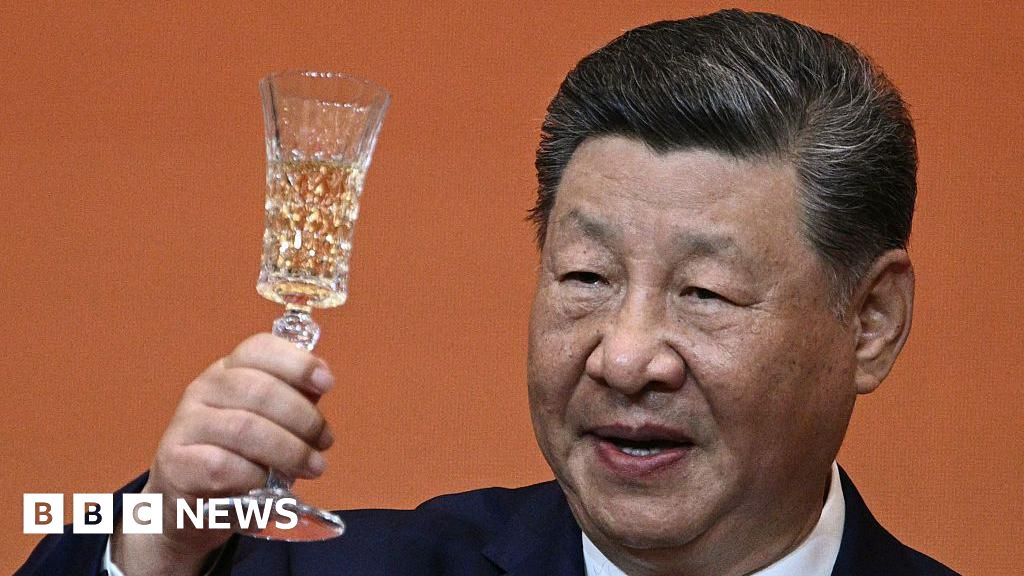
Chinese President Xi Jinping rolled out a lavish reception for Russian President Vladimir Putin in Beijing on Tuesday, signaling a deepening alliance between the two global powers. The state dinner, broadcast nationwide, featured gold-accented table settings, a 21-gun salute, and a performance by the Central Symphony Orchestra, all under tight security from the People’s Armed Police.
Putin arrived at the Great Hall of the People shortly after midnight, greeted by Xi and a military honor guard. Chinese state media framed the visit as a "new chapter" in Sino-Russian relations, with live tickers on major platforms declaring the two nations "closer than ever." The optics contrasted sharply with Putin’s contentious visit to the United States just weeks prior, where his meeting with President Trump sparked protests from European allies.
Key Points
- ✅ Xi and Putin signed 14 agreements covering energy, trade, and defense
- ⚡ The visit follows Trump’s NATO tour, amplifying geopolitical tensions
- 💡 Security measures included airspace restrictions over Beijing
Western diplomats in Beijing described the timing as deliberate, noting that Xi’s calendar was cleared for Putin’s arrival just days after Trump wrapped up a five-nation European tour. "This isn’t a coincidence," said a senior EU official who requested anonymity. "China is making a statement." Trump’s meetings with NATO leaders in Brussels had devolved into public disputes over defense spending, leaving European capitals scrambling for alternatives.
| Country | Leader | Recent Move |
|---|---|---|
| China | Xi Jinping | Hosted Putin with state-pageantry |
| Russia | Vladimir Putin | Sought stronger ties with Beijing |
| USA | Donald Trump | Pressed NATO allies on spending |
The joint statement released after the dinner emphasized "strategic coordination" on global issues, with a particular focus on countering U.S. influence in the Asia-Pacific and Europe. Analysts at the China Institutes of Contemporary International Relations noted that the agreements included a 25-year extension of a natural gas supply deal, worth an estimated $100 billion, and joint military exercises planned for the South China Sea.
📋 By The Numbers
- 100 billion dollars — Value of the extended gas supply deal between China and Russia
- 4 days — Gap between Trump’s NATO tour and Putin’s arrival in Beijing
Security in Beijing was at its highest level in years, with drones patrolling the skies and checkpoints on major roads leading to the Great Hall. Diplomatic sources revealed that Xi personally ordered the measures after intelligence reports suggested potential protests by Uyghur activists and pro-democracy groups. The visit also coincided with the anniversary of the 1969 Sino-Soviet border conflict, a date quietly observed by state media with subdued references to "historical unity."
- Energy pivot — China secures long-term gas supplies amid U.S. LNG competition
- Military signaling — Joint exercises planned in waters claimed by Vietnam and the Philippines
- Diplomatic isolation — Russia and China position themselves as alternatives to Western-led forums
The optics of the visit were designed to project strength, but behind the scenes, diplomats acknowledged lingering tensions. Sources in Moscow confirmed that Putin sought assurances on Chinese support for Russia’s war in Ukraine, while Xi emphasized the need for "balanced" trade terms. A Kremlin aide, speaking on condition of anonymity, called the agreements "pragmatic" but declined to detail specific compromises.
💡 Pro Tip
Watch for the next round of Russo-Chinese military drills in the Yellow Sea. Analysts expect them to coincide with NATO’s autumn summit, deliberately escalating pressure on Western alliances.
The global response was swift. Japan’s Prime Minister Fumio Kishida summoned his national security council within hours of the agreements’ announcement, while the EU’s foreign policy chief condemned the deals as "destabilizing." Meanwhile, Trump took to Truth Social to praise Putin’s "tough leadership," a statement that drew immediate backlash from U.S. lawmakers on both sides of the aisle.
- 📊 Energy deals could shift global LNG markets, reducing Europe’s leverage over Russian supplies
- 🔍 Military exercises may force ASEAN nations to recalibrate their neutrality
- ⚠️ Any escalation in the South China Sea risks drawing the U.S. into a direct confrontation
The visit concluded with a joint press conference where Xi and Putin avoided direct questions about their stance on Ukraine, instead emphasizing "regional stability." As Putin’s motorcade departed Beijing under heavy escort, the message was clear: China and Russia are not just aligning their interests—they are daring the world to respond.