Kyiv’s skies rattled under the heaviest Russian aerial barrage in the war’s history this month, when 1,500 drones and 56 missiles slammed into cities in just 48 hours. Two sisters, 12-year-old Liubava and 17-year-old Vira, were among 24 civilians killed when a missile demolished their apartment block. Their father had already died fighting on the front lines, leaving their mother the family’s sole survivor.
But the devastating strike could have been worse. President Volodymyr Zelensky confirmed that Ukrainian forces downed 94% of the long-range drones and 73% of the missiles. Just three months prior, on May 14, the interception rate stood at 55%. The leap in effectiveness reflects Ukraine’s pivot from Soviet-era systems to a layered, AI-driven defence network built at speed.
Key Points
- ⚔️ Ukraine now intercepts 94% of long-range drones, up from 55% in May
- 💰 Homegrown interceptors cost $1,000 each—one-fiftieth the price of Shahed drones
- 🛠️ Private firms operate 25% of interceptors, scaling faster than state systems
At the core of this transformation is Sky Map, an AI-powered system that fuses radar, sensors, and video feeds to track every Russian glide bomb, missile, and drone in real time. Initially fed by mobile phones strapped to telegraph poles to listen for drone engines, the network now draws on thousands of advanced sensors. Even the U.S. military has adopted Sky Map to protect a base in the Middle East.
💡 Pro Tip
AI-driven tracking systems like Sky Map rely on constant data feeds. Ensure redundant sensors and backup power to prevent blind spots during peak attacks.
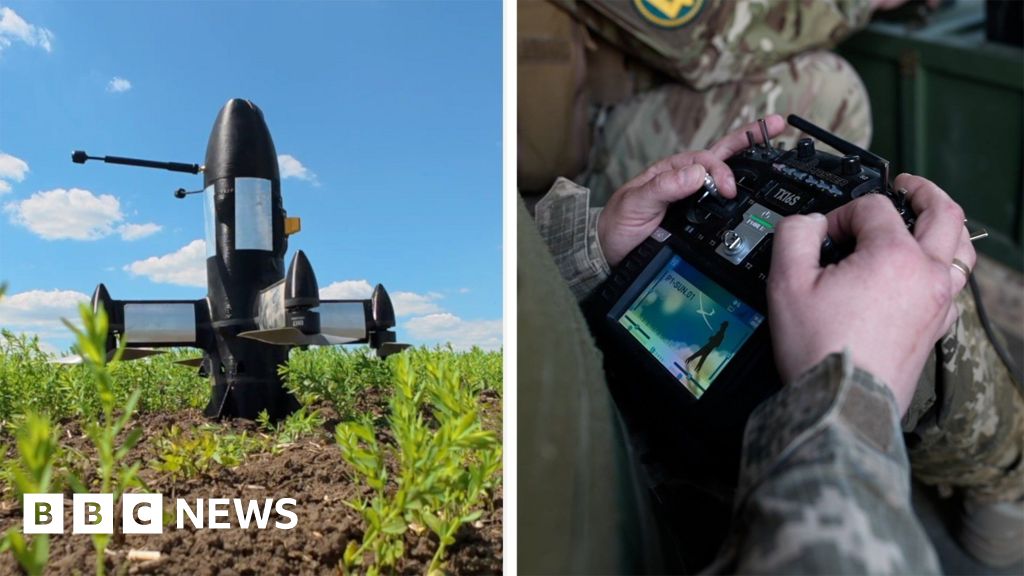
Ukraine’s most visible success is the P1-SUN interceptor, a 3D-printed drone shaped like a bullet with four rotors at its base. Fielded by the Marine Corps Unmanned Systems Regiment near Kherson, the P1-SUN reaches speeds over 300 km/h with a 30-km range. Within minutes of launch, it can destroy a Shahed worth $50,000—achieving a kill ratio that has forced Russia to alter tactics.
| Interceptor Type | Cost per Unit | Speed | Range | Primary Target |
|---|---|---|---|---|
| P1-SUN | $1,000 | 300+ km/h | 30 km | Shahed drones |
| Patriot missile | $3 million | Mach 5+ | 100+ km | Ballistic missiles |
Private companies are now integral to the defence. Carmine Sky, a Kharkiv-based firm, has trained civilian operators—mothers, veterans, and taxi drivers—to man remote-controlled machine guns mounted on towers. In a basement control room ringed by screens, they track Sky Map’s live feed, spotting drones before pulling the trigger. “It’s not difficult,” says Ruslan, the company’s spokesman. “It’s like an Xbox—just a game.”
📋 By The Numbers
- 1,000 — Interceptors produced daily by Ukrainian factories
- 30,000 — Russian drones destroyed by interceptors in March 2025
- 25 — Private firms now integrated into Ukraine’s air-defence network
“We’re not the Wild West,” Ruslan stresses. “We follow military commands. But we scale faster than the government can.” His company’s network has already downed dozens of drones, plugging critical gaps in coverage near the front lines. The integration of civilian talent and commercial tech has accelerated Ukraine’s response time from minutes to seconds in some cases.
- March 2025 — Ukraine begins mass production of P1-SUN interceptors
- April 2025 — Sky Map AI system deployed nationwide after successful Middle East trial
- May 2025 — Interception rate jumps from 55% to 94% in a single month
- June 2025 — Private firms account for 25% of all drone interceptions
Yet vulnerabilities remain. Russia has responded with jet-powered drones and decoy drones designed to lure Ukrainian interceptors into revealing their positions. Ballistic missiles still evade interception more often than drones—Lt Col Yuriy Myronenko admits that shooting them down “is not so easy.” Ukraine is racing to field directed-energy weapons and electronic warfare systems to counter these threats.
Beyond defence, Ukraine has turned the tables. Recent strikes on Russian oil refineries have triggered fires visible from space, while precision attacks reached St. Petersburg and Moscow in May. The Kremlin scaled back its Victory Day parade out of fear of further incursions. Both sides are now locked in a high-stakes arms race, each pushing the other to innovate faster.
- 🔍 Russia increases jet-powered drone production to evade interceptors
- 📊 Ukraine’s AI tracking system processes over 10,000 threat alerts per hour
- ⚠️ Ballistic missiles remain the biggest gap in Ukraine’s layered defence
For the first time since the invasion began, Ukraine’s skies are no longer just a battlefield—they’re a proving ground for a new kind of warfare, where speed, cost, and adaptability determine survival. The sisters’ deaths in Kyiv were a grim reminder of the stakes. But the interceptors racing into the night above their city are a sign that Ukraine is fighting back—with the tools it built itself.