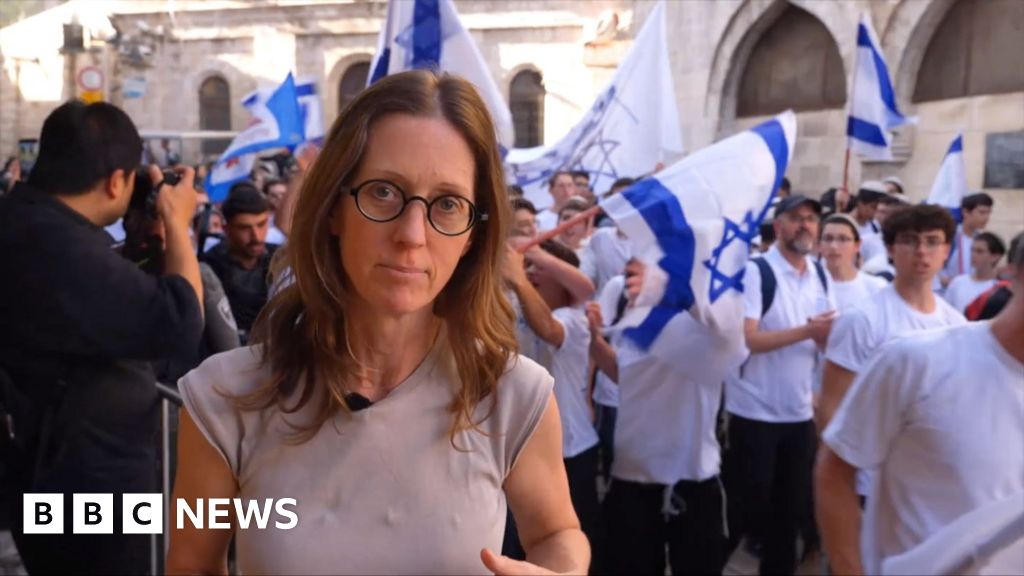
JERUSALEM — Tens of thousands of Israeli celebrants surged through Jerusalem’s Old City on Thursday, retracing a route captured during the 1967 Arab-Israeli War in a march that has become a flashpoint for regional tension and international condemnation.
The parade, held under heavy police escort, wound past the Damascus Gate and into the heart of the Old City, where Palestinian residents and business owners have long decried it as a provocation. Israeli authorities defended the event as a commemoration of national heritage, but diplomats from the UK and other allies reiterated their refusal to recognize Israeli sovereignty over East Jerusalem, annexed in 1967.
📋 Regional Flashpoints
- 1967 — Israel captured East Jerusalem during the Six-Day War
- 1980 — Israel formally annexed East Jerusalem; annexation not recognized by the UN
- 2021 — Last major escalation during the march led to 11 days of conflict
Security forces deployed water cannons, barricades and drone surveillance as protesters along the route chanted slogans and waved flags, some drifting into violent clashes with police. Videos circulating on social media showed Israeli flags being torn down and Palestinian youth throwing stones, prompting immediate crackdowns by riot police.
| Aspect | Israeli Position | International Response |
|---|---|---|
| Sovereignty | Claims Jerusalem as undivided capital | East Jerusalem remains occupied territory under international law |
| March | Cultural heritage event | Viewed as illegal provocation under international law |
| Security | Ensuring freedom of movement | Accused of excessive force against Palestinians |
Prime Minister Benjamin Netanyahu issued a statement calling the march a “celebration of resilience and unity,” while Palestinian Authority President Mahmoud Abbas condemned it as a “deliberate assault on Muslim and Christian holy sites.” The contrast underscored the deepening divide even as diplomats urged restraint.
Key Points
- ✅ March drew over 30,000 participants through Jerusalem’s Old City
- ⚡ Event condemned by UK and other allies for undermining peace efforts
- 💡 Security forces deployed drones, barricades and water cannons amid tensions
The procession, known as the “Flag March,” has grown in scale and intensity over the past decade, often coinciding with spikes in violence. Last year, the event was rerouted due to security concerns, but this year authorities permitted it to proceed along its traditional route, citing intelligence suggesting no imminent large-scale threats.
💡 Pro Tip
Foreign journalists covering sensitive events in Jerusalem should coordinate with local fixers before entering Palestinian neighborhoods and avoid carrying visible press credentials in contested areas.
As night fell, the city remained tense. In the Sheikh Jarrah neighborhood, a flashpoint since 2021, residents reported hearing sporadic gunfire and the sound of helicopters overhead. Local medics said at least 42 people were treated for injuries during the day, including 19 police officers and 23 civilians.
- Sheikh Jarrah — Long-standing eviction dispute fuels daily confrontations
- Damascus Gate — Traditional starting point for the Flag March
- Western Wall — Site of competing narratives over Jerusalem’s future
Analysts warn that the annual convergence of nationalist fervor and historical grievance is pushing the region closer to a breaking point. “Each year, the march becomes more provocative,” said Dr. Leila al-Mansour, a Jerusalem-based political analyst. “It’s not just a parade anymore. It’s a litmus test for whether coexistence is still possible.”