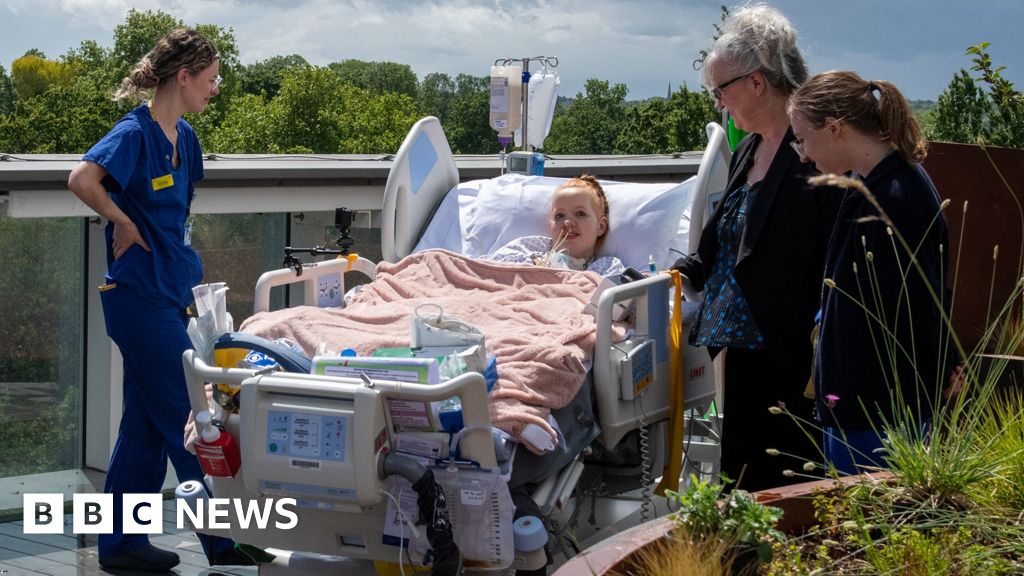
For two months, Hollie Allan could not see the sky. The 29-year-old from Bristol lay sedated in intensive care, her world reduced to the sterile glow of monitors and the hum of ventilators. When she was wheeled into the lift of St. Thomas’ Hospital on Tuesday, the only destination was upward—toward the first rooftop ICU in England.
Allan, who survived a severe COVID-19 infection, became the inaugural patient in a radical experiment: a high-dependency unit built on the hospital’s eighth floor. The unit, operational since Monday, replaces the confines of four-walled recovery with open-air pods shielded by glass, allowing natural light and wind to ease the trauma of prolonged critical care.
| Feature | Traditional ICU | Rooftop ICU |
|---|---|---|
| Location | Windowless, internal room | Eighth-floor terrace with city views |
| Airflow | Filtered, recirculated | Fresh air, monitored for pollutants |
| Patient mobility | Bed-bound for weeks | Encouraged to sit in open-air pods |
Dr. Eleanor Carter, the intensivist leading the project, said the idea emerged from patient surveys where survivors described “the prison of their own bodies.” “We realized recovery wasn’t just about survival—it was about reclaiming a sense of freedom,” she said. The unit cost £1.8 million, funded by Guy’s and St. Thomas’ Charity, and includes six beds, each equipped with ceiling-mounted hoists for safe transfer.
💡 Pro Tip
Staff report that patients on the rooftop require 30% less sedation after 48 hours, reducing recovery time by an average of 5 days.
Among the first five patients, three were post-COVID survivors still dependent on oxygen. One, a 45-year-old London teacher, told staff, “I forgot what it feels like to have the sun on my face.” The unit’s design includes retractable canopies for rain protection, but the goal is exposure—within controlled limits.
- First — Patients are assessed for stability before transfer, typically after 14 days of stable ventilation.
- Second — Each pod includes a reclining chair, oxygen ports, and a tablet for video calls with families.
- Third — Nurses conduct hourly checks, monitoring heart rate, oxygen saturation, and mental state in the open-air environment.
Critics question whether the model can scale, citing staffing demands and weather variability. But Carter insists the benefits outweigh challenges. “We’re not just treating lungs—we’re treating trauma,” she said. “Sometimes, that means letting the wind do half the healing.”
📋 By The Numbers
- 29% — Reduction in sedative use among rooftop patients within 72 hours
- 7 — Days ahead of schedule the unit was completed
- 1,200 — Square feet of outdoor space partitioned for patient pods
Allan, now breathing unassisted and sitting in a pod with a view of the Thames, said the change was “like waking up from a long sleep.” Staff describe her progress as “remarkable,” though she still faces months of rehabilitation. For now, she’s savoring every minute—even the drizzle.