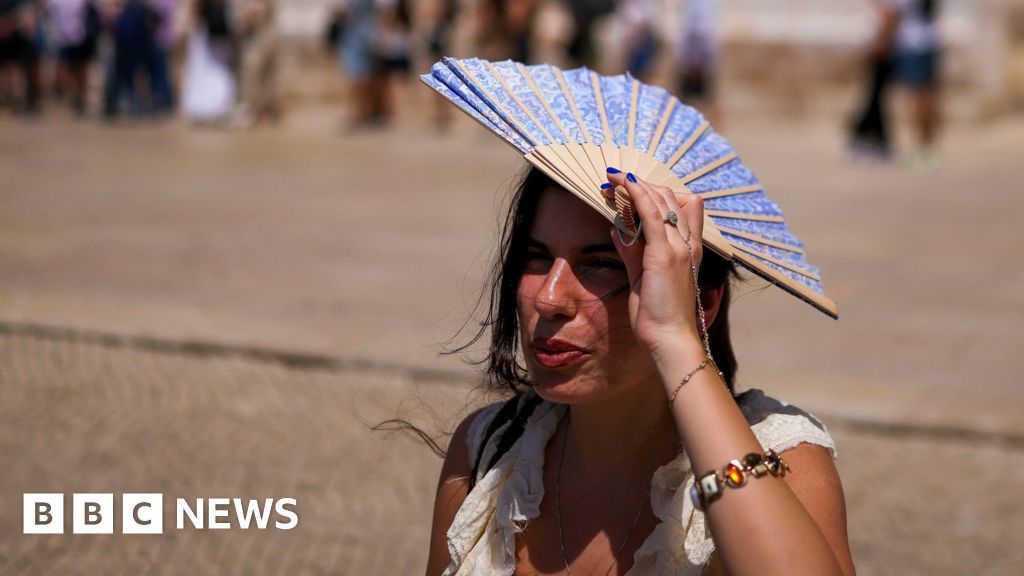
A brutal heatwave gripping western Europe shattered records on Wednesday after Portugal logged its hottest May day ever. The mercury in Mora, a town 100 miles northeast of Lisbon, peaked at 40.3°C, shattering the previous national May record of 38.5°C set in Pinhão in 2022. The extreme temperatures arrived a full month before typical summer peaks, catching meteorologists and emergency services off guard.
The sudden spike follows days of unseasonably warm air streaming north from North Africa, supercharged by a stationary high-pressure system parked over the Iberian Peninsula. Portugal’s national weather service, IPMA, issued red alerts for 18 districts, warning of “extreme risk” from heatstroke and dehydration. Rural firefighters in the Alentejo region reported multiple ignition points, though no major blazes had been confirmed as of Wednesday evening.
Key Points
- ✅ Portugal’s all-time May high shattered by 1.8°C
- ⚡ Red alerts issued across 18 districts
- 💡 Wildfire risks rising with tinder-dry vegetation
Across the border in Spain, temperatures in Andalusia approached 39°C, while southern France saw unofficial readings above 37°C—both well above seasonal norms. The European Centre for Medium-Range Weather Forecasts (ECMWF) warned the heatwave could linger into next week, with a 70% chance of record-breaking conditions persisting in central Portugal and Galicia. Health authorities in Lisbon reported a 20% surge in heat-related emergency calls within 24 hours, primarily among elderly residents and outdoor laborers.
| Country | Peak Temperature | Alert Level |
|---|---|---|
| Portugal | 40.3°C (Mora) | Red |
| Spain | 38.9°C (Córdoba) | Orange |
| France | 37.3°C (Montpellier) | Yellow |
Climate scientists linked the early-season inferno to a broader pattern of accelerating summer extremes across the continent. Last year’s deadly heatwaves, which killed an estimated 60,000 across Europe, set the stage for 2024’s precocious surge. “We’re seeing a clear fingerprint of climate change,” said Dr. Sofia Reis, a climatologist at the University of Lisbon. “The frequency and intensity of these events are outpacing even the most pessimistic models from a decade ago.”
📋 By The Numbers
- 60,000 — Estimated deaths from Europe’s 2023 heatwaves
- 20% — Increase in Lisbon’s heat-related ER visits since Tuesday
Tourists in Lisbon’s Baixa district responded with a mix of alarm and dark humor, snapping photos of sidewalk thermometers bursting past 40°C. “I planned for mild weather, not a furnace,” said Maria Chen, a visitor from Singapore. “The locals keep saying this is just the beginning.” Local authorities have opened 24-hour cooling centers in municipal libraries and metro stations, but concerns persist over homeless populations and migrant agricultural workers sleeping in unshaded fields.
💡 Pro Tip
If temperatures exceed 35°C, avoid outdoor activity between 11 a.m. and 4 p.m. Drink water before you feel thirsty, and check on elderly neighbors—heat exhaustion can escalate silently in just 30 minutes.
Portugal’s government has convened an emergency cabinet meeting for Thursday, with plans to deploy water tankers to drought-stricken regions and activate military firefighting units. But with reservoirs in the Alentejo at 15% capacity and winds forecast to gust at 40 kph, the risk of uncontrollable wildfires looms large. “This isn’t just a weather event,” said Prime Minister Luís Montenegro. “It’s a national crisis unfolding in real time.”