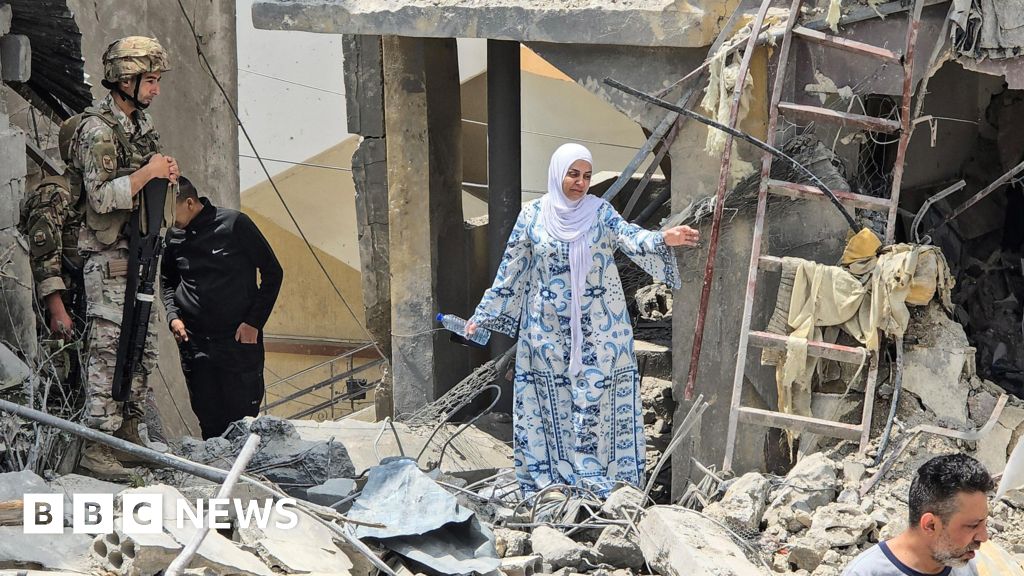
The Israeli military confirmed early Friday it had launched air strikes targeting Hezbollah positions in Tyre, a historic coastal city in southern Lebanon. Hours before the strikes, Israel’s military spokesperson issued an evacuation order for the entire city, warning residents to relocate north of the Litani River. The move marks a significant escalation in the ongoing conflict between Israel and Hezbollah, which has intensified over the past six months.
Hezbollah, the Iran-backed militant group, has operated from southern Lebanon for decades, using the region as a launchpad for attacks against Israel. The latest strikes targeted a series of buildings in Tyre’s southern districts, including residential areas near the port. Local officials reported at least three explosions in rapid succession, followed by emergency sirens and panicked crowds fleeing toward safer zones. The Israeli military stated the strikes were precision operations aimed at disrupting Hezbollah’s command structure and weapons storage facilities.
💡 Pro Tip
Residents in conflict zones should maintain emergency kits with food, water, and medical supplies for at least 72 hours, as evacuation orders often provide minimal notice.
Lebanon’s caretaker Prime Minister Najib Mikati condemned the strikes as a “dangerous escalation” and called for an emergency session of the United Nations Security Council. Mikati’s statement emphasized Lebanon’s neutrality in the conflict, despite Hezbollah’s deep involvement. The strikes come just days after Hezbollah launched a barrage of rockets into northern Israel, injuring six civilians and damaging infrastructure. Israel retaliated with artillery fire and airstrikes, further destabilizing the already fragile border region.
| Impact Zone | Casualties (Reported) | Infrastructure Damage |
|---|---|---|
| Tyre Southern Districts | 0 immediate deaths, 12 injured | 3 buildings destroyed, 8 damaged |
| Northern Israel | 6 civilians injured | 1 school, 2 homes damaged |
International observers warn that the escalation risks drawing in broader regional actors. The U.S., France, and Germany have all issued statements urging restraint, while Iran reiterated its support for Hezbollah through its foreign ministry spokesperson. The situation remains fluid, with Hezbollah yet to respond directly to the Israeli strikes. Analysts suggest the group may delay retaliation to avoid further provocation, but the risk of a larger confrontation looms large.
📋 By The Numbers
- 6 months — Duration of intensified cross-border clashes
- 72 hours — Evacuation deadline for Tyre residents
- 6 civilians — Injured in northern Israel during Hezbollah rocket attacks
The evacuation order for Tyre has triggered a humanitarian crisis, with thousands of residents scrambling to find shelter in overcrowded facilities north of the Litani River. Aid organizations report shortages of food, water, and medical supplies, exacerbated by Lebanon’s economic collapse. The United Nations High Commissioner for Refugees (UNHCR) has called for urgent international aid, estimating that at least 5,000 people have already fled Tyre in the past 24 hours. Local NGOs are coordinating with the Lebanese Red Cross to set up temporary shelters, but the scale of the displacement threatens to overwhelm existing resources.
Key Points
- ✅ Israel launched air strikes on Hezbollah targets in Tyre, southern Lebanon
- ⚡ Evacuation order issued for 23,000 residents within 72 hours
- 💡 Escalation follows six months of intensified cross-border clashes
Diplomatic efforts to de-escalate the crisis have so far yielded no breakthroughs. Egypt and Qatar, which have mediated previous conflicts between Israel and Hezbollah, are reportedly in talks with both sides. However, the window for diplomacy appears narrow as military operations on the ground continue. The U.S. State Department has dispatched a special envoy to the region to assess the situation and explore avenues for dialogue. Meanwhile, Hezbollah’s leader Hassan Nasrallah is expected to address the group’s supporters in a televised speech later Friday, which could signal the next phase of the confrontation.
Timeline of Recent Escalations
- October 7, 2023 — Hezbollah launches rockets into Israel in solidarity with Hamas during the October 7 attacks
- January 2024 — Israel conducts precision strikes on Hezbollah command centers in southern Lebanon
- March 2024 — Cross-border exchanges intensify, resulting in civilian casualties on both sides
- May 2024 — Lebanon’s government calls for international intervention to prevent further escalation
- June 14, 2024 — Israel issues evacuation order for Tyre, followed by air strikes
The strikes on Tyre underscore the growing volatility of Lebanon’s southern border, a region already grappling with political instability and economic collapse. The Lebanese Armed Forces (LAF) have remained largely sidelined in the conflict, avoiding direct confrontation with either Israel or Hezbollah. Analysts suggest this restraint may not last if the crisis deepens. For now, the focus remains on the humanitarian fallout, with international aid groups warning of a potential refugee surge if the violence persists. The coming days will determine whether the latest strikes push the region toward a broader war or open a fragile pathway to de-escalation.
- 📊 Hezbollah’s arsenal includes an estimated 150,000 rockets and missiles
- 🔍 Israel’s Iron Dome intercepted 90% of incoming rockets during the May escalation
- ⚠️ Lebanon’s economy contracted by 2.5% in 2023, exacerbating humanitarian strain