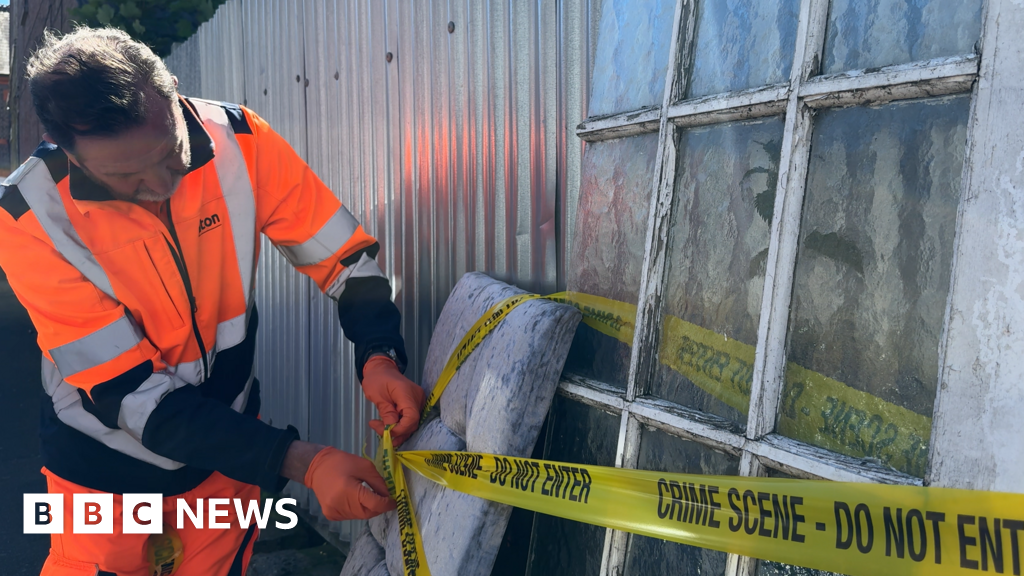
Luton Council has declared war on illegal dumping by treating fly-tipping sites like crime scenes, complete with yellow tape and forensic searches for evidence. Since September 2024, enforcement officers have sealed off dumping grounds in the town, leaving waste untouched for three days to gather clues such as delivery labels, receipts, or identifiable waste items that could lead to prosecutions.
Naveed Shakoor, a lifelong resident of a Dallow Road terrace, said the problem has turned his neighborhood into a health hazard. "There are syringes, dead rats, and mice everywhere," he said. "It feels like leaving your back door open. You don’t know what could come into your house." Shakoor, a father of two, described the constant cleanup as a "mental drain" amid efforts to provide for his family.
Key Points
- ✅ Luton Council treats fly-tipping sites as crime scenes, leaving waste for three days to gather evidence
- ⚡ Enforcement officers search for clues like delivery labels, receipts, or identifiable waste to trace dumpers
- 💡 The approach has cut fly-tipping incidents in the town by 19% since 2024
James Taylor, Luton Council’s outgoing Labour portfolio holder for regeneration and inclusive growth, said the traditional cleanup-only approach was failing. "We were picking up rubbish off the street, and people treated it like a free service," he said. "Some officers said, ‘We’re doing the same thing over and over but getting the same results. Let’s try something different.’" The council now uses CCTV in hotspot areas and has increased fines to £5,000 for offenders who refuse to pay fixed penalty notices.
| Measure | Before 2024 | 2025-26 |
|---|---|---|
| Fixed penalty notices issued | 90 | 200 |
| Fly-tipping collections | 11,639 | 9,352 |
| Maximum fine | £400 | £5,000 |
Nationally, fly-tipping has surged, with England recording 1.26 million incidents in 2024-25—a 9% increase from the previous year. Most involved household waste, often equivalent to a small van load. The Department for Environment, Food and Rural Affairs (Defra) has warned of the wider consequences, including public health risks, wildlife damage, and significant clean-up costs for councils and landowners.
💡 Pro Tip
Keep all waste disposal receipts and delivery notes for at least six months. If you suspect illegal dumping near your property, photograph the waste and its location before reporting it to your local council’s enforcement team.
Taylor cited housing pressures and transient populations as contributing factors. "We’re a constrained town with high housing costs. We’ve seen an increase in HMOs, and when people are more transient, they treat the area with less respect," he said. Illegal waste operators dumping rubbish for profit and confusion over legal responsibilities also play a role.
The council’s crackdown mirrors efforts in other towns. In Newham, east London, a trial with Keep Britain Tidy saw fly-tipping drop by up to 73% at targeted sites when crime scene tape was used. Dr. Anna Scott, of Keep Britain Tidy, said the approach challenges the perception that fly-tipping is low-risk. "By leaving rubbish visible and marking it as under investigation, councils signal enforcement activity and increase the perceived likelihood of being caught," she said. However, she emphasized it’s not a "silver bullet" and works best alongside broader enforcement and public awareness campaigns.
📋 By The Numbers
- 19% — Reduction in Luton’s fly-tipping incidents since the crackdown began
- 73% — Maximum drop in fly-tipping at Newham trial sites using crime scene tape
- £5,000 — Maximum fine for repeat offenders in Luton
Residents like Laura Haydon, who lives near a sealed-off dumping site, said the tactic has made a difference. "I’ve seen tape go across with cones, looking like someone’s been murdered here," she said. "It’s not—it’s just a mattress. But at least now, people might think twice."
The government has also taken notice, with ministers announcing tougher national enforcement measures as part of its Waste Crime Action Plan. Proposals include targeting drivers and vehicles involved in fly-tipping, aiming to disrupt illegal waste operators who profit from dumping. Luton’s approach, however, shows that local innovation—paired with visibility and consequences—can yield results even in the face of a stubborn national problem.