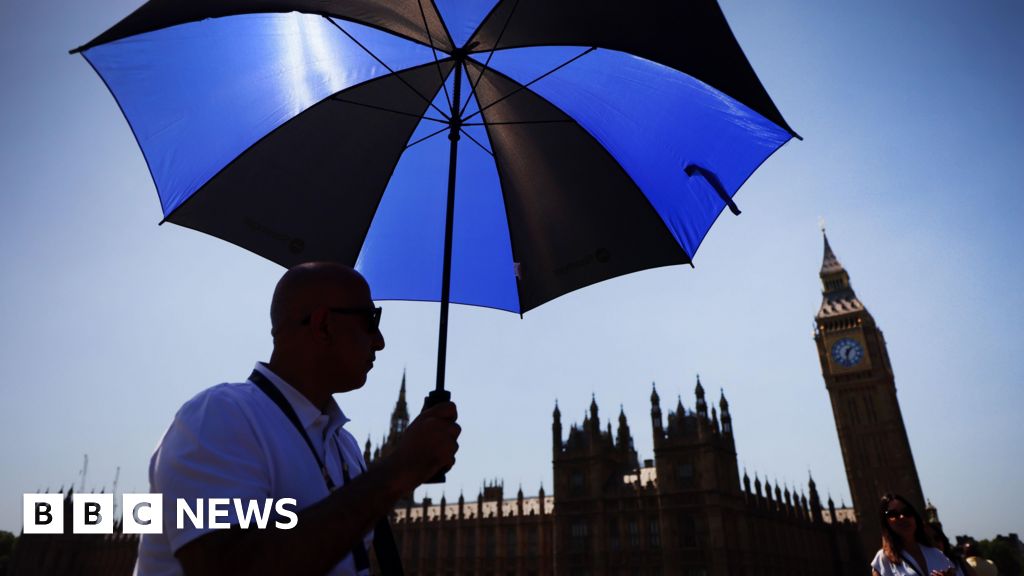
The UK is on track to shatter its May heat record for the second time in seven days, with forecasters predicting temperatures could reach 35°C in southern and eastern England by Tuesday. The Met Office issued an amber warning for extreme heat, citing “unprecedented” conditions that could trigger wildfires, strain water supplies, and pose severe health risks to vulnerable groups. Schools in Essex and Kent have already announced partial closures on Tuesday, while emergency services are on standby.
The rapid escalation follows a weekend where temperatures in London peaked at 30°C, making this the earliest sustained heatwave in England since 1992. Climatologists attribute the anomaly to a high-pressure system parked over the North Sea, funnelling hot air from continental Europe. The Met Office’s four-day forecast shows no relief until Friday, when winds from the North Atlantic may bring cooler conditions.
Key Points
- ⚠️ First May heatwave to exceed 30°C in 32 years
- 🔥 Wildfire risk classified as “very high” in Surrey and Hampshire
- 🚨 NHS England activates heatwave emergency protocols
Public health officials have urged residents to avoid outdoor activities between 11 a.m. and 4 p.m., stay hydrated, and check on elderly neighbors. The Royal National Lifeboat Institution has suspended all water rescue training due to heat-induced fatigue risks among crews. Meanwhile, water companies Thames Water and Affinity Water have imposed temporary hosepipe bans in parts of the Southeast, citing reservoir levels 18% below seasonal averages.
| Region | Tuesday Peak (°C) | Alert Level |
|---|---|---|
| London | 34 | Amber |
| Essex | 35 | Red |
| Kent | 33 | Amber |
| Surrey | 34 | Amber |
The UK’s previous May record was set in May 1990 when temperatures hit 32.8°C in London and Gravesend. This year’s heatwave has already surpassed that mark on Saturday, when Heathrow recorded 32.9°C, and again on Sunday at 33.1°C in Cambridge. The Met Office’s long-range models suggest these temperatures are part of a broader trend, with May 2024 on track to be the warmest on record for England.
📋 By The Numbers
- 35°C — Highest May temperature projected for Tuesday
- 18% — Current water reservoir deficit in Southeast England
- 32 years — Since England last saw a May heatwave this intense
Farmers in East Anglia report crops wilting under the relentless sun, while vineyard owners in Sussex fear a repeat of last year’s heat-damaged grape harvest. The National Farmers’ Union has called for immediate government intervention to mitigate losses. In urban areas, the heat is exacerbating air quality issues, with London’s nitrogen dioxide levels already exceeding EU safety thresholds. Transport for London has advised commuters to expect delays on the Tube due to track buckling from extreme temperatures.
💡 Pro Tip
Use damp towels on windows to reduce indoor temperatures by up to 5°C without relying on energy-intensive air conditioning.
The Met Office’s Dr. Mark McCarthy confirmed the extreme heat is part of a “clear warming signal” linked to climate change. “While individual heatwaves can occur naturally, the frequency and intensity of these events are increasing,” he said. The World Meteorological Organization has echoed these concerns, warning that Europe is warming at twice the global average rate. With no sign of a reprieve until the weekend, authorities are urging businesses and households to prepare for a prolonged period of extreme weather.
- 🌡️ England’s average May temperature has risen 1.2°C since 1960, accelerating in the last decade
- 🚒 Firefighters in Hampshire report a 40% surge in emergency callouts since Saturday
- ☀️ Solar power generation hit a record 10.5 GW on Sunday, covering 30% of UK demand
As the heatwave grips the nation, climate scientists warn this may no longer be an exception but a new norm. The UK’s record books are being rewritten, and the country’s infrastructure is struggling to keep pace. With Tuesday’s forecast still uncertain, one thing is clear: this is not just another hot spell—it’s a climate event demanding urgent attention.