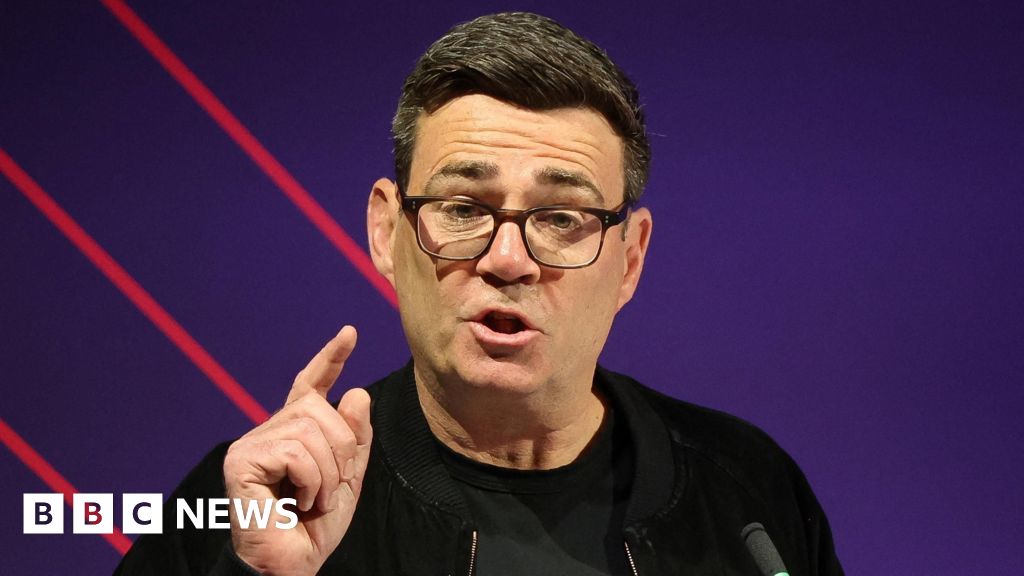
Greater Manchester Mayor Andy Burnham escalated a public feud with former Prime Minister Tony Blair on Tuesday, accusing him of being “out of touch” with the daily realities facing working-class communities across northern England.
Speaking at a press conference in Manchester, Burnham said Blair’s 1997–2007 Labour governments prioritized London-centric growth while ignoring the erosion of industrial bases in northern cities like Liverpool, Sheffield, and Newcastle. “Tony Blair doesn’t understand what’s going on in people’s lives,” Burnham told reporters. “He sees the economy through a City of London prism and misses the collapse of our towns and high streets.”
Key Points
- ⚡ Burnham claims Blair’s policies deepened regional inequality
- ✅ Calls for devolution of economic powers to northern city regions
- 💡 Accuses Blair of prioritizing London’s financial sector over local economies
Blair, who remains Labour’s most influential figure abroad, fired back within hours, dismissing Burnham’s critique as “a crude caricature of the 1997–2007 government.” In a statement issued via his office, Blair defended Labour’s record on reducing child poverty and boosting employment, insisting that “no government in modern history did more to lift people out of hardship.”
| Claim | Burnham’s Argument | Blair’s Response |
|---|---|---|
| Regional inequality | Policies favored London and the Southeast | National growth benefited all regions |
| Devolution | Called for stronger city-region control | Centralized governance ensured efficiency |
The spat has laid bare a growing divide within Labour over its identity and strategy. Burnham, a potential leadership contender, has positioned himself as the champion of northern Labour voters, arguing that economic devolution is the only way to reverse decades of underinvestment. His allies point to Greater Manchester’s record of attracting private investment and improving public services as evidence that local control works.
💡 Pro Tip
Local leaders pushing for devolution should focus on tangible results like transport upgrades and skills training, not just political slogans.
Blair’s supporters counter that Burnham’s approach risks fragmenting national policy and diluting Labour’s ability to address inequality through unified programmes. They point to Labour’s 2000–2010 Sure Start centres and tax credits as evidence of effective national interventions that reduced inequality across all regions.
📋 By The Numbers
- 12% — Rise in child poverty in the North West between 2003 and 2008
- 4.2% — Annual growth rate in London’s GVA during Blair’s tenure vs. 2.8% in the North West
The clash comes ahead of Labour’s internal review into party policy, due to be published next month. Insiders say the document will address calls for greater devolution but is likely to stop short of endorsing full fiscal autonomy for city regions. Burnham has vowed to push the issue regardless, warning that without change, Labour risks losing its traditional northern heartlands to smaller parties or abstentions.
The spat also underscores the tension between Labour’s metropolitan elite and its working-class base—one that could define the party’s direction for years. With the next general election just two years away, the row over inequality and devolution is no longer just an internal debate. It’s a fight for the soul of the Labour Party.