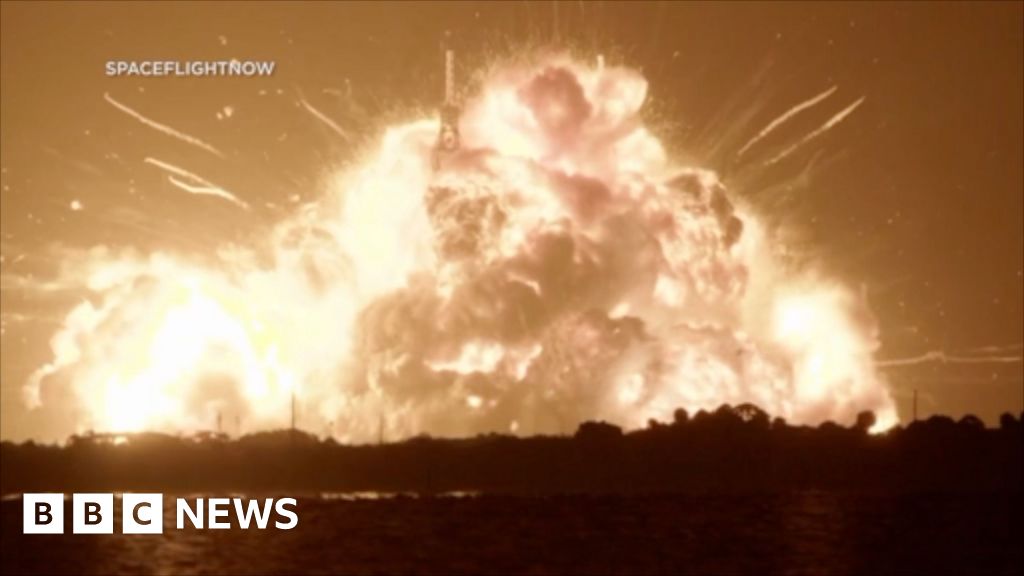
A 380-foot New Glenn rocket burst into flames on Launch Complex 36 at Cape Canaveral Space Force Station on Thursday at 8:37 p.m., sending a fireball visible for miles across Brevard County. All test personnel had been evacuated from the pad two hours earlier, and Blue Origin confirmed in a terse statement that "all personnel have been accounted for."
The rocket, designed to carry up to 45 metric tons to low Earth orbit, was undergoing a routine static fire to validate its BE-4 engines—propulsion units also slated for use on United Launch Alliance’s Vulcan rocket. The anomaly occurred 12 seconds into a planned 20-second burn, according to a source familiar with the incident. Video captured by a local photographer showed the vehicle engulfed in a blinding inferno within seconds, with debris scattering across the pad.
Key Points
- ⏱️ Explosion occurred at 8:37 p.m. during hotfire test
- 🚀 New Glenn was slated for first orbital flight in 2025
- ⚠️ BE-4 engines also power ULA’s Vulcan rocket
Blue Origin has not disclosed the cause but said in a statement that teams are "mobilizing to investigate" with support from the U.S. Space Force and Federal Aviation Administration. The company’s last public update came at 10:02 p.m., promising further updates as they become available. The incident follows a string of delays for the New Glenn program, including supply chain issues and engine qualification hurdles.
📋 By The Numbers
- 380 feet — Height of the New Glenn rocket
- 45 metric tons — Payload capacity to low Earth orbit
- 12 seconds — Duration before explosion during hotfire
- 2025 — Previously announced target for first orbital flight
Industry analysts say the failure could delay the rocket’s commercial debut by at least six months, impacting payload contracts already signed with NASA and commercial customers. The New Glenn was positioned to compete directly with SpaceX’s Falcon Heavy and Starship, as well as ULA’s Vulcan. Its modular design, with a reusable first stage, aimed to cut launch costs by 50% compared to legacy systems.
💡 Pro Tip
For rocket developers, a hotfire test is a critical milestone—not a final check. Failures at this stage are rare but not unprecedented; they often reveal latent engine or fuel system flaws that ground vehicles before they even roll to the pad.
While no injuries were reported, the explosion highlights growing scrutiny over private spaceflight safety. The FAA’s Office of Commercial Space Transportation has opened an investigation under its incident reporting protocol. Cape Canaveral Space Force Station authorities restricted air and sea access overnight, reopening the area by dawn after debris clearance began.
| Aspect | New Glenn | Falcon Heavy |
|---|---|---|
| First flight | Delayed (TBD) | 2018 |
| Payload to LEO | 45 metric tons | 63.8 metric tons |
| Reusability | First stage only | Both stages |
| Engine type | BE-4 (methalox) | Merlin (kerosene) |
Blue Origin’s founder, Jeff Bezos, has not publicly commented since the incident. The company’s next communication is expected within 48 hours, according to a company spokesperson. Meanwhile, space industry watchers are parsing whether this setback will accelerate or stall the commercial space race—just months after NASA’s Artemis II splashdown and ahead of a crowded 2025 launch calendar.