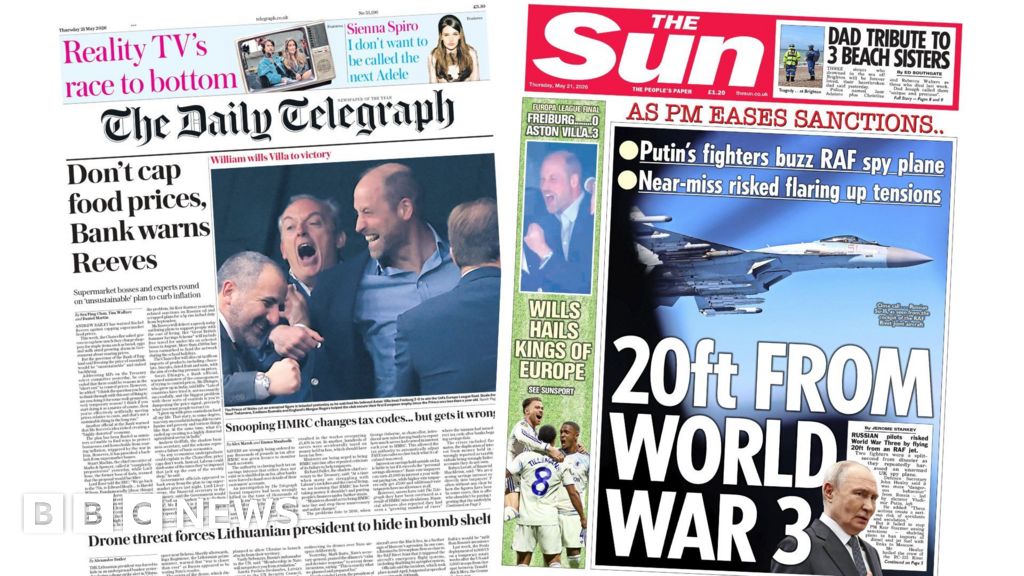
Bank of England Governor Andrew Bailey has delivered a scathing assessment of the government’s plan to cap food prices, warning MPs on Tuesday that such a move would create an "unsustainable" and "highly distorted" economy by artificially suppressing prices below cost levels.
Bailey, addressing the Treasury Select Committee, argued that price controls would "risk backfiring spectacularly," forcing retailers to cut production or exit the market entirely. His remarks came as supermarket chiefs, including Marks & Spencer CEO Stuart Rose, publicly rejected the idea, warning that staple items like milk, bread, and bananas were already being sold at a loss.
Key Points
- ⚠️ Bailey calls food price caps "unsustainable" and warns of economic distortion
- 📉 Supermarkets confirm losses on essential items under current pricing
- 🔄 Reeves abandons plan after fierce industry pushback
Chancellor Rachel Reeves confirmed the government had shelved the proposal within 48 hours of floating it. Speaking to reporters outside Downing Street, she said the policy had been misinterpreted and was never intended as a permanent solution. "We need to work with retailers, not against them," she stated. The volte-face emerged just days after Treasury officials suggested capping prices on over 100 staple goods to ease the cost-of-living squeeze.
| Proposal | Government Rationale | Industry Response |
|---|---|---|
| Food price caps | Reduce inflationary pressure on low-income households | Unsustainable losses for retailers; risk of supply shortages |
| Tariff cuts on 100+ items | Lower import costs for essential goods | Welcomed by consumer groups but requires supermarket cooperation |
Retailers had warned that price caps would force them to ration stock or remove loss-making products from shelves. Tesco, Sainsbury’s, and Asda all declined to comment on the record, but industry insiders confirmed that profit margins on basic foods were already razor-thin. The British Retail Consortium’s director general, Helen Dickinson, said: "Artificial price controls send the wrong signal to suppliers and risk destabilising the entire food supply chain."
📋 By The Numbers
- 14% — Inflation rate for food prices in the UK over the past year
- 3.2 million — Households estimated to skip meals due to cost, per food bank data
- 2 days — Time between proposal and abandonment
The sudden reversal underscores the fragility of Labour’s economic strategy just months into its first term. Reeves had framed the price caps as a temporary measure to "bridge the gap" until inflation eased, but the political and practical hurdles proved insurmountable. Shadow Chancellor Jeremy Hunt accused the government of "policy chaos," while Reform UK’s Nigel Farage mocked the plan as "another Brussels-style folly."
💡 Pro Tip
Retailers suggest the government focus on targeted support—such as VAT reductions on essentials—rather than blunt price controls, which distort market signals and can worsen shortages.
Meanwhile, the political fallout extended beyond Westminster. Andy Burnham, Labour’s candidate in the Makerfield by-election, distanced himself from the proposal, telling local media that while he supported measures to ease living costs, he was "not convinced" price caps were the answer. His opponent, Reform UK’s Robert Kenyon, seized on the controversy, claiming it proved Labour’s "out-of-touch elitism."
- 🔍 Bailey’s intervention highlights the Bank of England’s growing unease over government interference in markets
- ⚠️ Supermarkets warn that price caps could lead to reduced product variety and longer-term price hikes
- 📊 Food inflation remains 3% above the Bank of England’s 2% target, prolonging pressure on household budgets
The episode also exposed tensions within Labour’s ranks. Sources close to the Treasury said Reeves had consulted widely but failed to anticipate the ferocity of industry resistance. One Whitehall insider described the plan as "dead on arrival" from the outset, noting that civil servants had privately warned against it for weeks.
Analysts now expect the government to pivot toward fiscal incentives for retailers, including tax breaks for stocking affordable essentials or subsidised storage costs for perishable goods. The Bank of England, for its part, has signalled it will not adjust interest rates to compensate for any inflationary effects of the abandoned policy—leaving the onus on fiscal measures to ease pressure on consumers.
- Immediate — Government to launch a summit with supermarkets to discuss voluntary price reductions
- Short-term — Temporary tariff cuts on 100+ staple goods take effect in August
- Long-term — Treasury to explore long-term solutions, including supply chain reforms and agricultural subsidies