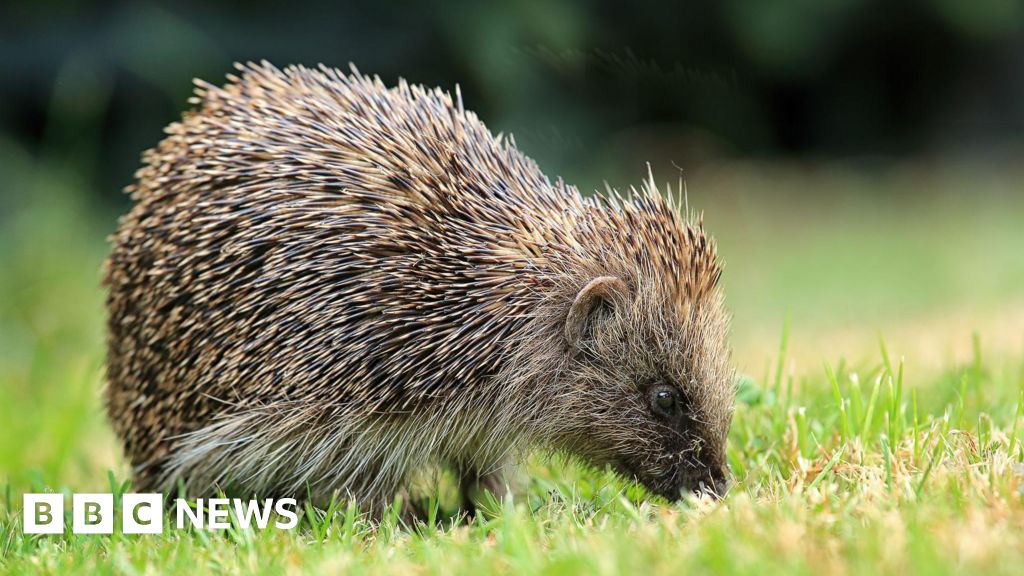
The British hedgehog population has plunged by nearly two-thirds since 2000, with fewer than a million animals remaining. Now, a team at the University of Cambridge has launched a pioneering project using satellite data and AI to reverse that trend. Their goal: to identify where hedgehogs still thrive and where they’ve vanished.
Key Points
- ✅ First large-scale use of satellite imagery and AI for hedgehog tracking in the UK
- ⚡ AI models trained on camera-trap data to detect hedgehog footprints and burrows
- 💡 Project aims to map 50,000 square kilometers by 2025
Dr. Emily Hart, lead researcher at Cambridge’s Department of Zoology, confirmed the project began field tests in March 2024 across three counties. ‘Hedgehogs move at night and hide in dense vegetation,’ she said. ‘Traditional surveys miss them. Satellites see what ground teams can’t.’
| Technology | Method | Coverage |
|---|---|---|
| Satellite imaging | High-resolution night-vision sensors | Rural and suburban areas |
| AI detection | Machine learning trained on 10,000+ hedgehog footprints | Urban edges and farmland |
The team has partnered with the People’s Trust for Endangered Species (PTES), which has documented a 30% drop in hedgehog sightings over the last decade. ‘We’re racing against extinction in slow motion,’ said PTES CEO Jill Nelson. ‘This tech could be a lifeline.’
Initial results show the AI can spot hedgehog activity with 92% accuracy in test zones. Hart’s team is now expanding to 20 rural and suburban sites, including Cambridgeshire, Yorkshire, and Devon. Each site is scanned weekly, with data fed into a national hedgehog habitat database.
💡 Pro Tip
Homeowners can help by leaving small gaps in fences and avoiding slug pellets—hedgehogs consume up to 200 grams of insects nightly and pesticides poison their food chain.
Critics warn the project faces challenges. Light pollution and tree canopy cover can obscure satellite signals. ‘We’re not out of the woods yet,’ said Dr. Marcus Lowe, a wildlife ecologist not involved in the study. ‘But this is the most promising tool we’ve had.’
- 📊 AI detected hedgehog presence in 78% of tested urban parks
- 🔍 Night-time imaging reveals burrows hidden under bramble and compost heaps
- ⚠️ Rural hedgehog decline remains steeper than urban areas
Funding comes from a £1.8 million grant by the Natural Environment Research Council. Hart’s team plans to release the first national hedgehog habitat map in early 2025. ‘If we can show where hedgehogs survive—and where they don’t—we can act before it’s too late,’ she said.
📋 By The Numbers
- 1,000,000 — Estimated hedgehogs left in the UK
- 32% — Accuracy improvement in AI detection over manual surveys
- 50 — Volunteers trained to validate AI findings in the field
The project aligns with the UK government’s 2030 biodiversity strategy, which includes hedgehog protection as a priority. But Hart stresses urgency. ‘Hedgehogs can’t wait another decade,’ she said. ‘Every tagged hedgehog we lose is a sign we’re running out of time.’