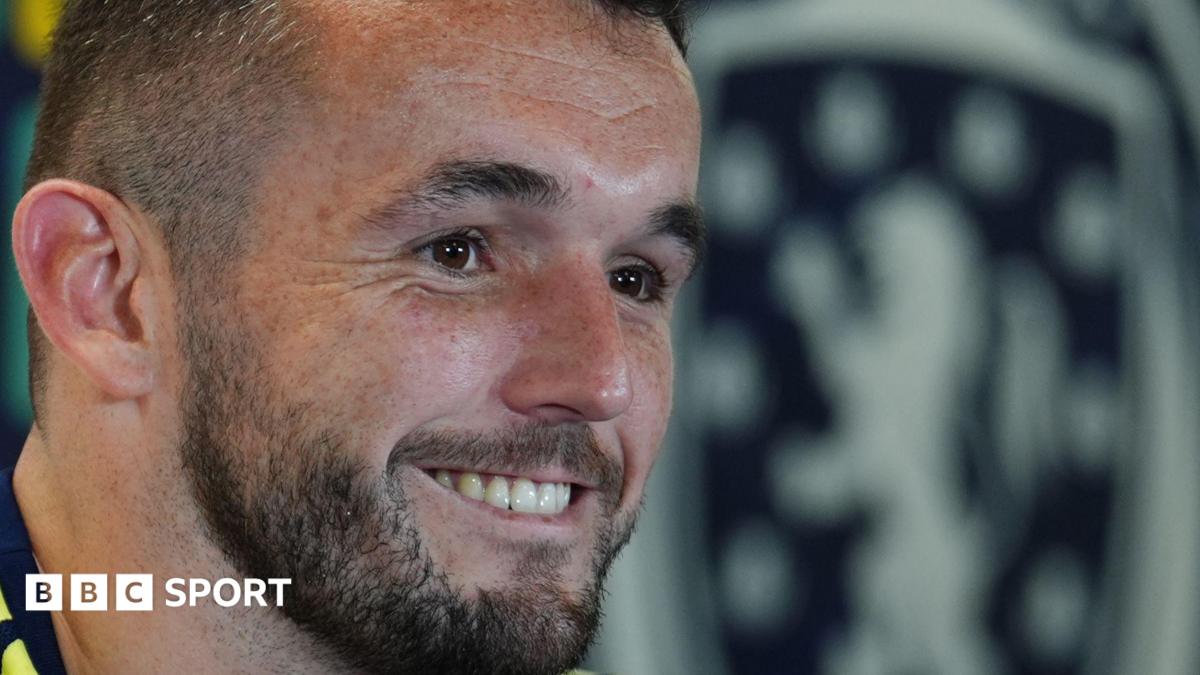
John McGinn stood between the flags of a Charlotte training pitch, his hands resting on his hips, and answered the noise—Norway’s fury over a scrapped reserve match—with a smile and a microphone. The Scotland captain didn’t flinch. “Seventy-five percent of this squad haven’t even seen it,” he said, gesturing to the Norwegian journalists who had stormed into the press zone hours before. “Our job is to look after Scotland. Norway’s job is to look after Norway.”
The Norwegian delegation had been sent to extract outrage, to force Steve Clarke to answer for a decision Clarke made to protect his squad. Instead, they met a man in peak form, a player whose name now adorns a 25-foot mural on a Clydebank tenement. “It’s a bit strange,” McGinn admitted, “but it filled me with pride.” He pointed to the building on Jake Anderson’s house, a monument to the journey from local lad to World Cup starter. “Hopefully it inspires kids from Clydebank to see one of their own on the world’s biggest stage.”
Key Points
- ✅ McGinn led Scotland’s response to Norway’s public criticism over a cancelled friendly
- ⚡ Clarke’s decision to pull players due to injury risks shielded Scotland’s World Cup preparations
- 💡 McGinn now fifth on Scotland’s all-time scoring chart with 20 goals
The mural isn’t the only tribute. A mural of Scott McTominay’s overhead kick in Denmark looms near Hampden, and Liverpool fans have immortalised Andy Robertson outside Anfield. For McGinn, the recognition is humbling but secondary. “I didn’t play at my best in the last two major tournaments,” he said. “In these competitions, you need your big players to come up with big moments.”
💡 Pro Tip
Avoid distraction before tournaments. McGinn learned the hard way after a schuhplattler dance at Euro 2022 backfired when Scotland underperformed. “I had belief,” he said. “But now I focus on the game, not the occasion.”
Two years ago in Garmisch-Partenkirchen, McGinn traded his boots for lederhosen and joined a Bavarian schuhplattler, Tyrolean hat bouncing on his head. The dance was meant to be playful, a nod to the hosts. When Scotland crashed out early, it felt like a misstep. “Do I regret it? Maybe,” he said. “But I’ve learned. The more big games you’re in, the more you adapt.”
📋 By The Numbers
- 3 — McGinn’s age the last time Scotland played in a World Cup
- 75% — Proportion of Scotland’s squad unaware of Norway’s criticism before McGinn addressed it
- 2 — Goals separating McGinn from Lawrie Reilly in Scotland’s all-time scoring list
Now, with Scotland’s World Cup opener against Germany looming, McGinn’s form is unquestionable. A Europa League winner with Aston Villa, a Champions League berth secured, and the captain’s armband held with quiet authority, he’s Scotland’s talisman. But it’s not just his club achievements that matter. It’s the message he’s passing to the next generation.
| Player | Age | McGinn’s Message |
|---|---|---|
| Tyler Fletcher | 19 | “If you get a chance to wear the jersey, keep it.” |
| Findlay Curtis | 19 | “It’s your moment. Own it.” |
| Ben Gannon-Doak | 20 | “Don’t waste it.” |
Decades ago, Stevie Thompson handed a young McGinn his St Mirren jersey and said, “It’s your shirt now. Keep it.” That moment defined a career. Now, McGinn is doing the same for the teenagers in Steve Clarke’s squad, players who might not start but who carry the weight of Scotland’s hopes. “They’ll get their chance,” he said. “And when they do, I want them to be ready.”
- 📊 McGinn has averaged a goal every 4.3 Scotland caps, a ratio that spikes in major tournaments
- 🔍 His leadership style blends defiance—like his response to Norway—and humility, seen in his mentorship of young players
- ⚠️ Scotland’s World Cup fate hinges on McGinn’s ability to turn moments into memories, something he’s failed to do in past tournaments
The road to Qatar—or wherever the World Cup is played—has been long enough. For McGinn, it’s time to dance for real. Not in a Bavarian hall, but on the world stage. And this time, the steps won’t be a misstep.
- First — McGinn’s leadership silences external noise and focuses on squad protection
- Second — His form is peak, with club success translating to international confidence
- Third — The next generation looks to him for guidance, not just goals