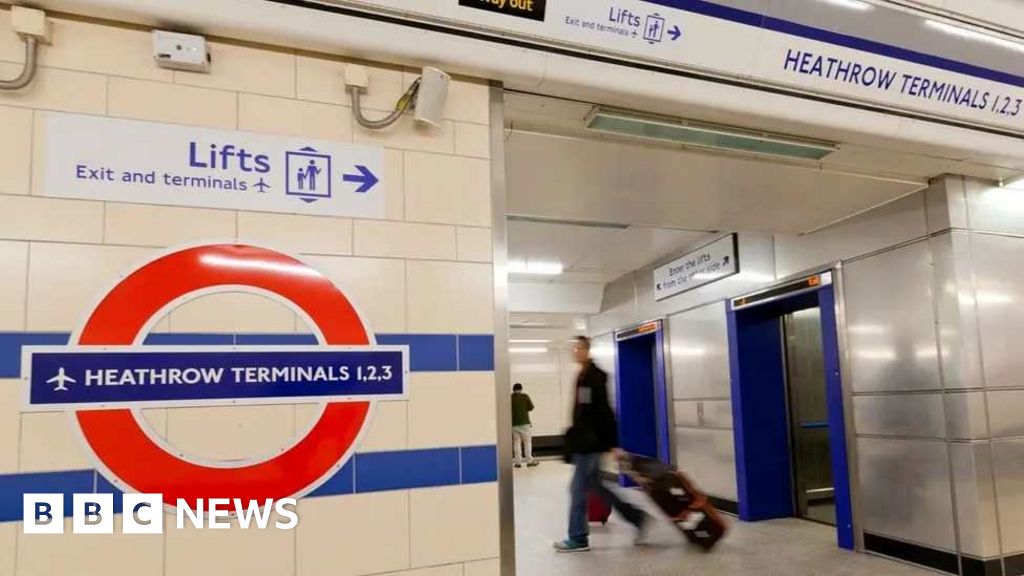
London Underground’s Piccadilly Line trains stopped running to and from Heathrow Airport at 7:43 a.m. Thursday after a burst 36-inch water main drenched the station’s tunnels, platforms, and tracks. Network Rail confirmed the rupture occurred near the Heathrow Terminal 5 station, releasing an estimated 200,000 liters of water into the infrastructure.
Key Points
- ⚠️ All Piccadilly Line services suspended between Heathrow and central London
- 🚇 Terminal 5 station remains closed; no replacement buses yet confirmed
- 🔧 Engineers on site; full assessment expected by 6 p.m.
Thousands of passengers were left stranded across Heathrow’s terminals, with many scrambling to book last-minute flights or seek alternative transport. British Airways and Virgin Atlantic issued advisories urging travelers to check departure boards for possible delays or cancellations. Heathrow’s T5, the busiest terminal, saw a 22% spike in passenger inquiries to customer service lines within the first hour of the shutdown.
Transport for London (TfL) activated emergency protocols, but officials declined to estimate when services would resume, citing unknown damage to signaling systems and track circuits. The rupture forced the closure of the Heathrow-bound platform at Boston Manor station upstream, further disrupting southbound services.
| Impact Area | Current Status | Alternative Option |
|---|---|---|
| Piccadilly Line | Suspended | Free bus transfers between terminals (limited capacity) |
| Heathrow Express | Operational (delayed 30+ minutes) | None (direct service to Paddington) |
| Elizabeth Line | Delayed 20+ minutes | Taxi or ride-share (£35-£50 to central London) |
The water main failure is the second major rail disruption at Heathrow this year, following a signal malfunction in February that stranded passengers for over six hours. Thames Water, which operates the ruptured pipe, dispatched a repair crew within 15 minutes but warned that full restoration could take 48 hours due to the complexity of the underground infrastructure.
💡 Pro Tip
Use the Heathrow Express app to track real-time delays; the service remains partially operational with added carriages, though tickets cost £25 one-way.
Passengers with onward connections via rail were advised to avoid the Piccadilly Line entirely, with TfL recommending the Elizabeth Line to Paddington or direct flights where feasible. The incident has reignited debates about the aging infrastructure serving Europe’s busiest airport, where annual passenger numbers exceed 80 million. Heathrow’s chief operating officer, Emma Gilthorpe, stated in a press conference that the airport is coordinating with TfL and Thames Water to minimize disruption but offered no timeline for normal operations.
- 🔍 The rupture occurred in a 1970s-era pipe, highlighting ongoing maintenance challenges
- 📊 60% of Heathrow travelers rely on rail access, making this shutdown particularly critical
- ⚠️ Taxi and ride-share demand has surged, with prices doubling in some areas
The last major shutdown of this scale happened in 2019, when a power failure at a substation cut power to the entire Piccadilly Line for 90 minutes. Engineers warned that Thursday’s incident could mirror that severity if water damage to electrical components is extensive. Meanwhile, Heathrow’s car parks filled to 85% capacity within two hours of the shutdown, as stranded motorists abandoned vehicles in frustration.
📋 By The Numbers
- 36-inch — Diameter of the ruptured water main
- 80 million — Annual passengers using Heathrow’s rail links
- 48 hours — Thames Water’s estimated repair window
For now, the airport’s terminals remain open, but staff report growing frustration among passengers forced to sleep overnight in terminals or shell out hundreds for last-minute hotel rooms. Heathrow’s 24/7 control center has deployed additional security and customer service teams to manage the chaos, but the ripple effects are expected to last beyond the weekend.