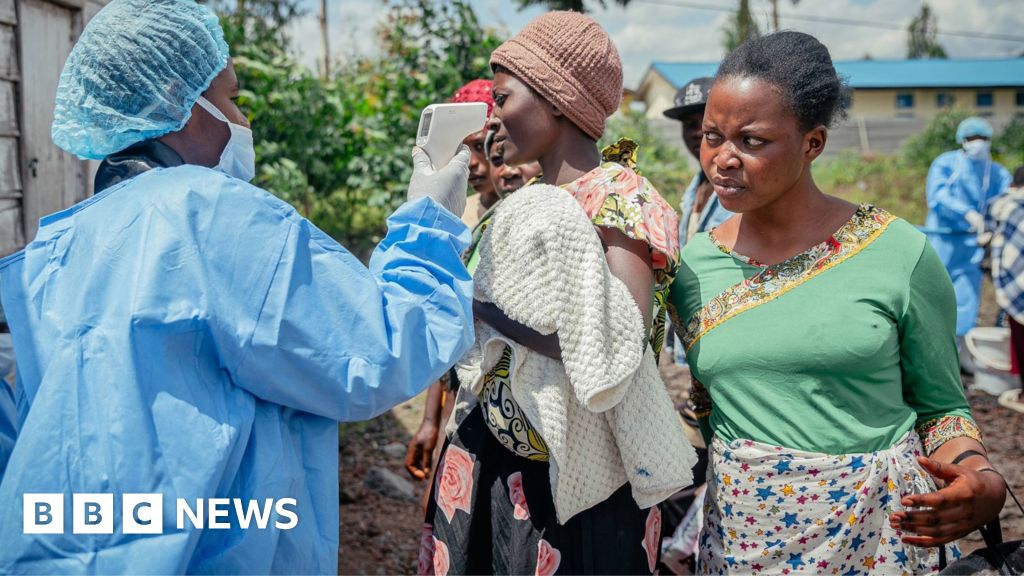
An Ebola outbreak in eastern Democratic Republic of Congo has spiraled into a full-blown emergency, with the World Health Organization declaring it a Public Health Emergency of International Concern on Saturday. The declaration came as confirmed cases surpassed 2,000, including 1,343 deaths, according to the latest WHO data from Beni, a city at the epicenter of the crisis. The surge marks the second-deadliest Ebola outbreak in history, trailing only the 2014-2016 West Africa epidemic that killed more than 11,000 people.
Médecins Sans Frontières, the international medical charity operating in the region, described the situation as "deeply alarming," citing unchecked transmission in areas ravaged by armed conflict and mass displacement. Dr. Maria Mashako, MSF’s emergency coordinator in Beni, reported that health workers are overwhelmed, with treatment centers struggling to isolate patients quickly enough to curb the spread. "The virus is moving faster than we can respond," Mashako said in a statement from Goma. "Entire communities are being cut off from care as roads become impassable due to clashes between armed groups."
📋 By The Numbers
- 2,020 cases — Confirmed since August 2018
- 1,343 deaths — Case fatality rate of 66.5%
- 47 treatment centers — Currently operational across North Kivu and Ituri provinces
- 65% of cases — Originating from Beni and Butembo hotspots
The WHO’s emergency declaration follows a spike in violence targeting health facilities and aid workers. In the past month alone, three Ebola treatment centers have been attacked, forcing temporary closures in Katwa and Butembo. The UN’s Under-Secretary-General for Peace Operations, Jean-Pierre Lacroix, confirmed that peacekeepers are now escorting medical convoys in high-risk zones, but the measure has not stemmed the outbreak’s momentum. "The combination of insecurity, mistrust in communities, and the sheer scale of the outbreak has created a perfect storm," Lacroix told reporters in Kinshasa.
Key Points
- ⚠️ WHO declares Ebola outbreak a global health emergency
- 💉 Over 2,000 cases confirmed with a 66.5% fatality rate
- 🛡️ Armed clashes and displacement hamper containment efforts
- 🏥 Treatment centers under attack, forcing temporary closures
Health officials warn that the true number of cases is likely higher, as underreporting persists in remote villages where access is limited by both geography and conflict. The virus has now spread to 22 of DR Congo’s 26 provinces, with isolated cases detected in neighboring Uganda and Rwanda, raising fears of regional spillover. Dr. Tedros Adhanom Ghebreyesus, WHO Director-General, called for an immediate surge in funding and personnel, noting that the current response is "severely under-resourced."
| Response Measure | Current Status | Funding Required |
|---|---|---|
| Vaccination Campaign | 161,000 people vaccinated | $50 million |
| Community Engagement | Limited due to mistrust | $20 million |
| Security Escorts | Deployed in 3 hotspots | $10 million |
Aid groups are also grappling with a wave of misinformation, including rumors that the virus is a bioweapon or a plot to destabilize the region. In Butembo, a mob attacked a health center last week, accusing workers of spreading the disease. "Distrust is our biggest enemy right now," said Dr. Jean-Jacques Muyembe, head of DR Congo’s Ebola response. "Without community buy-in, even the best vaccines and treatments will fail."
💡 Pro Tip
Local leaders must be embedded in response teams to rebuild trust. In past outbreaks, such as the 2018 Sierra Leone epidemic, involving traditional healers and religious figures reduced resistance to health measures by over 40%.
The crisis has drawn rare bipartisan concern in the U.S. Congress, where lawmakers are pushing for a $35 million emergency supplemental appropriation to support WHO and NGOs on the ground. Meanwhile, the European Union has pledged an additional €50 million, though humanitarian agencies say gaps remain in critical areas like cold chain logistics for vaccines and personal protective equipment. "We’re playing catch-up in a race against time," said David Miliband, CEO of the International Rescue Committee. "Every day without full funding is a day the virus gains ground."
- 🔍 Violence has directly led to 12% of treatment center closures
- 📊 Only 34% of suspected cases receive lab confirmation within 48 hours
- ⚠️ WHO warns that without urgent action, cases could triple by year-end
As international aid trickles in, the Congolese government has begun deploying the military to guard health facilities in North Kivu, a move critics argue could escalate tensions. The army’s involvement comes after a string of kidnappings of health workers, including a French nurse abducted near Oicha in June. The government insists the deployment is necessary to protect responders, but residents in Beni report increased harassment by soldiers. "We’re trapped between the virus and the guns," said a local trader who requested anonymity. "No one is safe."
The WHO’s emergency committee, which met Friday in Geneva, emphasized that the declaration is not a call to restrict travel or trade but a plea for solidarity. "This is not a signal to panic," said Dr. Tedros. "It is a signal to act." With the rainy season approaching, road access to remote villages will worsen, potentially isolating entire communities. The race to contain the outbreak has never been more urgent—or more perilous.