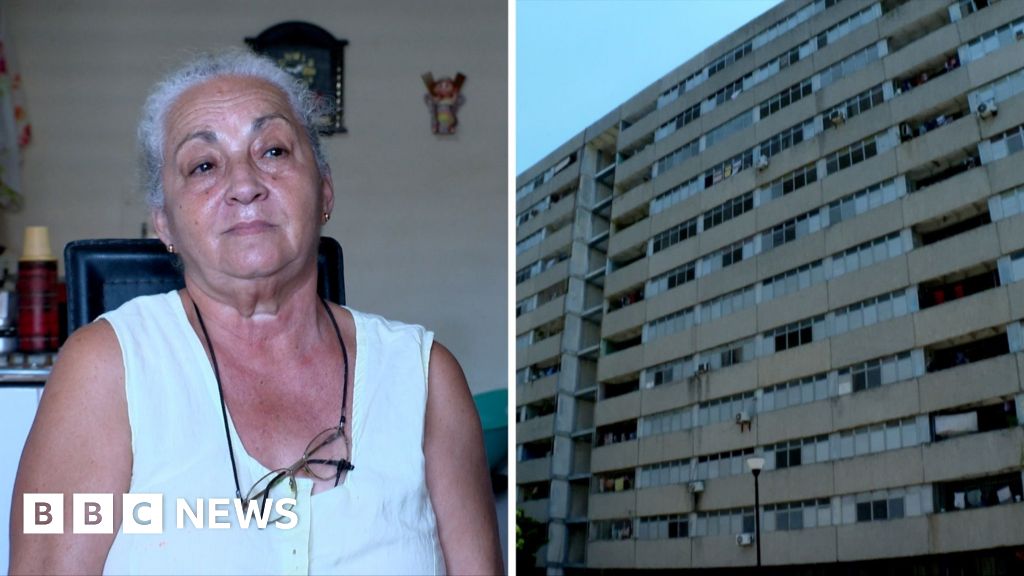
Havana’s 30-story Edificio Fénix, a Soviet-era high-rise in the heart of the capital, has become a symbol of Cuba’s crumbling energy grid. Residents report the building now averages 12-hour daily blackouts, with some units losing power for 18 consecutive hours during peak strain on the national grid. Ana Rosa Romero, 70, has lived on the 22nd floor for 23 years. She now cooks meals on a gas ring in the emergency stairwell, where the only natural light filters through dust-choked windows.
Fuel shortages triggered by the ongoing US blockade have paralyzed Cuba’s power plants, which rely on imported diesel and heavy crude. The government has diverted remaining supplies to hospitals and water pumps, leaving neighborhoods to fend for themselves. Engineers at the Antonio Guiteras thermoelectric plant in Matanzas confirmed fuel stocks at 12% capacity, down from 45% in March. “We’re burning whatever we can get,” said plant supervisor Javier Mena. “The turbines are screaming.”
Key Points
- ✅ Havana’s 30-story Edificio Fénix now averages 12-hour blackouts daily
- ⚡ Fuel stocks at Matanzas plant down to 12%, forcing rationing
- 💡 Residents cook in stairwells and study by torchlight
Protests have erupted in neighborhoods like Centro Habana, where residents block traffic with burning tires and shout slogans against the government’s energy policy. Police have responded with arrests and water cannons, but the unrest has spread to Santiago de Cuba and Holguín. On Wednesday, 47 demonstrators were detained after clashing with security forces outside a local power substation. State media blamed “counter-revolutionary elements” for the disturbances.
| Neighborhood | Average Outage | Recent Protests |
|---|---|---|
| Centro Habana | 14 hours | 3 protests this month |
| Santiago de Cuba | 10 hours | 2 protests this month |
| Holguín | 16 hours | 1 protest this month |
The National Assembly has approved an emergency decree allocating $4.2 million for road repairs but only $800,000 for generator upgrades in state institutions. Critics call the move a distraction from the real crisis: a lack of foreign currency to import fuel. “This is a bandage on a hemorrhage,” said economist Pavel Vidal. “The grid is collapsing, and no one is addressing the root cause.”
📋 By The Numbers
- 4.2 million USD — Allocated for road repairs, not generators
- 800,000 USD — Budget for generator upgrades in state buildings
- 47 — Protesters detained in Centro Habana on Wednesday
Residents have turned to extreme measures to cope. Families in Edificio Fénix now sleep on balconies during blackouts to escape the stifling heat inside apartments. Children study by the dim glow of phone flashlights, their parents fretting over plummeting grades. “My grandson used to top his class,” said Romero. “Now he struggles to read by candlelight.”
💡 Pro Tip
Keep a solar-powered lantern and a battery-powered fan charged at all times. Purchase non-perishable food that requires no cooking, such as canned beans and crackers, to avoid relying on gas rings or open flames.
Engineers warn the situation will worsen in 2026, when Cuba’s fuel supply agreements with Venezuela are set to expire. Without new contracts, the grid faces total collapse. “We’re in uncharted territory,” said Mena. “The plants are running on fumes. One more shock and the lights go out for good.”
- Fuel crisis deepens — Venezuela’s agreements expire in 2026, threatening Cuba’s last major oil supply.
- Grid strain increases — Hospitals and water pumps get priority, leaving neighborhoods in darkness for 12-18 hours daily.
- Social unrest spreads — Protests in Havana, Santiago de Cuba, and Holguín have led to arrests as frustration mounts.
For Romero and thousands like her, the blackouts are not just an inconvenience—they are a daily reminder of a system pushed to the brink. “We used to have light,” she said. “Now we have only questions.”