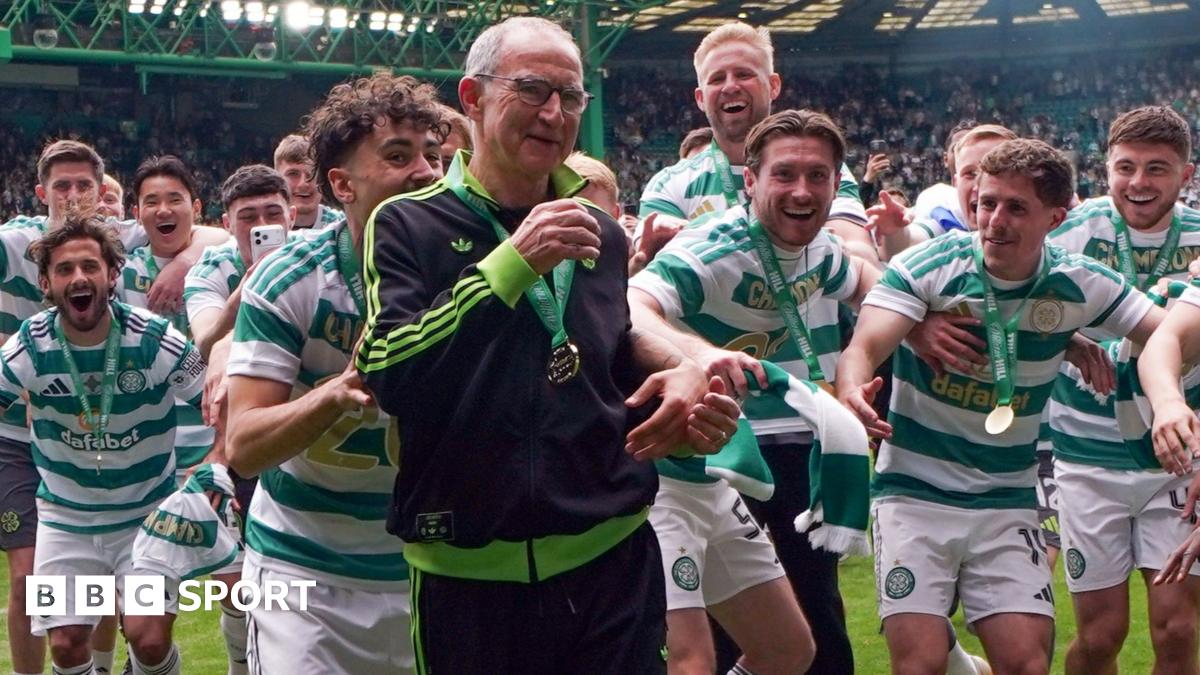
Martin O’Neill’s second coming at Celtic Park ended in fairytale fashion on Sunday, as his side snatched the Premiership title from Hearts with a 2-1 win in a breathless finale at Celtic Park. The victory, sealed in the 88th and 90th minutes, completed a seven-game winning streak and delivered a 10th league crown in 12 years for a club that had spent most of the season staring into the abyss.
The championship was anything but smooth. A 2-0 loss to Dundee United in March left Celtic seven points adrift of Hearts, and O’Neill’s blunt assessment—“We disappointed an awful lot of people today”—echoed the strain coursing through the club. Yet his call for “seven out of seven” on the road to the title became prophecy. Six wins followed, setting up a winner-takes-all showdown where only Celtic’s nerve and Hearts’ fragility could decide the destination.
📋 By The Numbers
- 19 wins — O’Neill’s tally in 23 Premiership games this season
- 73 goals — Celtic’s lowest league tally in 19 years
- 41 conceded — Highest total in 33 seasons
- 13 league games — Combined appearances by Carter-Vickers and Johnston
The triumph was built on resilience rather than romance. Hearts had led the table for 31 of the 38 rounds, but a late stumble handed the initiative back to Celtic, who had been chasing shadows since October. The title was secured not by flair, but by sheer force of will—a stark contrast to the fluent football that had once dazzled under Brendan Rodgers, now reduced to a distant memory.
- March 3: Celtic lose 2-0 to Dundee United, fall seven points behind Hearts.
- March 21: O’Neill’s interim appointment announced hours after predicting Hearts’ league win on radio.
- May 18: Late goals seal the title as Hearts crumble under the weight of their own pressure.
The season’s chaos extended far beyond the pitch. A humiliating Champions League exit to Kairat Almaty—two matches, zero goals—triggered a summer of recrimination. The board’s recruitment strategy, derided by Rodgers as “club signings” akin to a “Honda Civic,” triggered a public rupture. His resignation in October was met with a scathing statement from major shareholder Dermot Desmond, who accused Rodgers of fostering toxicity and directing abuse at executives and their families.
💡 Pro Tip
When rebuilding a fractured dressing room, prioritise psychological audits over tactical tweaks. O’Neill’s success this season hinged on restoring belief before refining strategy.
Celtic’s title came with a sobering sting. Their 73-goal haul was a fraction of the 112 scored the previous year, while their 41 conceded marked the highest tally in over three decades. The absence of Cameron Carter-Vickers and Alistair Johnston—just 13 league games between them—crippled the defence, a wound deepened by the club’s failure to replace departing striker Kyogo Furuhashi in the 16 months since his exit. Daizen Maeda’s late-season resurgence was the club’s only bright spot in an otherwise bleak attacking landscape.
| Aspect | O’Neill’s Run-In | Hearts’ Collapse |
|---|---|---|
| Form | 18 points from 18 | 5 points from last 8 |
| Defence | Conceded 5 in final 10 games | Conceded 12 in final 10 |
| Striker | Maeda scored 6 in last 8 | None scored in last 8 |
The title may have silenced the critics, but it did not erase the questions. Celtic’s board must confront why a club with such resources has stagnated in attack and defence. O’Neill’s interim reign has bought time, yet his long-term future remains uncertain. One thing is clear: this was not a victory for the purists, but for the survivors. And in football, where narratives are written in gold and dust, today’s story belongs to the fighters.