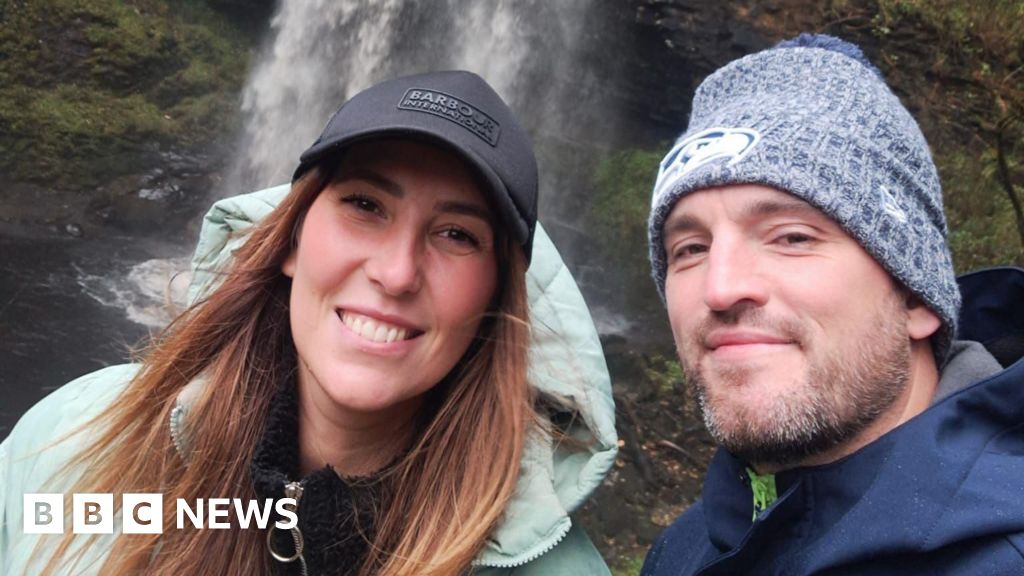
The woman at the centre of Britain’s most harrowing cliffside rescue last summer has finally met the mountain rescue volunteers who pulled her to safety after she plunged 130ft into a ravine in Snowdonia National Park. Emma Carter, 28, of Manchester, was climbing alone near Llyn Idwal on August 12, 2023, when a 40-metre limestone slab gave way beneath her. Emergency services were called at 3:47 p.m. after the collapse was reported by a passing walker.
Carter’s survival was described as a miracle by doctors at Royal Manchester Children’s and Adult Hospital, where she spent nine weeks in a coma before regaining consciousness. She suffered multiple fractures, a shattered pelvis, and severe internal trauma that required eight surgical procedures. Her spinal cord was bruised but intact, a factor doctors later attributed to the positioning of her landing. “I broke every rule in the book,” Carter said in her first public interview. “I fell backward, hit rock, ricocheted off a ledge, then landed in a shallow scree slope. The team said if I’d landed headfirst or on solid ground, I wouldn’t have made it.”
Key Points
- ✅ Emma Carter, 28, fell 130ft in Snowdonia on August 12, 2023
- ⚡ Survived nine-week coma, eight surgeries, and extensive rehab
- 💡 Doctors credit her positioning for avoiding fatal injury
On Thursday, Carter was reunited with the 14-member Ogwen Valley Mountain Rescue Organisation team at a private ceremony in Capel Curig. Rescue leader Huw Williams, 47, said the moment was emotional. “We always knew she had a fighting chance,” Williams said. “But seeing her walk in here today, after everything she’s been through, is beyond words.” The rescue operation involved 36 personnel from four agencies, including North Wales Fire and Rescue and the RAF Mountain Rescue Service, who worked through the night in torrential rain. A drone with thermal imaging located Carter 90 minutes after the alert.
| Agency | Personnel | Role |
|---|---|---|
| Ogwen Valley MRO | 14 | Ground search and retrieval |
| North Wales Fire and Rescue | 12 | Technical rope access |
| RAF Mountain Rescue | 6 | Aerial reconnaissance |
| Welsh Ambulance Service | 4 | Pre-hospital critical care |
Carter’s recovery has since become a symbol of resilience in the outdoor community. She has walked 5km unassisted and can now climb stairs, though she uses a cane for longer distances. Her physiotherapist, Dr. Aisha Patel, confirmed she’s ahead of schedule in her rehabilitation. “Most spinal contusion patients take up to two years to regain mobility,” Patel said. “Emma is at eight months and walking. That’s extraordinary.”
💡 Pro Tip
When climbing in limestone terrain, always test hand and footholds before committing. The rock can fracture under pressure without warning, as seen in Carter’s fall.
In a statement, Snowdonia National Park Authority said the incident had prompted a review of safety signage on popular routes. “We’ve added more warning signs and partnered with local rescue teams to offer pre-hike briefings,” a spokesperson said. “Emma’s story has made a real difference.” The authority also confirmed it will install a memorial plaque at Llyn Idwal next month to honour the rescue effort. Carter, who now works as a disability awareness trainer, said she plans to return to climbing—with a harness and belay system—by next summer. “I’m not afraid anymore,” she said. “I know now that I’m stronger than the mountain.”
📋 By The Numbers
- 9 weeks — Duration of Carter’s coma
- 8 surgeries — Required to repair fractures and internal trauma
- 5km — Distance Carter can now walk unassisted
- 36 — Total rescue personnel involved
