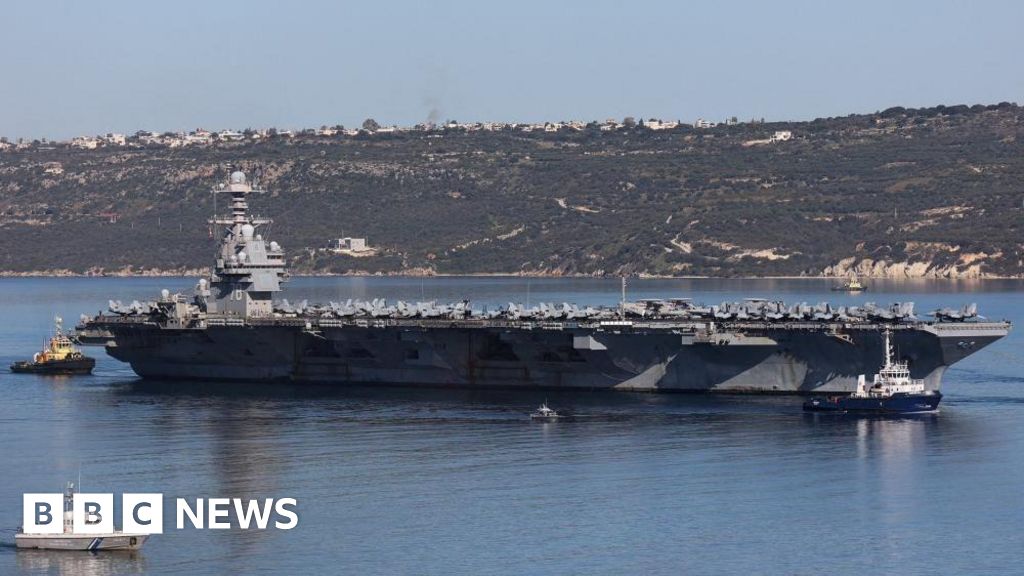
The U.S. Navy’s most advanced aircraft carrier, the USS Gerald R. Ford, is making its way toward Crete for emergency repairs after a fire broke out aboard Wednesday, leaving multiple sailors injured and causing significant damage to critical systems.
The fire, which started in the carrier’s electrical systems, spread rapidly through compartments housing advanced radar and communication equipment. Damage control teams from the USS Gerald R. Ford and nearby coalition vessels responded within minutes, but the blaze required more than six hours to fully contain.
Key Points
- ✅ Carrier’s propulsion systems remain operational despite damage
- ⚡ Electrical fire traced to faulty wiring in the ship’s island structure
- 💡 Sailors treated on board before transfer to medical facilities in Crete
Admiral Sarah Voss, commander of U.S. Naval Forces Central Command, confirmed the extent of the damage in a press briefing Thursday, stating that while the fire has been extinguished, the carrier’s combat systems and flight deck remain offline. "The USS Gerald R. Ford is still mission-capable but will require significant repairs before returning to full operational status," Voss said.
💡 Pro Tip
Navy officials recommend avoiding speculative reports on carrier readiness—damage assessments often take days to finalize, and operational status can change as new data emerges.
Greek defense sources report the USS Gerald R. Ford is expected to dock at Souda Bay Naval Base in Crete by Friday evening, where U.S. and Greek repair teams will conduct a full damage assessment. The carrier’s temporary relocation underscores the challenges facing the Navy’s newest fleet asset, which has already faced delays in its deployment schedule due to previous mechanical issues.
| Aspect | Current Status | Expected Timeline |
|---|---|---|
| Propulsion | Operational | No delays reported |
| Flight Deck | Offline | Repairs begin Friday |
| Combat Systems | Offline | Assessment complete by Monday |
The fire aboard the USS Gerald R. Ford marks the latest in a series of setbacks for the $13 billion vessel, which entered service in 2017 after years of development delays and cost overruns. The carrier’s advanced electromagnetic aircraft launch system, known as EMALS, has faced repeated scrutiny over reliability issues, though officials have not linked the current incident to that system.
📋 By The Numbers
- 14 — Sailors injured, none in critical condition
- $13 billion — Cost of the USS Gerald R. Ford, the Navy’s most expensive warship
- 6+ hours — Time required to fully contain the fire
- 2017 — Year the carrier entered service
Defense analysts warn the incident could further strain the Navy’s already stretched repair and maintenance resources, particularly as the USS Gerald R. Ford was scheduled to lead a carrier strike group in the Mediterranean next month. The carrier’s temporary withdrawal from operations highlights the vulnerabilities of high-tech naval assets operating in high-risk environments.
- Fire containment — Achieved after six hours of coordinated damage control efforts
- Casualty evacuation — Injured sailors transferred to medical facilities in Crete
- Damage assessment — Full evaluation to begin upon arrival in Souda Bay
The USS Gerald R. Ford’s journey to Crete is being conducted under escort by guided-missile destroyers from the Harry S. Truman Carrier Strike Group, ensuring the carrier’s safe transit through regional waters. U.S. officials emphasize the carrier remains a critical component of regional security, despite the setback. "The USS Gerald R. Ford’s capabilities are unmatched, and we are committed to restoring it to full operational status as quickly as possible," said a Pentagon spokesperson.
- 📊 The fire’s origin in electrical systems suggests a need for enhanced inspection protocols for high-voltage equipment aboard carriers
- 🔍 The carrier’s delayed deployment could impact U.S. Navy operations in the Mediterranean and Middle East
- ⚠️ While the fire is contained, lingering smoke damage may require extensive cleaning before systems can be reactivated