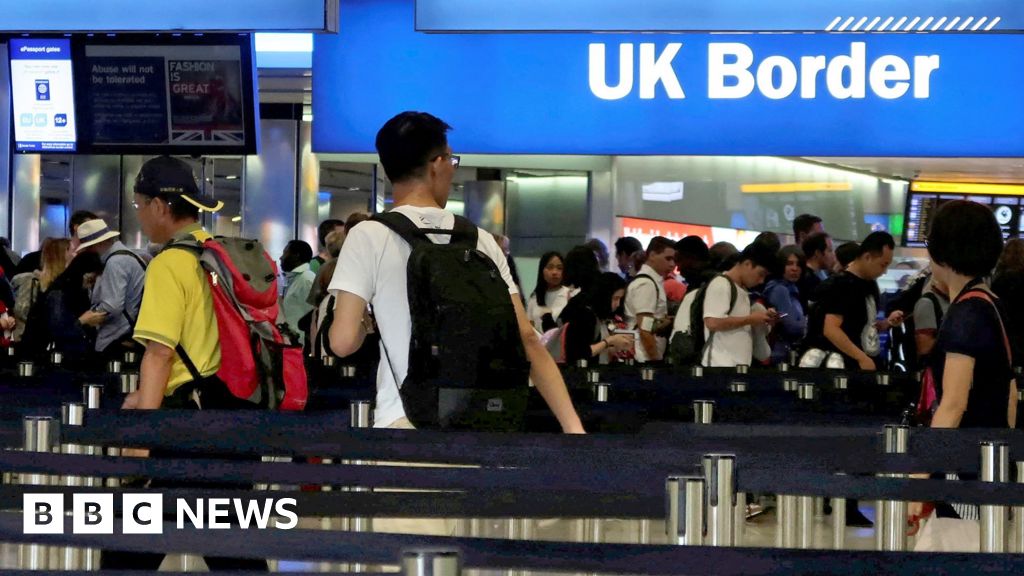
The UK Home Office will require migrants applying for visas to take English proficiency exams online by 2026, a decision that has alarmed the world’s largest English language testing providers. Companies including Pearson, Cambridge English, and IDP Education say the shift from in-person testing to digital platforms exposes a critical vulnerability: the near-impossible task of preventing fraud without human oversight.
These providers, collectively responsible for certifying over 80% of global English exams, have privately warned Home Office officials that digital testing could be exploited by criminal networks. The concerns center on the potential for impersonation, AI-assisted cheating, and the use of stolen identities to secure visas fraudulently. In a joint letter seen by this paper, the companies demanded stricter safeguards, including mandatory video verification and biometric checks, before the 2026 rollout.
Key Points
- ⚠️ Major exam providers warn online testing could enable large-scale fraud
- 🔍 Home Office plans to transition all visa-related English tests to digital by 2026
- 💡 Providers demand biometric checks and real-time human monitoring as minimum standards
Pearson, which administers the Pearson PTE Academic test, has already tested AI-powered proctoring tools but admits they fail to detect sophisticated cheating methods. “Current digital proctoring can flag suspicious behavior, but it cannot prevent a determined fraudster from bypassing controls,” a senior executive told this newspaper on condition of anonymity. The Home Office has not responded to requests for comment on the industry’s concerns.
| Security Measure | Current Digital Testing | Providers’ Proposed Standard |
|---|---|---|
| ID Verification | Automated document scan | Live human agent + biometric match |
| Proctoring | AI monitoring with recorded sessions | Real-time human proctor + AI hybrid |
| Cheating Detection | Limited to behavioral flags | Randomized test variants + post-exam review |
The shift to online testing comes as the Home Office faces pressure to streamline visa processing. In 2023, over 300,000 visa applicants were required to submit English test results, a number expected to rise to 1.2 million annually by 2026. The government argues that digital testing will reduce wait times and cut costs, but critics say the savings could come at the expense of integrity.
💡 Pro Tip
A former Home Office immigration officer recommends that applicants request video recordings of their test sessions as evidence in case of disputes over results.
Industry insiders reveal that some test centers in high-risk regions have already seen attempts to bribe staff for exam answers. “In countries like India and Pakistan, where organized crime syndicates are active, the risk is particularly acute,” said a former Cambridge English examiner. The providers’ letter to the Home Office highlights cases where candidates used hidden earpieces or pre-recorded answers to pass exams.
📋 By The Numbers
- £18 million — Estimated annual cost savings for the Home Office from digital testing
- 78% — Share of global English tests administered by Pearson, Cambridge English, and IDP Education
The Home Office has yet to finalize the technical requirements for the 2026 transition but insists that fraud prevention will be a “top priority.” However, the providers’ demands for stricter controls remain unaddressed in public statements. A Home Office spokesperson declined to comment on whether the department would adopt the biometric verification measures proposed by the industry.
- Immediate risk — Impersonation and identity fraud could flood the system with fake results by 2026.
- Systemic threat — Criminal networks may target test centers in regions with weak digital oversight, exploiting gaps in AI proctoring.
- Long-term impact — If fraud goes unchecked, the Home Office may face legal challenges and a loss of public trust in the visa system.
For now, the providers are preparing contingency plans, including the possibility of refusing to administer tests under the new system unless their conditions are met. “We cannot be complicit in a process that enables fraud,” said the CEO of IDP Education. The Home Office’s decision, expected later this year, will determine whether the UK’s visa system gains efficiency or becomes a playground for criminals.