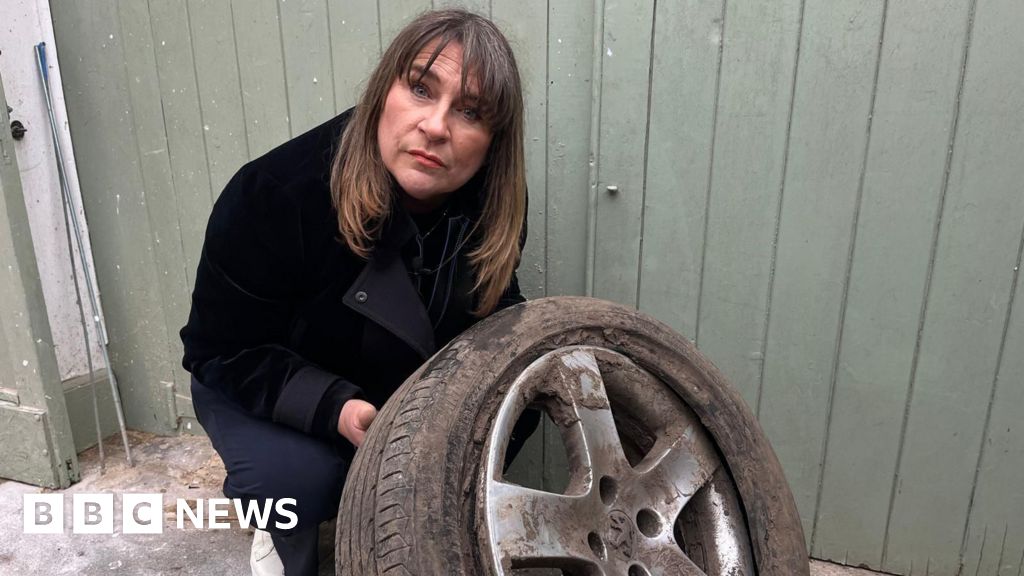
Drivers across the UK are being forced to absorb the cost of pothole damage as local authorities reject three out of every four compensation claims, a BBC investigation has uncovered.
Freedom of Information requests sent to 207 UK councils revealed that just 24% of pothole-related vehicle damage claims resulted in payouts since 2019. Councils paid out £13.5 million in settlements during this period—covering only a fraction of the estimated £146,000 claims submitted.
Key Points
- ✅ 75% of pothole damage claims are rejected by local authorities
- ⚡ Councils paid £13.5 million in payouts over five years
- 💡 More than 146,000 claims were filed, with a 24% success rate
In Nottinghamshire, residents of Netherfield have grown so accustomed to cratered roads that local humour has emerged as a coping mechanism. Floral arrangements spelling “craters ahead” adorn front gardens, while hand-painted signs warn drivers of “pothole season.” Yet beneath the sarcasm lies real frustration. Reg Patterson, 68, who has lived on Victoria Road for 20 years, said the road’s surface now resembles a lunar landscape. “It’s not just the noise—it’s the way your car shudders every time you drive over one,” he said. “We’ve had temporary fixes, but they crumble within weeks.”
| Authority Type | Total Claims | Successful Payments | Success Rate |
|---|---|---|---|
| County Councils | 98,000 | 22,000 | 22.4% |
| District Councils | 48,000 | 11,500 | 24.0% |
The data, which spans England and Wales, shows wide variation between regions. In Greater Manchester, only 18% of claims were approved, while in Devon, 36% resulted in compensation. The discrepancy has raised concerns about inconsistent enforcement of highway maintenance standards under the Highways Act 1980.
📋 By The Numbers
- 146,000 — Total pothole damage claims filed with UK councils since 2019
- £13.5 million — Total paid out in successful claims
- 24% — Average success rate across 147 reporting councils
Mick Hampshire, a mechanic in Netherfield with 40 years’ experience, said he now replaces suspension struts and coil springs weekly due to pothole impacts. “I’ve never seen so many snapped coil springs,” he said, pointing to a vehicle lifted in his garage. “Some cars bottom out so hard they’re hitting the fuel tank. That’s a bomb waiting to happen.” Hampshire estimates five drivers a week visit his workshop with pothole-related damage—double the rate from five years ago.
Nadia Kerr, a solicitor specialising in highway claims at Fletchers, said pothole cases now dominate her caseload. “What used to be a trickle has become a flood,” she said. “But the process is stacked against claimants. Authorities often deny claims on the grounds they weren’t aware of the defect—even if the pothole has existed for months.” She added that many claimants give up when faced with bureaucratic resistance.
💡 Pro Tip
Always photograph the pothole and your vehicle’s damage immediately, and note the exact location using GPS. Keep all repair receipts and submit your claim within 14 days of the incident—delays often lead to automatic rejections.
Local authorities defend their records, citing budget constraints and legal thresholds. Mick Barton, leader of Nottinghamshire County Council, said pothole repair is a “top priority,” but admitted that with 2,500 miles of road to maintain, resources are stretched. He pointed to the deployment of two JCB machines dedicated to rapid repairs as progress, though residents remain sceptical.
Across the UK, the cost of addressing the backlog is estimated at £18.6 billion—enough to resurface every local road in England and Wales. Campaign groups, including the Asphalt Industry Alliance, warn that without urgent funding, the crisis will worsen, turning every journey into a gamble with both tyres and safety.
- 📊 Pothole claims are most frequently rejected in urban areas with high traffic volumes
- 🔍 Authorities often cite lack of prior notice as grounds for refusal, even when defects are long-standing
- ⚠️ Failure to report potholes within 14 days of damage can invalidate claims
The investigation highlights a growing divide between drivers’ expectations and local government capacity—a gap that shows no sign of narrowing as budgets tighten and road conditions deteriorate.