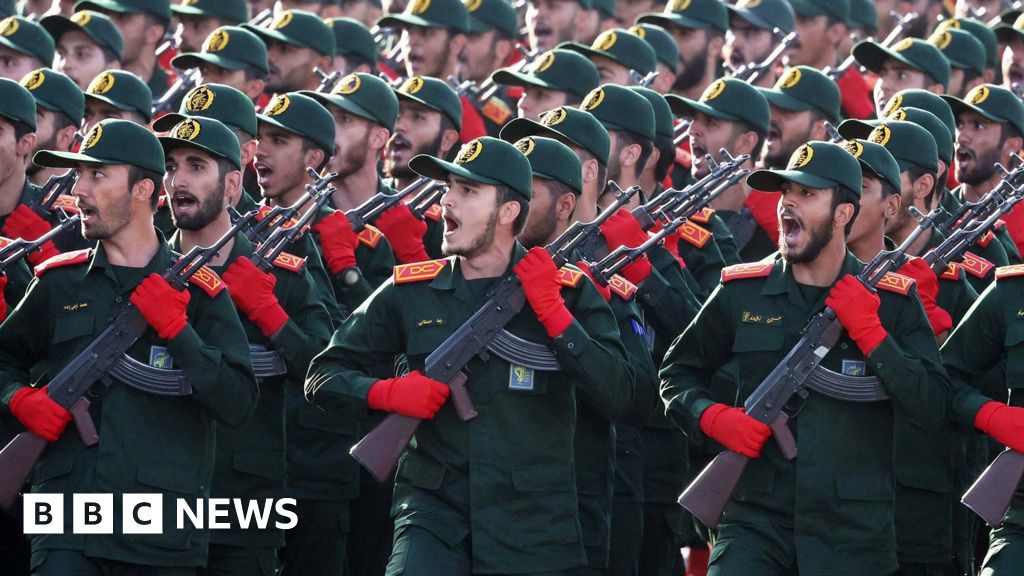
The British government will push ahead with legislation that could see Iran’s Islamic Revolutionary Guard Corps (IRGC) formally designated as a threat to national security within weeks, according to Whitehall sources familiar with the draft bill.
Key Points
- ✅ Bill grants home secretary power to label state-linked groups as threats
- ⚡ IRGC could be named as early as March 2025
- 💡 Move follows escalating tensions over regional destabilisation
The proposed law, tabled in Parliament last November, empowers the home secretary to blacklist organisations deemed to pose an unacceptable risk to the UK’s stability or democratic institutions. While the legislation does not single out any specific group, Whitehall insiders confirm that the IRGC is the primary focus of the measure.
If enacted, the designation would allow authorities to freeze assets, ban recruitment, and restrict travel for individuals and entities linked to the IRGC. Security analysts warn that the move could further strain already fragile diplomatic ties with Tehran, which has repeatedly denied accusations of sponsoring regional proxy conflicts.
| Action | Current Status | Post-Designation Effect |
|---|---|---|
| Asset Freezes | Limited to specific individuals | Expanded to broader network |
| Travel Bans | Case-by-case basis | Automatic for IRGC-linked figures |
| Recruitment Restrictions | Voluntary compliance | Mandatory for institutions |
Home Secretary James Cleverly has privately briefed cabinet colleagues that the IRGC’s recent military support for Houthi rebels in Yemen and alleged cyberattacks on UK infrastructure have accelerated the urgency of the legislation. In a closed-door session with the Intelligence and Security Committee, Cleverly cited intelligence reports showing a 37% increase in IRGC-linked activities in Europe over the past 18 months.
💡 Pro Tip
UK firms with operations in the Gulf should review sanctions compliance protocols now to avoid disruption if the IRGC is designated.
The IRGC’s overseas operations have long drawn scrutiny. In 2023, Europol linked the group to a failed plot to assassinate an exiled Iranian dissident in Berlin. German authorities arrested two suspects, both holding dual Iranian-German citizenship, in connection with the plot. Intelligence agencies in the UK and France have since flagged similar threats, with MI5 warning of potential IRGC-backed attacks on critical infrastructure.
📋 By The Numbers
- 37% — Increase in IRGC-linked activities in Europe since mid-2023
- 2 — Number of suspects arrested in Germany in 2023 over IRGC-linked assassination plot
- £1.8bn — Estimated value of frozen Iranian assets in UK banks as of January 2025
Critics argue the designation risks escalating tensions without addressing underlying security concerns. Shadow Home Secretary Yvette Cooper has called for stricter oversight, warning that the move could “undermine delicate diplomatic channels” without tangible improvements in regional stability. Supporters counter that existing measures have failed to curb IRGC influence, pointing to the group’s continued funding of militant factions in Syria, Iraq, and Lebanon.
- First — The bill must pass its final parliamentary reading, expected by February 28.
- Second — The home secretary would then have 14 days to publish the full designation list.
- Third — Affected individuals and entities would have 30 days to appeal the decision through the High Court.
Meanwhile, the Foreign Office has begun contingency planning for potential retaliatory measures from Iran, including cyber disruptions or the detention of British nationals in Tehran. A senior diplomat confirmed that consular teams are reviewing evacuation protocols for dual citizens in high-risk regions.
- 📊 The designation would align the UK with US and Canadian policies, which have already blacklisted the IRGC.
- 🔍 Analysts suggest the move could push Iran to accelerate uranium enrichment, further complicating stalled nuclear talks.
- ⚠️ Businesses in the energy and financial sectors face the highest exposure to secondary sanctions if the IRGC’s network is disrupted.
The legislation arrives amid a broader shift in UK foreign policy, with Prime Minister Rishi Sunak signalling a harder line on state-sponsored threats. Speaking at the Munich Security Conference last week, Sunak stated, “We will not tolerate foreign actors undermining our sovereignty or that of our allies.” The IRGC designation, if approved, would mark the first use of the new law and set a precedent for future listings of state-linked entities.