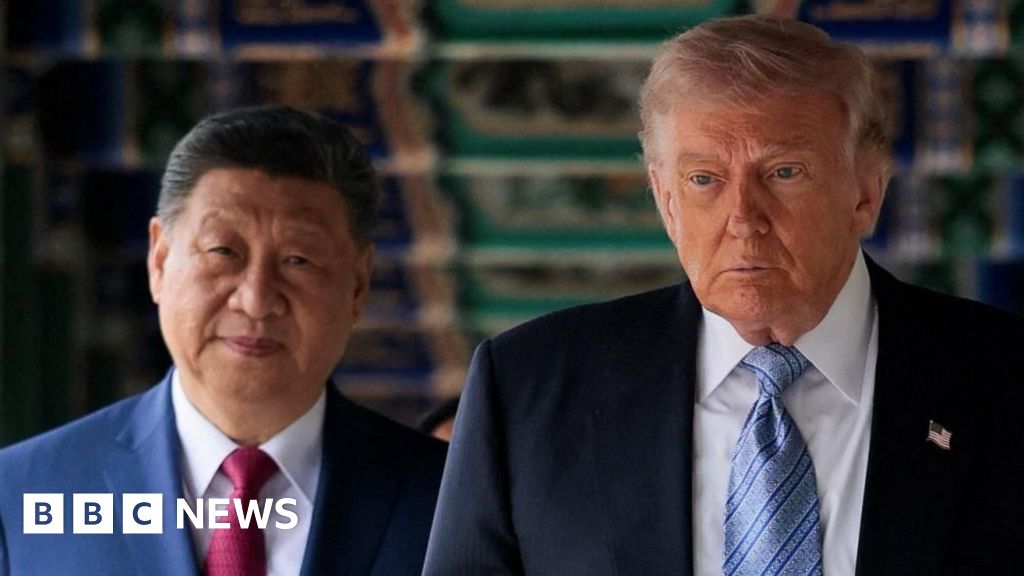
The Oval Office confirmed late Tuesday that U.S. President Donald Trump told Chinese President Xi Jinping during a private session in the White House that America has "made no commitment either way" on the future of Taiwan. The statement was delivered during a three-hour meeting that also covered trade, North Korea, and regional security.
The disclosure came as a shock to analysts and diplomats who had tracked years of strategic ambiguity maintained by Washington. Trump’s words suggest a potential shift—one that could embolden Beijing’s stance on Taiwan while unsettling Taipei and its allies in the Indo-Pacific. The White House later clarified that U.S. policy on Taiwan remains unchanged, calling the remarks part of broader negotiations.
💡 Pro Tip
Diplomats should watch for follow-up statements from Beijing that may frame Trump’s remarks as tacit support for its "One China" policy, even without formal commitment.
The meeting, held two weeks ago, was the first in-person summit between the two leaders since Trump’s return to the presidency in January. Sources describe an atmosphere of heightened tension, with Xi pressing for stronger guarantees on U.S. non-interference in Taiwan’s affairs. Trump reportedly responded by emphasizing America’s economic leverage over China, particularly in semiconductor restrictions and tariffs.
- Semiconductor Controls — The U.S. maintains strict export bans on advanced chips to China, a move Xi called "unilateral coercion."
- Taiwan Arms Sales — Washington has approved $345 million in new military aid to Taipei this year, despite Beijing’s objections.
- Military Posturing — U.S. Navy destroyers conducted a transit through the Taiwan Strait just 48 hours before the Trump-Xi talks.
Taiwan’s Ministry of Foreign Affairs issued a cautious response, stating it "values the continued support from like-minded partners" but stopped short of direct criticism. Meanwhile, a senior Chinese diplomat told reporters in Beijing that Trump’s comments were "a step in the right direction."
Key Points
- ✅ Trump explicitly said no U.S. commitment on Taiwan during Xi talks
- ⚡ Semiconductor export controls and tariffs topped the agenda
- 💡 U.S. policy remains officially unchanged, per White House
Defense analysts warn that Trump’s remarks could be interpreted as a green light for Beijing to escalate pressure on Taiwan, potentially through military drills or economic coercion. The Pentagon has not publicly adjusted its posture, but internal discussions are reportedly underway to reassess risk levels in the region.
| Aspect | Trump Administration | Past U.S. Policy |
|---|---|---|
| Taiwan Commitment | No formal pledge | Strategic ambiguity since 1979 |
| China Engagement | Focus on economic leverage | Balanced diplomacy and deterrence |
| Military Support to Taiwan | $345M approved in 2024 | Consistent but conditional arms sales |
The timing of the revelation—amid a global race for AI dominance and semiconductor supremacy—adds another layer of complexity. Sources say Xi pushed for concessions on rare earth mineral exports, a critical resource for U.S. tech and defense industries. The U.S. delegation pushed back, citing national security concerns.
📋 By The Numbers
- 345 million — Value of U.S. military aid to Taiwan authorized in 2024
- 12 — Number of U.S. Navy transits through the Taiwan Strait this year
- $5.3 billion — Estimated annual cost of semiconductor export restrictions to China
As the dust settles, global markets reacted with caution. Asian stock indices dipped slightly on Wednesday, with tech-heavy sectors most exposed to U.S.-China tensions. Analysts at Goldman Sachs noted that while Trump’s remarks may signal flexibility, they also introduce uncertainty into a fragile geopolitical equation.