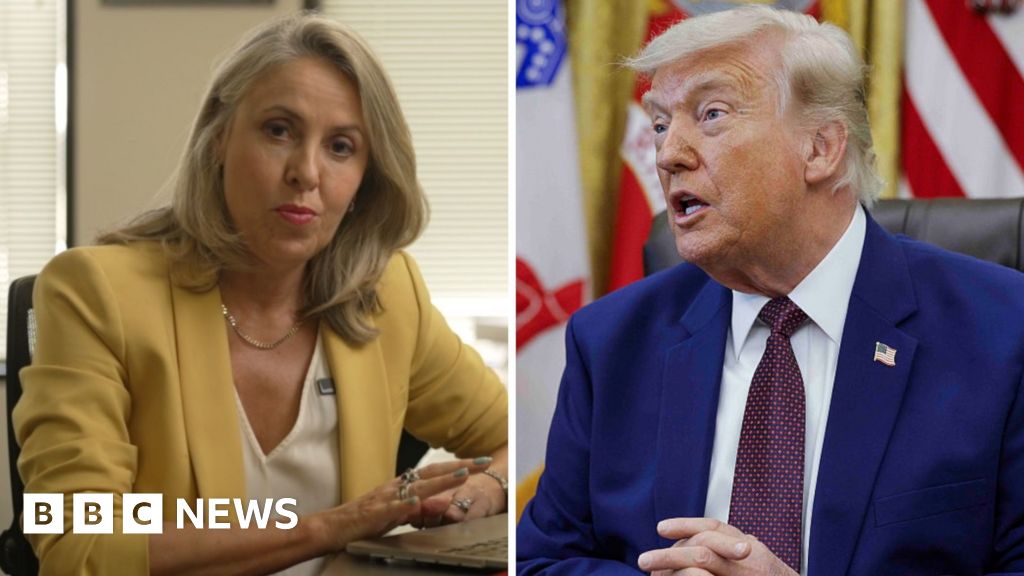
President Donald Trump has directly contradicted reports that Israeli Prime Minister Benjamin Netanyahu defied US leadership before launching a preemptive strike on Iran on Sunday. In a brief but pointed phone call with BBC North America Editor Sarah Smith on Monday, Trump stated that Israeli missiles were "already on their way" when he spoke with Netanyahu about the impending operation. "If I tell him to do something, he does it," Trump said, dismissing any notion of disobedience.
The revelation comes amid escalating tensions in the Middle East, where Iran and Israel have exchanged strikes in recent days, raising fears of a broader regional conflict. Trump’s comments suggest that the Israeli action was not a unilateral decision but followed a sequence of events that had already been set in motion before his conversation with Netanyahu.
Key Points
- ⚡ Trump claims Israeli missiles were "already on their way" when he spoke to Netanyahu
- ✅ Trump asserts that Netanyahu "does what he is told" when given an order
- 💡 The call lasted less than a minute, according to BBC sources
Analysts are scrutinizing Trump’s remarks for clues about the level of US-Israel coordination during the crisis. While Trump’s statement implies prior alignment, it does not address whether the US was informed of the strike in advance or whether it provided tacit approval. The White House has not issued an immediate response to requests for clarification.
Trump’s account also raises questions about the timeline of events leading to the strike. If missiles were already in motion when he spoke to Netanyahu, it suggests that Israel acted independently, at least initially, before any US consultation occurred. This could indicate a breakdown in communication or a deliberate decision by Israel to proceed without explicit US endorsement.
| Timeline Aspect | Trump’s Account | Independent Reports |
|---|---|---|
| Missile Status at Time of Call | Already launched | Reports indicate Israel prepared strikes in advance |
| US Coordination | Implied approval | No public confirmation of US involvement |
| Netanyahu’s Response | Complied with Trump’s direction | Netanyahu has not commented on Trump’s claims |
The BBC’s report is the first direct account of Trump’s perspective on the strike, which has drawn international condemnation and warnings of further escalation. Lebanese officials reported overnight strikes on southern Lebanon, while Iranian authorities confirmed damage to military sites but denied civilian casualties. The situation remains fluid, with no clear path toward de-escalation.
💡 Pro Tip
When assessing conflicting accounts of military actions, scrutinize the sequence of events and the timing of communications. A delay between orders and execution does not necessarily imply defiance—it may reflect operational realities.
Trump’s assertion that Netanyahu complies with his directives contrasts sharply with public perceptions of the two leaders’ relationship. Their interactions have often been marked by public disagreements, particularly over Iran policy. Trump’s claim of unquestioning obedience from Netanyahu could be an attempt to assert control over the narrative or downplay discrepancies in US-Israel coordination.
📋 By The Numbers
- 1 — Number of minutes Trump’s call with BBC lasted
- 5 — Number of days since the Israeli strike on Iran
- 60+ — Number of injuries reported in a recent Iranian drone strike on Kuwait
The strike on Iran followed a series of provocations, including drone incursions into Israeli airspace and threats from Iranian-backed militias in the region. Israel has framed its actions as preemptive measures to prevent an imminent attack, while Iran has condemned the strikes as unprovoked aggression. The international community remains divided, with some nations calling for restraint and others warning of the risks of a wider war.
The White House’s silence on Trump’s remarks leaves critical questions unanswered. Did the US receive advance notice of the strike? Was there a prior agreement between the two leaders? Without further details, Trump’s account raises more questions than it answers, leaving diplomats and analysts to piece together the truth from fragmented reports and official statements.