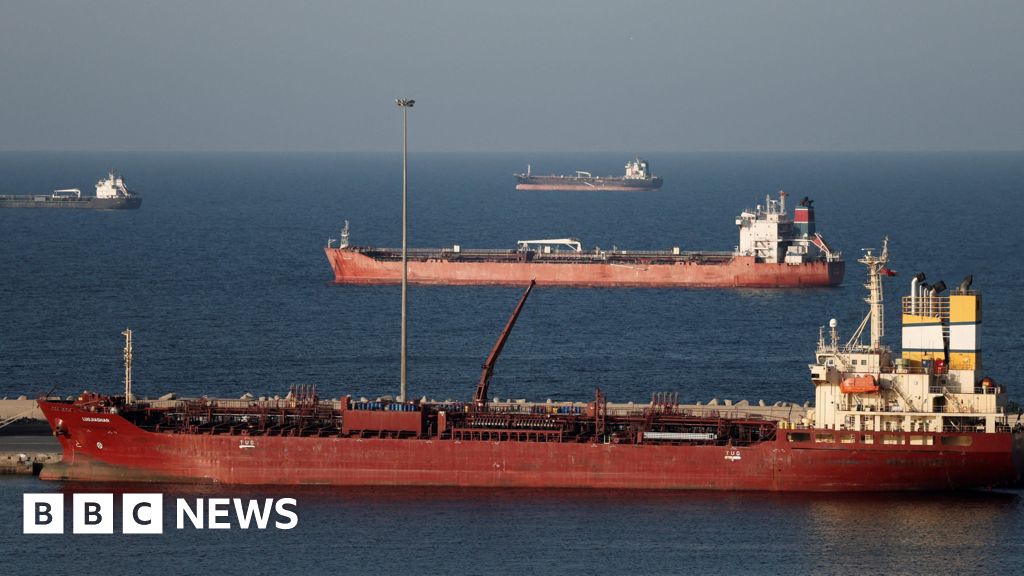
Prime Minister Keir Starmer has held a pivotal discussion with former U.S. President Donald Trump, emphasizing the urgent need to reopen the Strait of Hormuz to alleviate disruptions in global shipping. The conversation, confirmed by Downing Street, highlights the critical role of the strait in international trade and maritime security.
Key Points
- ✅ Starmer and Trump discussed the Strait of Hormuz's reopening.
- ⚡ The strait is crucial for global shipping and trade.
- 💡 Disruptions have caused significant economic and logistical challenges.
The Strait of Hormuz, a narrow waterway between the Persian Gulf and the Gulf of Oman, is a linchpin for global oil and gas shipments. Recent tensions in the region have led to significant disruptions, affecting global supply chains and economic stability.
| Aspect | Strait of Hormuz | Alternative Routes |
|---|---|---|
| Strategic Importance | Critical for oil and gas shipments | Less efficient and costly |
| Current Status | Disrupted due to regional tensions | Underutilized but viable |
Starmer's call to Trump underscores the international cooperation required to address the crisis. The prime minister's office stated that the conversation focused on the need for immediate action to ensure the safe passage of vessels through the strait.
The economic impact of the disruptions has been severe, with shipping costs rising and trade routes becoming increasingly volatile. The Strait of Hormuz typically handles about 30% of the world's seaborne oil shipments, making its reopening a top priority for global economic stability.
💡 Pro Tip
For businesses reliant on maritime trade, diversifying supply chains and exploring alternative routes can mitigate risks during periods of instability.
The discussion between Starmer and Trump comes at a time when international efforts to stabilize the region are gaining momentum. Diplomatic channels are being utilized to engage with regional stakeholders and find a sustainable solution to the crisis.
- First — Assess the current security situation in the Strait of Hormuz.
- Second — Engage with regional and international partners to find a resolution.
- Third — Implement measures to ensure the safe passage of vessels.
The Strait of Hormuz has been a focal point of geopolitical tensions for decades. Its strategic location makes it a critical chokepoint for global trade, and any disruption can have far-reaching consequences. The ongoing efforts to reopen the strait are crucial for maintaining economic stability and ensuring the smooth flow of goods and resources.
- 📊 The strait handles approximately 17 million barrels of oil per day.
- 🔍 Alternative routes are longer and more expensive.
- ⚠️ Prolonged disruptions could lead to a global economic downturn.
The international community is closely monitoring the situation, with various nations and organizations offering support to resolve the crisis. The collaboration between Starmer and Trump highlights the importance of bipartisan and international cooperation in addressing global challenges.
📋 By The Numbers
- 30% — Proportion of global seaborne oil shipments through the Strait of Hormuz.
- 20% — Increase in shipping costs due to disruptions.