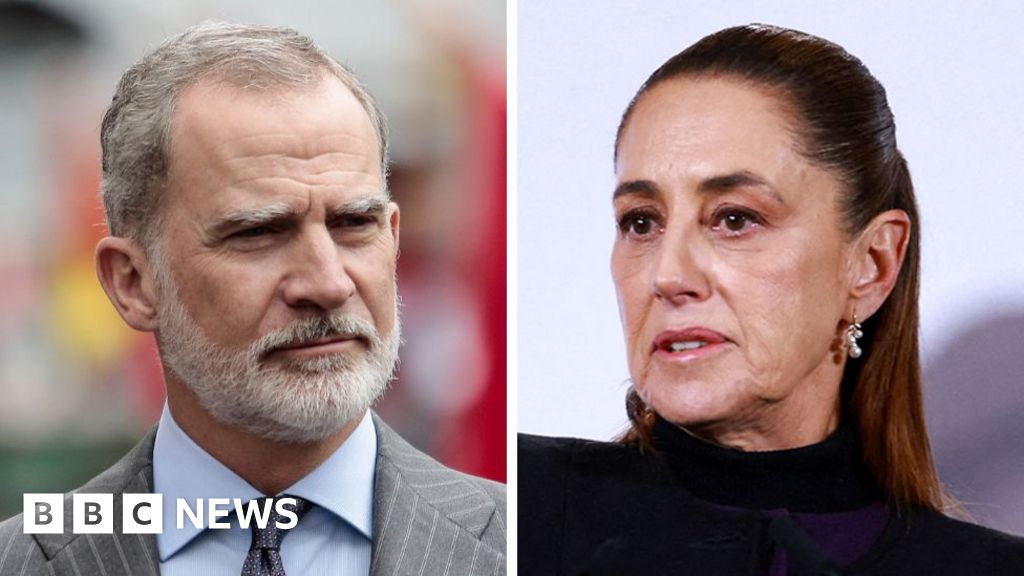
MADRID — In a move that stunned historians and diplomats alike, King Felipe VI of Spain on Friday formally acknowledged the "abuses and injustices" committed by Spanish conquistadors during the conquest of Mexico in the 16th century. Speaking at a joint press conference with Mexican President Claudia Sheinbaum in Mexico City, the monarch’s words carried the weight of centuries, as he described the colonial period as a "painful chapter" in bilateral relations.
The king’s remarks came during the first state visit by a Spanish monarch to Mexico in 13 years, a trip designed to reset frayed ties amid recent trade disputes and cultural tensions. Sheinbaum, Mexico’s first female president, responded cautiously but praised the gesture as "a necessary step toward reconciliation."
| Aspect | Spain’s Stance | Mexico’s Stance |
|---|---|---|
| Colonial Legacy | Emphasizes shared heritage | Demands reparations and acknowledgment |
| Diplomatic Tone | Calls for "constructive dialogue" | Insists on "historical truth" |
Felipe’s statement went further than any prior acknowledgment by a Spanish head of state, referencing "exploitation, violence, and cultural destruction" inflicted on Indigenous populations. The king stopped short of an apology, however, a distinction that drew immediate criticism from activists in both countries.
Key Points
- ✅ King Felipe VI’s statement is the first public acknowledgment of colonial abuses by a Spanish monarch
- ⚡ The remarks were made during a three-day state visit to Mexico, the first in 13 years
- 💡 Activists argue the speech falls short of a full apology, demanding reparations
Mexico’s government has long framed the conquest as a unilateral act of aggression, while Spain has historically framed it as a shared history of cultural exchange. The divide was on full display as Sheinbaum reiterated her country’s demand for Spain to return plundered artifacts, a request Madrid has repeatedly declined.
📋 By The Numbers
- 1519 — Year Hernán Cortés landed in Mexico, initiating the conquest
- 2014 — Last state visit by a Spanish monarch to Mexico
The timing of Felipe’s remarks is no coincidence. Spain and Mexico are locked in negotiations over a new trade agreement, and the visit was seen as an effort to smooth tensions. Yet the king’s comments risk alienating conservative factions in Spain, where nostalgia for the empire remains strong. The far-right Vox party immediately condemned the statement as "historical revisionism."
| Conquistador | Impact on Mexico |
|---|---|
| Hernán Cortés | Led the fall of the Aztec Empire, beginning three centuries of colonial rule |
| Pedro de Alvarado | Commanded brutal campaigns against Indigenous populations in Guatemala and southern Mexico |
Analysts suggest Felipe’s move may be a calculated risk, aimed at positioning Spain as a modern, self-critical nation in Latin America. "This is not just about Mexico," said historian Dr. Elena Rojas. "It’s a signal to the entire region that Spain is willing to confront its past, even if it’s politically costly."
- 📊 Spain’s colonial legacy remains a contentious issue in Latin America, with demands for reparations growing
- 🔍 Felipe’s statement avoids legal liability but opens the door to further discussions
- ⚠️ Conservatives in Spain argue the king’s words distort history, downplaying Spain’s civilizing role
Sheinbaum’s response to the king’s statement was carefully measured. While she welcomed the acknowledgment, she made it clear that Mexico expects tangible actions. "Words must be followed by deeds," she said, echoing a sentiment shared by many in her administration. The visit concluded with the signing of five new cooperation agreements, though none addressed the core issues of reparations or artifact repatriation.
💡 Pro Tip
For historians tracking diplomatic shifts, note that such acknowledgments rarely occur without underlying geopolitical motives — in this case, Spain’s desire to strengthen economic ties with Latin America as China’s influence grows.
The debate over Spain’s colonial past shows no signs of abating. As Mexico prepares to host a summit of Latin American nations next month, the pressure on Spain to address its history will only intensify. Whether Felipe’s words mark a turning point or a fleeting gesture remains to be seen.
- 1519 — Hernán Cortés lands in Mexico, beginning the conquest
- 2014 — Last state visit by a Spanish monarch to Mexico
- 2025 — King Felipe VI’s acknowledgment of colonial abuses