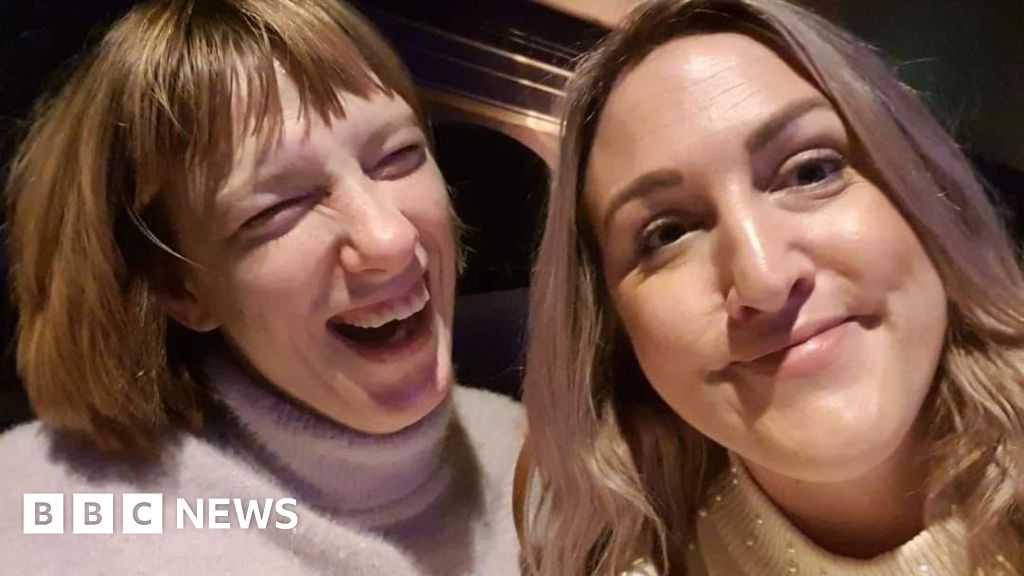
Sarah Lilly was four years old when she first felt the weight of responsibility for her sister. Vicky, then a toddler, had just been diagnosed with a rare genetic condition that would leave her unable to walk without assistance. By six, Sarah was not just pushing a wheelchair—she was managing medications, coordinating therapies, and advocating for Vicky’s needs in a system too often designed for adults.
Today, the sisters live in a converted bungalow in Hampshire, where every room has been adapted to accommodate Vicky’s mobility and medical equipment. The house—funded through a combination of grants and Sarah’s relentless fundraising—cost £180,000 to renovate. Sarah works full-time as a disability support worker, a job she took to ensure Vicky never spent a day in institutional care.
📋 By The Numbers
- 1 in 50,000 — Global incidence rate of Vicky’s condition
- £180,000 — Cost of home renovations to accommodate Vicky’s needs
- 28 — Sarah’s age when she became Vicky’s legal guardian
Vicky’s condition, spinal muscular atrophy type 2, typically presents in early childhood and progressively weakens muscle control. Doctors initially gave her a life expectancy of 15 years. She is now 26. “The specialists said she wouldn’t make it to her teens,” Sarah says. “But every year she defies the odds, and I refuse to let the world forget her.”
| Challenge | 2004 | 2024 |
|---|---|---|
| Mobility aids | Manual wheelchair | Power chair with custom seating |
| Medical support | Weekly physiotherapy | Daily respiratory treatments |
| Education access | Home tutoring | Specialist college placement |
Sarah’s story is not one of pity, but of defiance. She refuses to frame their lives in terms of sacrifice, instead describing their bond as a partnership. “People ask how I do it,” she says. “But Vicky’s laughter is louder than any obstacle. She’s taught me more about resilience than I ever could have learned in school.”
💡 Pro Tip
Families navigating long-term care should document every medical interaction and treatment plan in a single binder or digital folder. This creates a unified record that expedites decisions during emergencies.
Last year, Sarah launched a charity, *Unseen Hands*, to provide grants for families caring for children with rare conditions. The organization has already distributed £120,000 to 45 families across the UK. “We’re not asking for pity,” she says. “We’re asking for recognition. These kids are worth fighting for.”
Key Points
- ✅ Sarah Lilly became Vicky’s carer at six after Vicky’s rare diagnosis
- ⚡ Their home in Hampshire was renovated for £180,000 to accommodate Vicky’s needs
- 💡 Vicky defied a life expectancy of 15 years, celebrating her 26th birthday this year
Vicky’s milestones—her first independent breath after surgery, her graduation from a specialist college, her viral TikTok videos dancing in her power chair—have all been shared with the public, not for sympathy, but to shift perceptions. “We’re not tragic,” Vicky says in a recorded message. “We’re just living.”
- 2000 — Vicky diagnosed at 18 months
- 2004 — Sarah, aged six, becomes primary carer
- 2016 — Family moves into adapted bungalow
- 2023 — Sarah establishes *Unseen Hands* charity
Sarah’s journey has not been without cost. She has no savings, no retirement plan, and a body that bears the strain of lifting Vicky daily. Yet, when asked about the future, she speaks in terms of Vicky’s dreams—not her own. “She wants to open a bakery,” Sarah says. “So we’re saving for a commercial oven. And if that oven ever gets installed, I’ll know we’ve won.”
