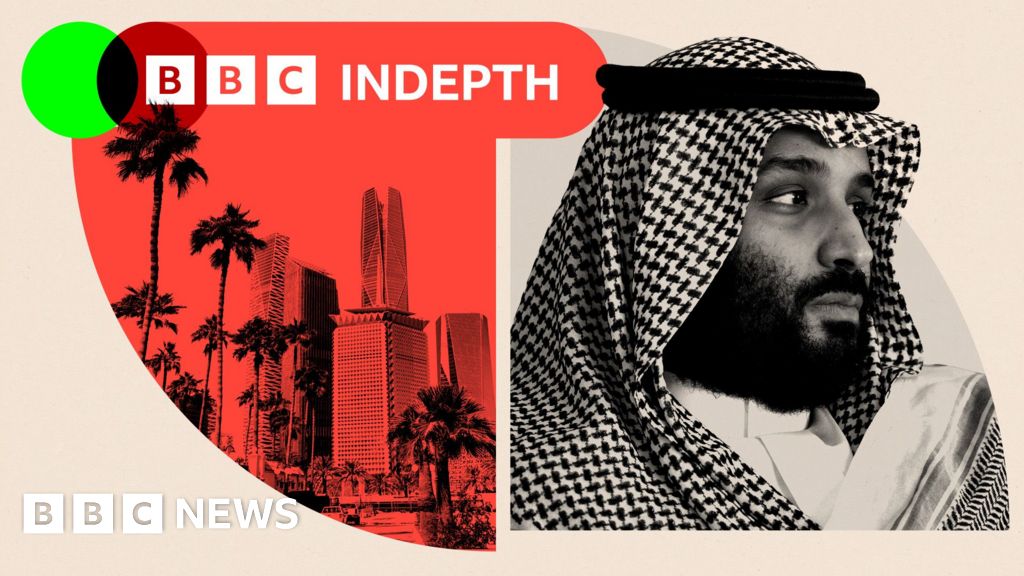
The desert sands of Tabuk will no longer witness the rise of The Line, the 170km-long linear city that promised to house 1.5 million people by 2030. Crown Prince Mohammed bin Salman’s signature project has been scrapped, leaving behind only a digital footprint of renderings and investor pitches. The decision marks a sharp pivot from the era of lavish spending that defined Saudi Arabia’s Vision 2030 plan.
Internal documents reviewed by this newspaper reveal that at least six major developments, collectively worth over $100 billion, have been shelved or significantly scaled back. The cancellations include NEOM’s Oxagon, a floating industrial city, and Trojena, a mountainous tourism hub in the northwest. The Jeddah Tower, once slated to surpass Dubai’s Burj Khalifa as the world’s tallest building, has also been frozen at 60% completion.
Key Projects Affected
- ✅ The Line — 170km linear city in NEOM
- ⚡ Oxagon — Floating industrial city in NEOM
- 💡 Trojena — Mountain resort in NEOM
- ✅ Jeddah Tower — 1,000m skyscraper in Jeddah
- ⚡ Qiddiya — Entertainment city near Riyadh
- 💡 Red Sea Project — Luxury tourism destination
Government officials, speaking on condition of anonymity, cite a combination of factors: soaring debt levels, falling oil prices, and austerity measures aimed at reducing fiscal deficits. Saudi Arabia’s public debt has ballooned to $400 billion, nearly 30% of GDP, up from $150 billion in 2016. The International Monetary Fund now warns that without drastic cuts, debt could exceed 40% of GDP by 2027.
| Project | Original Budget | Current Status |
|---|---|---|
| The Line | $500 billion | Canceled |
| Oxagon | $100 billion | Delayed indefinitely |
| Jeddah Tower | $1.2 billion | Frozen at 60% completion |
| Qiddiya | $8 billion | Scaled back to 50% of original scope |
Economists warn that the retreat from megaprojects could have long-term consequences. The construction sector, which employs over 2 million people, faces mass layoffs. Foreign investors, lured by promises of high returns, now face uncertainty. The Red Sea Project, a luxury tourism destination set to open in 2025, has already pushed back its completion date to 2028.
💡 Pro Tip
Avoid committing capital to Saudi megaprojects until fiscal reforms are clearly outlined and debt levels stabilize. The government’s shift toward privatization and PPP models signals higher risk for early-stage investors.
In Riyadh, officials insist the cancellations are not a sign of failure but a necessary correction. Finance Minister Mohammed Al-Jadaan told parliament last week that the government is prioritizing “economic stability over grandeur.” He pointed to a 15% reduction in this year’s capital expenditure as evidence of the new austerity drive. Yet, the question remains: Can Saudi Arabia afford to walk away from its most ambitious visions?
📋 By The Numbers
- 30% — Saudi Arabia’s public debt as a share of GDP in 2024
- $400 billion — Total public debt in 2024
- $56 billion — Budget deficit in 2024
- 2.1 million — Jobs at risk in the construction sector
The cancellation of The Line alone could save the government $50 billion annually in construction costs, according to estimates. But the loss of prestige and geopolitical influence is harder to quantify. The project was meant to showcase Saudi Arabia as a global leader in futuristic urban planning, a counterpoint to Dubai’s rapid expansion. Now, it stands as a monument to the limits of petro-dollar ambition.
- 📊 Oil Dependency — 70% of government revenue still tied to oil, despite diversification efforts
- 🔍 Investor Sentiment — Foreign direct investment fell 22% in 2023, the sharpest drop in a decade
- ⚠️ Debt Risk — Moody’s downgraded Saudi Arabia’s credit rating in March 2024, citing fiscal pressures
As the dust settles on the megaproject era, analysts say Saudi Arabia must now navigate a delicate balance: maintaining investor confidence while avoiding the mistakes of the past. The crown prince’s vision of a transformed, diversified economy remains intact—but the path to get there is narrower, and far rockier, than anyone imagined.