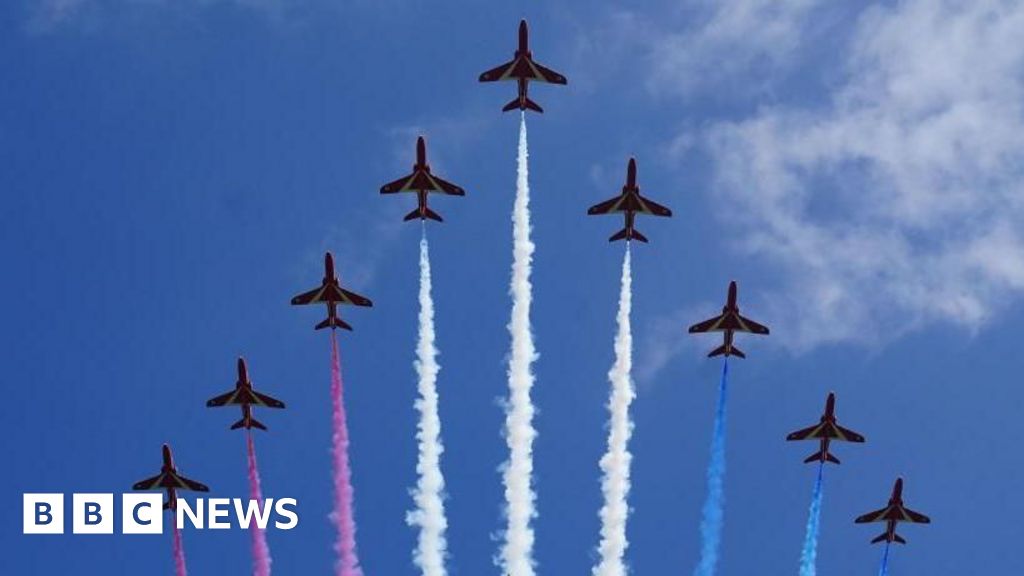
The Royal Air Force has quietly approved a reduction in the number of jets flown by the Red Arrows for most of their displays this year, a direct response to the accelerating wear on their aging Hawk T1 aircraft.
Key Points
- ✅ Red Arrows will fly with fewer jets in 2025 to preserve fleet
- ⚡ RAF reviewing long-term viability of Hawk T1 jets
- 💡 The team will use full nine-aircraft formations only for major events
Internal RAF documents obtained by this newspaper reveal the Red Arrows will perform with as few as seven jets for the majority of their 2025 display schedule, down from the usual nine. The decision follows a technical audit that flagged concerns over structural fatigue in the fleet, which has flown more than 70,000 hours since entering service in 1980.
Sources familiar with the review say the RAF’s engineering teams have identified increasing stress on the airframes, particularly in the wings and fuselage, which were not originally designed for the high-G maneuvers the team performs. Wing Commander David Montenegro, Officer Commanding of the Red Arrows, confirmed the changes in a statement issued late Friday, emphasizing the need to balance operational demands with fleet preservation.
💡 Pro Tip
If you're planning to see the Red Arrows this season, check their schedule closely—major public events like the RAF Cosford Air Show will still feature the full nine-aircraft formation, while smaller displays may see reduced numbers.
The RAF has not disclosed the exact number of displays affected, but insiders indicate the reduction will apply to roughly 70% of the team’s confirmed bookings. The move comes as the Ministry of Defence faces mounting pressure to justify the £1.2 billion investment in the Hawk T1 successor program, which has faced repeated delays and cost overruns.
| Aspect | 2024 Schedule | 2025 Schedule |
|---|---|---|
| Average jets per display | 9 | 7-8 |
| Full 9-aircraft formations | All major events | Select major events only |
| Technical concerns addressed | Minor repairs ongoing | Structural audit completed |
Critics of the RAF’s handling of the fleet argue the reduction in display numbers is a symptom of deeper procurement failures. The Hawk T1, originally slated for retirement in 2018, remains in service due to delays in its replacement, the UK Military Flying Training System (UKMFTS). The first of the new Hawk T2 jets, intended to replace the T1, is not expected to enter service until at least 2027.
📋 By The Numbers
- 1980 — Year the Hawk T1 entered service with the Red Arrows
- £1.2bn — Estimated cost of the Hawk T1 successor program
- 2027 — Earliest expected entry into service for replacement jets
In response to questions, a Ministry of Defence spokesperson stated that the RAF is ‘taking all necessary steps to maintain the operational capability and safety of the Red Arrows while managing the challenges posed by an aging fleet.’ The spokesperson declined to comment on whether the reduction in jet numbers would impact the team’s reputation or public appeal.
The Red Arrows are scheduled to begin their 2025 display season in May, with the first public performance at the RNAS Yeovilton Air Day on May 17. While the team’s precision and skill remain unmatched, the logistical realities of an aging fleet are now dictating the scale of their performances.
- 📊 The Red Arrows have flown over 4,500 displays since 1965
- 🔍 Structural fatigue in the Hawk T1 fleet has been a growing concern since 2022
- ⚠️ The RAF has not ruled out further reductions if fleet conditions worsen
Aviation analysts warn that the situation reflects broader issues within the UK’s defense procurement process, where delays and cost overruns have left frontline units operating equipment well beyond its intended lifespan. For the Red Arrows, the decision to fly with fewer jets is not just a tactical adjustment—it’s a stark reminder of the hidden costs of procrastination.