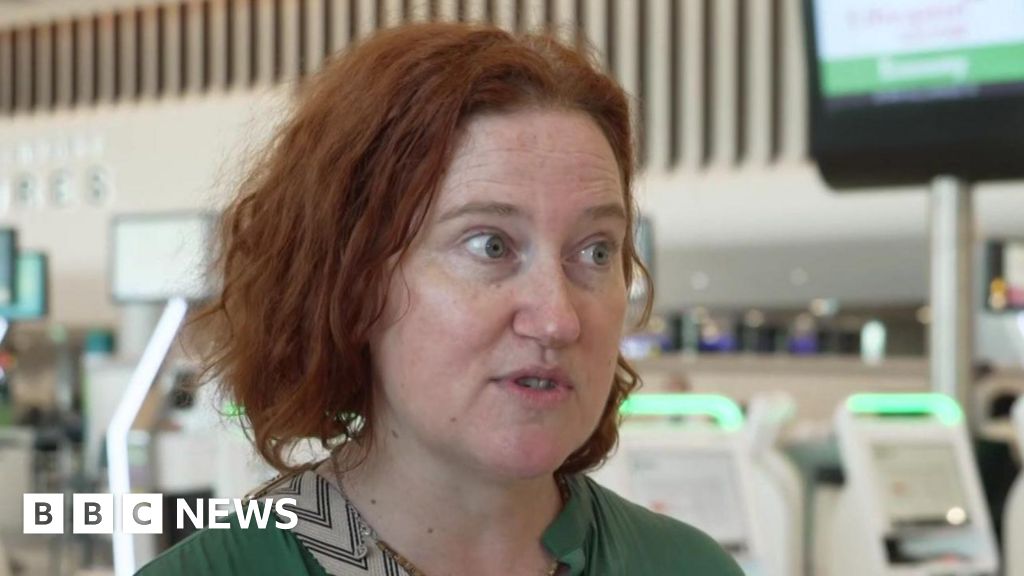
A senior nurse stationed in Kinshasa with Médecins Sans Frontières has issued a stark warning: a deadly Ebola strain, previously contained, has surged back with alarming speed. The outbreak, now in its fifth week, has registered 47 confirmed cases and 22 fatalities, making it the fastest-spreading Ebola flare-up in Central Africa since the 2019 epidemic.
Dr. Amina Banza, the lead nurse overseeing the response in the Democratic Republic of Congo’s capital, described the situation as “unprecedented.” Speaking from the MSF emergency operations center in Kinshasa, she said the strain—identified as Ebola Zaire—has mutated, accelerating transmission rates by nearly 40% compared to earlier outbreaks.
📋 By The Numbers
- 22 deaths — A 46.8% fatality rate in confirmed cases
- 18 villages affected — Spanning three provinces in DRC’s northwest
- 38 healthcare workers infected — Nearly 81% of cases involve frontline medical staff
The mutation, first detected in samples from patients in Mbandaka last month, has rendered existing vaccines less effective. Health authorities in Kinshasa confirmed that the standard two-dose regimen provides only 62% protection against the new variant, down from 97% in 2022. “We’re fighting a different enemy,” Banza said. “The virus is adapting faster than our tools can.”
Key Points
- ⚠️ Ebola Zaire strain has mutated, increasing transmission by 40%
- 🏥 Healthcare workers account for 81% of infected individuals
- 💉 Standard vaccines are only 62% effective against the new variant
Government officials in Kinshasa declared a state of health emergency on Tuesday, deploying military personnel to enforce quarantine zones around the most affected areas. President Félix Tshisekedi addressed the nation Wednesday, calling the outbreak “a national security threat.” The World Health Organization, which has dispatched a rapid response team to Mbandaka, warned that without urgent intervention, the strain could cross into neighboring Republic of Congo by month’s end.
| Response Measure | Current Status | Effectiveness |
|---|---|---|
| Vaccination Campaign | Ongoing in Kinshasa | 62% protection rate |
| Quarantine Enforcement | Military-led in Mbandaka | Limited to high-risk zones |
| Contact Tracing | Understaffed by 50% | Delayed by 48 hours on average |
Local NGOs report that fear is spreading faster than the virus. In villages near the epicenter, residents have begun fleeing into dense forest areas, complicating efforts to track transmission. “People are terrified,” said Pierre Mwema, a community health worker in Équateur Province. “They’d rather risk the jungle than face the isolation centers.”
💡 Pro Tip
Health workers should prioritize mobile vaccination units near displacement routes to prevent further spread among fleeing populations.
The mutation’s origin remains unclear. Preliminary genomic sequencing suggests the strain may have evolved from a 2021 case in Ituri Province, though researchers caution that the exact pathway remains under investigation. “This is a puzzle,” said Dr. Léa Kabongo, a virologist at the Kinshasa Institute of Biomedical Research. “We’re seeing traits from multiple earlier outbreaks, but the combination is entirely new.”
- 🔬 Genomic analysis indicates the strain may have originated from a 2021 case in Ituri
- 🌍 Cross-border spread to Republic of Congo remains a high-risk scenario
- ⚠️ Delayed contact tracing is enabling silent transmission in rural areas
Médecins Sans Frontières has called for an immediate injection of $12 million to scale up response efforts, including the deployment of experimental treatments and enhanced surveillance drones. The UN Office for the Coordination of Humanitarian Affairs has pledged $5 million, but MSF warns this is insufficient. “Time is running out,” Banza said. “Every hour we delay, the virus wins.”