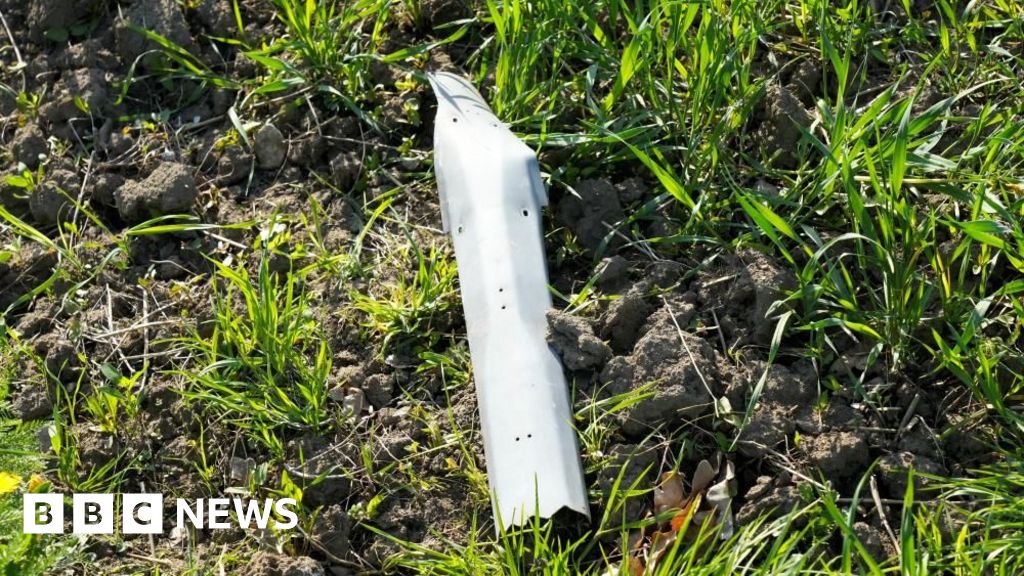
A NATO Eurofighter Typhoon operating under Baltic Air Policing scrambled Tuesday intercepted and destroyed an unmanned aerial vehicle over southern Estonia, near the border with Latvia. Defense officials in Tallinn confirmed the jet was scrambled from Ämari Air Base after civilian radar detected an unauthorized aircraft breaching controlled airspace.
Preliminary analysis by the Estonian Defense Forces suggests the drone was a modified Ukrainian projectile that strayed off course due to Russian electronic warfare interference. 'The signal disruption was consistent with known Russian jamming techniques used to disrupt Ukrainian UAV operations,' a defense ministry spokesperson said. 'We have no evidence this was a deliberate incursion.'
Key Points
- ✅ NATO jet intercepts drone over southern Estonia
- ⚡ Drone likely a Ukrainian projectile deflected by Russian electronic jamming
- 💡 No evidence of deliberate incursion; signal disruption confirmed
NATO’s Allied Air Command confirmed the interception, noting the Baltic Air Policing mission remains on high alert following repeated Russian electronic warfare activities. 'Our jets are prepared to respond to any airspace violations,' a spokesperson stated. 'This incident underscores the ongoing risks posed by electronic interference in the region.'
| Aspect | Russian Activity | NATO Response |
|---|---|---|
| Electronic Warfare | Disrupts Ukrainian UAV operations | NATO jets maintain 24/7 readiness |
| Drone Interception | N/A | Typhoon jet destroys unauthorized UAV |
| Airspace Violation | N/A | Baltic Air Policing enforces strict protocols |
Estonia’s Prime Minister Kaja Kallas condemned the electronic interference, calling it 'another attempt to destabilize the region.' 'Russia’s actions are not just a threat to Ukraine but to all of Europe,' she said. 'NATO’s rapid response demonstrates our collective defense capabilities.'
💡 Pro Tip
Civilian pilots in the Baltic region should report any unauthorized aircraft or electronic interference to authorities immediately—do not attempt to engage.
Estonian authorities are reviewing radar data and coordinating with Latvian and Lithuanian counterparts to determine the drone’s origin. While no casualties or damage were reported, the incident has raised concerns about the potential for miscalculation in an already tense airspace. 'This is a reminder of how quickly situations can escalate when electronic warfare disrupts normal operations,' a defense analyst noted.
📋 By The Numbers
- 27 minutes — Time from detection to interception
- 2024 — Third NATO drone interception over the Baltics this year
- 4 — NATO member states participating in Baltic Air Policing rotations
The Estonian Defense Forces have increased surveillance in the region, deploying additional radar systems to monitor airspace. 'Our priority is to ensure the safety of Estonian airspace and maintain transparency with our allies,' the defense ministry stated. NATO officials have not ruled out further interceptions if unauthorized aircraft breach airspace again.