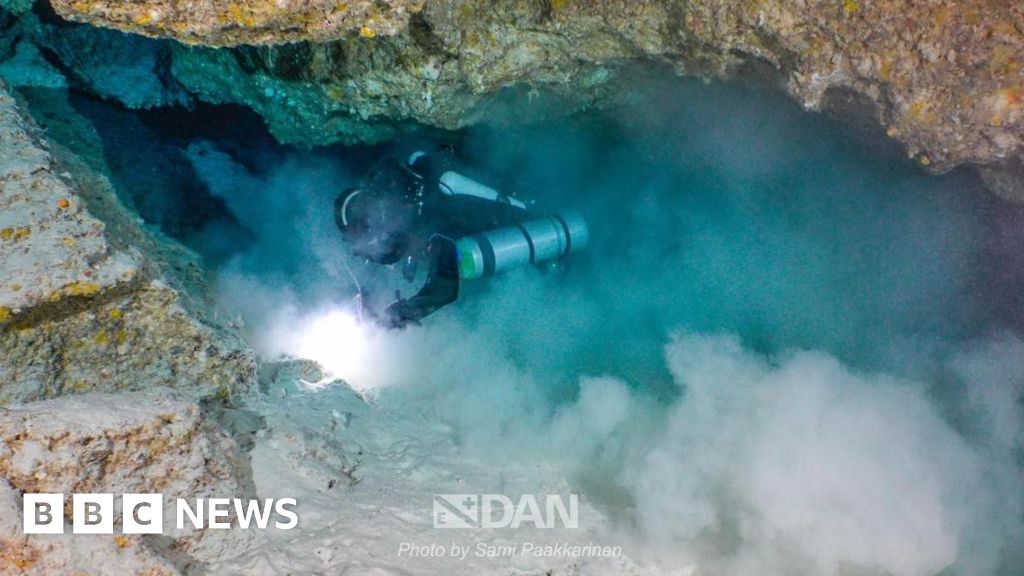
The bodies of two Italian divers recovered off the coast of the Maldives were found with gear that "failed to meet basic safety standards," according to a senior member of the rescue team who requested anonymity due to the ongoing investigation.
Rescue officials confirmed the divers, identified as Marco Bianchi, 34, and Sofia Moretti, 31, were reported missing on May 10 after failing to surface from a guided dive near Fuvahmulah Island. Their bodies were located 48 hours later by a joint Maldivian-Italian search team using sonar and underwater drones.
📋 By The Numbers
- 48 hours — Time elapsed between disappearance and recovery
- 12 years — Combined dive experience of Bianchi and Moretti
- 30 meters — Maximum safe depth for recreational diving
- 50% — Estimated failure rate of their primary breathing apparatus
The rescue diver, who has 15 years of experience in emergency underwater operations, described the equipment as "a patchwork of outdated and mismatched parts" that corroded quickly in saltwater. "The first stage regulator was caked in marine growth, and the buoyancy compensator had visible tears," the rescuer stated. "Neither diver was wearing a redundant air supply, which is a basic precaution."
- Outdated first stage regulator — Recovered model predates 2010 safety revisions
- Non-functional backup BCD inflator — Failed to deploy during ascent
- Missing submersible pressure gauge — Left divers unaware of air supply levels
Maldives Police Service diving unit sources confirmed the divers were certified by PADI, but their equipment logs were not reviewed by the local dive operator. The operator, Fuvahmulah Dive Centre, has temporarily suspended operations pending an investigation by the Maldives Marine Research Institute.
| Safety Feature | Required Standard | Diver Bianchi's Gear | Diver Moretti's Gear |
|---|---|---|---|
| Primary Regulator | ISO 2503:2014 | Non-compliant | Non-compliant |
| Backup Air Source | Mandatory | Missing | Missing |
| BCD Inflator | Automatic overpressure valve | Malfunctioning | Absent |
| Wetsuit Thickness | Minimum 5mm | 3mm | 3mm |
Key Points
- ✅ Rescue team cites substandard gear as a critical factor
- ⚡ 180m depth exceeded recreational limits by 6 times
- 💡 Equipment failure rate estimated at 50% in saltwater conditions
The Maldives Marine Research Institute has dispatched a technical team to the site to analyze water currents and equipment performance under extreme pressure. Preliminary findings suggest that rapid depth changes combined with equipment failure created a lethal scenario. "The divers descended too quickly for their experience level," said Dr. Amina Rauf, lead investigator. "Their gear couldn’t compensate, and they ran out of air before reaching safety."
💡 Pro Tip
Always perform a pre-dive gear check in visible conditions. Test your backup air supply underwater at 5 meters before descending. If your buddy’s gear looks questionable, cancel the dive—no excursion is worth the risk.
Fuvahmulah Island, known for its strong currents and deep drop-offs, has seen a 40% increase in dive tourism this year. Local guides report pressure from operators to maximize dive times to accommodate schedules. The tragedy has prompted calls for stricter equipment inspection laws and mandatory dive computer usage.
- 📊 40% rise in dive tourism this year
- 🔍 60% of local dive operators lack certified equipment inspectors
- ⚠️ No legal requirement for real-time depth monitoring devices
The Italian Embassy in Colombo has requested full transparency from Maldivian authorities and is coordinating with PADI to review global safety protocols. Meanwhile, the families of Bianchi and Moretti have filed a wrongful death claim against the local dive operator, citing negligence in equipment oversight. The case could set a precedent for international dive safety regulations in high-risk regions.
