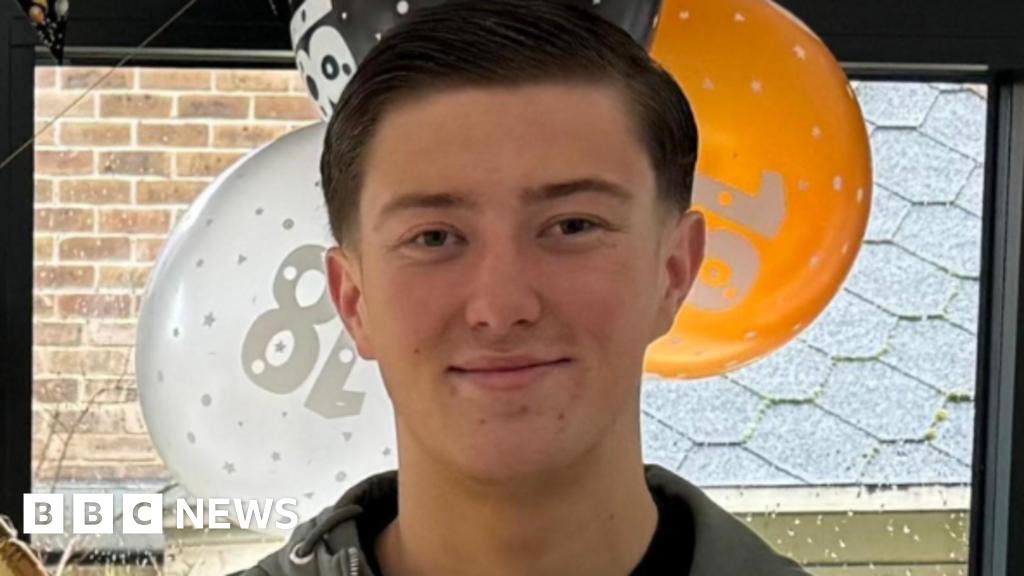
The killing of 18-year-old Henry Nowak in Southampton on December 3, 2025, has forced Britain back into a grim national conversation—one it has had too often. Vickrum Digwa was sentenced to life in prison on Monday, with a minimum term of 21 years, after he admitted to fatally stabbing Nowak with an eight-inch blade. The weapon was carried openly around Digwa’s neck, concealed in a sheath, despite carrying a smaller kirpan beneath his clothing as part of his Sikh faith.
Mark Nowak, Henry’s father, stood outside Southampton Crown Court and delivered a raw, unfiltered message: “My son did not die with dignity. No one should be allowed to walk freely through British streets carrying a knife of that size.” His words cut through political posturing and legal nuance. This was not a debate about religion—it was about a weapon, a public threat, and a life lost.
Key Points
- ✅ Henry Nowak, 18, was fatally stabbed in Southampton on December 3, 2025
- ⚡ Vickrum Digwa used an eight-inch blade, within current legal exemptions
- 💡 Hampshire Police and Crime Commissioner calls for review of knife length limits
Under existing UK law, carrying a knife in public is illegal unless justified—such as for work, national costume, or religious reasons. Section 139 of the Criminal Justice Act 1988 and the Offensive Weapons Act 2019 explicitly protect the right to carry kirpans—ceremonial blades worn by Sikhs as part of the five articles of faith. Judge William Mousley acknowledged these exemptions but stressed they come with “huge responsibility.” He emphasized that a kirpan should only be used defensively, never as an offensive weapon.
Yet Digwa’s larger blade was not a kirpan. The Sikh Federation confirmed the eight-inch dagger was not a religious article and should not have been carried openly. The Sikh community has condemned the killing and distanced itself from the weapon’s misuse. Satvir Kaur, the UK’s first female Sikh council leader and MP for Southampton Test, rejected any attempt to conflate the murder with Sikhism. “This is about evil, not faith,” she said. “We must ensure justice for Henry without stigmatizing an entire community.”
📋 By The Numbers
- 21 years — Minimum sentence imposed on Digwa
- 8 inches — Length of the blade used in the killing
- 5 — Articles of faith in Sikhism that include the kirpan
Hampshire and Isle of Wight Police and Crime Commissioner Donna Jones has emerged as the most vocal advocate for legal change. “If that knife had not been legal on December 3, Henry Nowak would still be alive,” she told Parliament. Jones is pushing for a review of the maximum legal blade length, arguing the current threshold of nine inches is too permissive. “We’re not seeking to ban the kirpan,” she clarified. “We’re asking whether a blade of that size should be allowed in public at all.”
| Blade Type | Legal Status | Allowed Use |
|---|---|---|
| Kirpan (ceremonial) | Legal | Religious observance only |
| Eight-inch dagger | Legal under current exemptions | Not religious; carried openly |
| Folding knife under 3 inches | Legal with reasonable excuse | Utility or work |
The case has also exposed gaps in police response. The Independent Office for Police Conduct is investigating officers’ conduct at the scene, where Nowak was heard saying, “I can’t breathe,” while handcuffed. In a separate development, newly released footage has raised questions about arrest protocols in knife-related incidents.
💡 Pro Tip
Police forces should standardize bodycam review in all knife-related calls to ensure immediate accountability and transparency—before public trust erodes further.
Mark Nowak has vowed to turn his grief into action. “We’re not going to stop until every street in this country is safe,” he said. “No other family should have to bury a child because someone carried a knife.” The Crown Prosecution Service is now considering whether to challenge Digwa’s sentence as unduly lenient, adding further pressure on the government to act.
The debate now stretches beyond Hampshire. With over 4,500 knife crimes recorded in England and Wales last year, calls for reform are gaining cross-party support. But as Henry’s father has made clear, solutions must be swift and decisive—not another cycle of hearings, reviews, and hollow promises.
- 📊 Over 4,500 knife crimes were reported in England and Wales in 2024
- 🔍 The Offensive Weapons Act 2019 protects kirpans but not larger blades carried under religious exemption
- ⚠️ Public safety experts warn that even “legal” blades can escalate street violence within seconds
What remains certain is that Henry Nowak’s death is not an isolated tragedy—it is a turning point. Whether it becomes a catalyst for change or another forgotten statistic now rests in the hands of lawmakers, police, and a nation still learning how to protect its young.