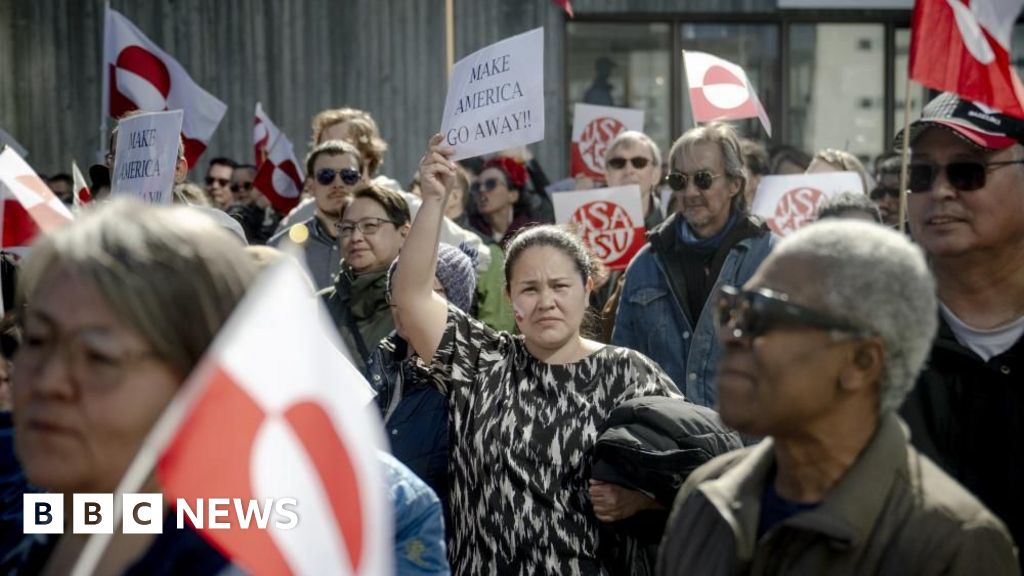
Hundreds of Greenlanders marched through the streets of Nuuk on Friday, their voices rising in unison against a new U.S. consulate that symbolized what they fear as a creeping American influence over their island. The protest, organized by local activists and environmental groups, drew residents from across the capital, many carrying handmade signs emblazoned with slogans like ‘No means no’ and ‘Greenland belongs to Greenlanders.’
Key Points
- ✅ Hundreds protested outside the newly opened U.S. consulate in Nuuk
- ⚡ Demonstrators accused the U.S. of seeking to undermine Greenland’s sovereignty
- 💡 Activists linked the consulate to broader concerns over resource extraction and geopolitical pressure
The timing of the protest was deliberate. The consulate, officially opened just weeks ago, has become a lightning rod for criticism, with opponents arguing it represents a strategic move by Washington to secure access to Greenland’s rare earth minerals and Arctic shipping lanes. Danish media reported last month that the U.S. had quietly pushed Denmark to support the consulate’s establishment, raising concerns in Nuuk about a loss of control over Greenland’s affairs.
Among the protesters was Aqqaluk Lynge, a veteran politician and former leader of the Inuit Ataqatigiit party, who addressed the crowd with a megaphone. ‘We are not a bargaining chip for foreign powers,’ Lynge declared. ‘Greenland decides its own future, not Washington or Beijing.’ His words were met with applause, underscoring the depth of local resistance to what many see as an encroachment on their autonomy.
The U.S. State Department has repeatedly stated that the consulate’s purpose is strictly diplomatic, aimed at strengthening ties with Greenland and supporting climate research initiatives. But critics remain unconvinced, pointing to recent U.S. military exercises in the Arctic and the Pentagon’s 2020 report identifying Greenland as a ‘priority’ for strategic access. Greenland’s government, led by Prime Minister Múte B. Egede, has yet to take a public stance on the protests, though Egede has previously warned against allowing foreign powers to exploit the island’s resources without strict oversight.
💡 Pro Tip
Local activists suggest keeping an eye on Greenland’s upcoming referendum on resource extraction laws, expected in late 2025. The outcome could redefine how—and by whom—Greenland’s vast mineral wealth is controlled.
Security was tight around the consulate, with Greenlandic police and a small contingent of Danish troops present. No incidents were reported, but tensions simmered beneath the surface. One protester, a 28-year-old marine biologist named Ivalu Holm, told reporters, ‘This isn’t about America or China. It’s about us. We’ve seen what happens when outsiders come in and take what they want. We won’t let it happen here.’
📋 By The Numbers
- 90% — Approximate share of Greenland’s population that opposes foreign interference in resource decisions
- 12 — Number of rare earth minerals found in Greenland’s Kvanefjeld deposit, one of the largest undeveloped reserves in the world
Analysts warn that the protest is just the beginning. Greenland’s government is currently negotiating a new agreement with Denmark over self-rule, set to be finalized by 2027. Any perceived weakening of Greenland’s position in these talks could reignite larger demonstrations. For now, the message from Nuuk is clear: Greenlanders will not accept a consulate—or any institution—that threatens their hard-won sovereignty.
| Aspect | U.S. Consulate | Greenlandic Response |
|---|---|---|
| Purpose | Diplomatic and research ties | Symbol of foreign interference |
| Control | Managed by U.S. State Department | Opposed by local activists and politicians |
| Impact | Potential access to rare earth minerals | Heightened protests and resistance |
The U.S. has not commented on the protests, but diplomats in Copenhagen have privately expressed frustration over Greenland’s reluctance to engage more deeply with Washington. Meanwhile, in Nuuk, the streets remain quiet—but the message is loud. As the sun set over the harbor, protesters lit flares, their orange glow reflecting off the water as a final warning: Greenland is not for sale.