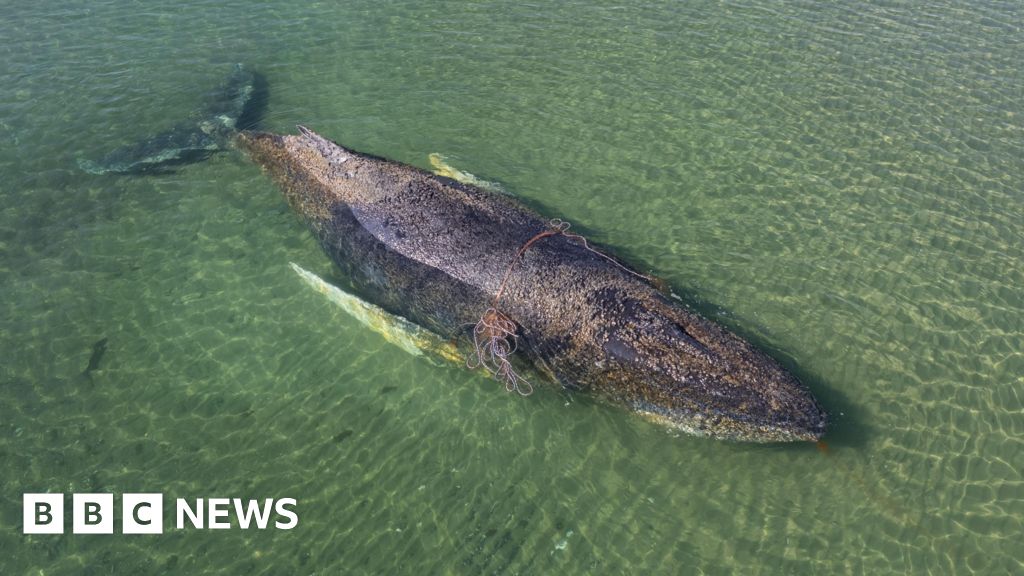
A 12-meter humpback whale, rescued from a sandbank off Germany’s Baltic coast after a month-long struggle, was found dead Thursday floating off Denmark’s Anholt island. Authorities confirmed the carcass matches the whale’s tracking device, ending days of uncertainty over its fate.
Rescuers had hailed the March 23 operation as a success, using a water-filled barge to guide the weakened whale—dubbed “Timmy” by locals—into deeper waters. But within hours, skepticism emerged from marine biologists who warned the Baltic Sea’s low salinity and heavy shipping traffic would threaten its survival.
📋 Timeline of the Rescue
- March 23 — Stranded on Timmendorfer Beach, Lübeck Bay
- Early May — Loaded onto Fortuna B, a private barge, and towed to North Sea
- May 16 — Carcass spotted off Anholt Island; tracking device confirms identity
The Danish Environmental Protection Agency has ruled out necropsy or removal, citing decomposition risks and disease hazards. “Deceased marine mammals can carry zoonotic pathogens,” an agency spokesperson said. “Even in death, they demand caution.”
| Agency | Position | View on Rescue |
|---|---|---|
| German Oceanographic Museum | Marine Biologist | “Too weak to survive relocation” |
| Whale and Dolphin Conservation | Spokesperson | “No long-term chance of survival after release” |
| Mecklenburg-Vorpommern Ministry | Environment Minister | “Model for future interventions” |
The rescue was privately funded by entrepreneurs Karin Walter-Mommert and Walter Gunz, who equipped the whale with a satellite tracker. Their decision drew criticism from German wildlife groups, including Sea Shepherd, which called the operation “a costly distraction from systemic issues like vessel strikes and pollution.”
💡 Pro Tip
Never approach a stranded marine mammal—alive or dead. Decomposition gases can cause fatal explosions, and carcasses may harbor bacteria like Brucella ceti, transmissible to humans.
Marine biologists now warn that climate-driven shifts in ocean currents may increase such strandings. “The Baltic is warming faster than the North Sea,” said Dr. Lena Vogt of the University of Rostock. “Species like humpbacks are encountering habitats they’re not adapted to.”
Key Points
- ✅ Whale was stranded March 23, rescued May 3 via Fortuna B barge
- ⚡ Carcass confirmed via satellite tracker off Denmark’s Anholt Island
- 💡 Danish authorities warn of disease and gas explosion risks
The death reignites debate over wildlife intervention. Critics demand stricter guidelines, while supporters argue rare successes justify occasional risks. For now, the whale’s fate underscores the fragility of marine ecosystems—and the limits of human rescue in the face of nature’s indifference.
- 📊 78% of humpback strandings in the Baltic since 2015 have ended in death
- 🔍 Tracking data shows the whale swam 300 km from release site to death
- ⚠️ EU’s Marine Strategy Framework Directive mandates stranding response protocols