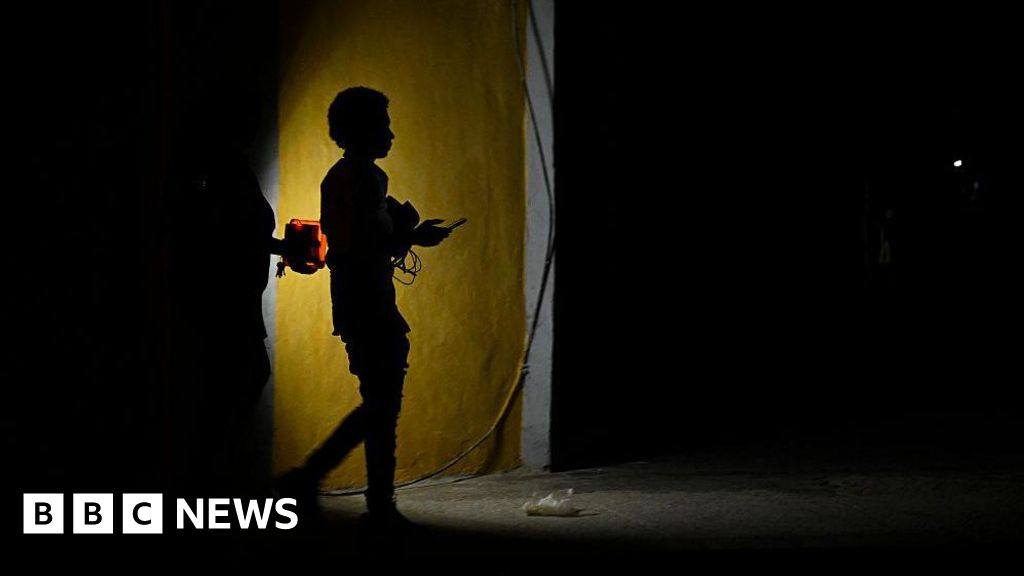
Havana — Cuba’s national electricity grid suffered a catastrophic collapse on Monday, leaving nearly 11 million people without power as the island nation battled extreme heat and failing infrastructure. The blackout, described by state-run power operator Unión Eléctrica de Cuba (UNE) as a "total system failure," occurred just after midday and showed no signs of immediate restoration.
The collapse followed a series of cascading failures in high-voltage transmission lines and aging thermal power plants, primarily in Matanzas Province and the Mariel Special Development Zone, where critical infrastructure has long suffered from underinvestment and chronic fuel shortages.
Key Points
- ⚡ Total grid failure — No regions spared, including Havana
- 🔥 Extreme heat — Temperatures exceeding 38°C (100°F) worsened strain on the system
- 💡 Underlying causes — Aging plants, fuel shortages, and delayed maintenance
Residents in Havana reported transformers exploding in the streets, while hospitals scrambled to activate emergency generators. Dr. Elena Rojas, a public health official in the capital, confirmed that dialysis centers and intensive care units were operating on backup power, but warned of "critical risks" if the outage persisted beyond 24 hours.
| Impact Area | Status | Immediate Risk |
|---|---|---|
| Hospitals | Emergency generators active | Medical equipment failure |
| Water treatment | Minimal disruption reported | Contamination risk in 48 hours |
| Transportation | Traffic lights offline | Gridlock in major cities |
UNE officials attributed the failure to a "domino effect" triggered by a fault in a 220-kV transmission line near Santa Clara, which overloaded and shut down three primary thermal plants. Engineers warned the system was operating at less than 60% capacity before the collapse, with reserves depleted by persistent heat waves and fuel constraints.
📋 By The Numbers
- 98% — Cuba’s electricity dependence on fossil fuels
- 25 years — Average age of thermal power plants
- 30% — Estimated fuel shortage for power generation this year
President Miguel Díaz-Canel convened an emergency meeting of the Council of Ministers, vowing to restore service "as soon as technically possible" but offered no timeline. Independent analysts suggest recovery could take days or weeks given the scale of damage to transformers and substations. The blackout compounds Cuba’s worsening economic crisis, where daily power cuts of 4 to 6 hours have become routine over the past year.
💡 Pro Tip
Businesses should prepare for prolonged outages by securing fuel for backup generators and pre-loading critical digital systems to avoid data loss during extended downtime.
The collapse also reignited debates over Cuba’s energy sovereignty. The government has relied heavily on imported fuel and Russian assistance to keep plants operational, but sanctions and global supply chain disruptions have exacerbated shortages. José Manuel Prieto, an energy analyst at the University of Havana, called the grid’s vulnerability "a ticking time bomb."
- Immediate — Assess damage to high-voltage lines and substations
- Short-term — Redirect available fuel to essential services
- Long-term — Accelerate renewable energy projects, particularly solar
The blackout comes just months after Cuba launched a new solar farm in Guantánamo Province, part of a fragile push to diversify energy sources. However, experts say these efforts remain insufficient to offset systemic failures in the national grid.
